%%USERNAME%%    %%ACCWORDS%% %%ONOFF%% |


 The FSFS Newsletter is written by FSFS members covering everything Fantasy and Sci-Fi |
The "Fantasy and Science Fiction Society" welcomes you to  Welcome to the November edition of the Newsletter. Written by members of the "Fantasy and Science Fiction Society" for all of Writing.Com, this month we are focusing on NaNoWriMo. Contents 1. Introduction 2. Masks 3. Halloween Poem 4. On the Horizon of NaNoWriMo - Preparation 5. NaNoWriMo: A Writer's Workshop 6. NaNoWriMo's Camp NaNo 7. About Book Design 101 8. Book Review: The Warlock in spite of Himself 9. Advertisements 10. Vote  First of all, apologies for the lack of an October Newsletter. The editor who was supposed to produce last month's Newsletter was unable to do so, so we had to skip that month. I (Matt Bird MSci (Hons) AMRSC) am back for this month and runningwolf04 will be editing the December edition. Don't worry, though! Many of the articles from last month were resubmitted this month, so we have a bumper Newsletter for you to help kickstart your NaNo month!  As a writer I wear lots of masks. You can cover a lot of insecurity wearing a mask. I put on a mask when I joined Writing.com over six years ago. In this environment where you can be anonymous, I joined to test out whether the stories I wrote were, well, good enough to be published and found it a place to also learn the craft. It is also a relatively inexpensive way to learn in this online community we’ve all helped create – one that allows for very flexible schedules. (After all, I’ve a day job – where I guess I wear another mask, the professional employee, since I’m nowhere near earning enough from writing to be among the minority of authors who can count on writing income to live off on alone.) Just about every author I’ve met has come to being published by a different route, some are part of a writing critique group, some cross the country or countries to participate in writing courses. Others publish one book and seem to feel they’ve attained their goal and move on – at least for now based on the demands of their lives, while others publish their first story or book and can’t stop (a group I’ve a strong affinity with). Fall is a time when I start spending weekends promoting what I write – essentially wearing a more public mask, projecting myself under my pen name as “the author.” I’m attending a local sci fi convention, where I’m on the back-up list for speaking on panels, and I’m a guest at two sci fi conventions in the region and just spoke and did a book signing at a major book festival. All provide wonderful venues to network and connect with potential readers, yet I wearing this “mask,” acting as a confident author – not as someone who still wonders are my stories good enough. What I’m seeking to share here is you have project confidence – have to believe in yourself, have to be willing to accept criticism, listen to reviews for what you can learn from (even if it’s how to ignore the nay-sayers in a review outside of WDC’s environment of position critiques). Through my networking I’m now exploring being able to turn one of my novels into an audio book, partnering with university’s performing arts program with its new recording studio, creating a student project, while offering to split royalties. Here I am again exploring what it means to be a writer in the 21st Century, learning new things, and seeking advice from others who’ve created audio books. One thing will lead to another – whether you take off that mask of confidence for a time or two or not. Well, that’s my message for the month – a month where we see lots of masks and may not realize how important they are to wear, whether you are an introvert or an extravert – child or adult -- or just an adult with a bit of child-like wonder, who just wants to tell people stories. Dare to Believe, D.H. Aire www.dhr2believe.net "Masks" by Highmage - D.H. Aire   Demons, witches, and ghouls Boys and girls It's time for Halloween Ravens preen and ghosts scream Dress up dandy In hopes of getting candy Get the treats By doing silly feats Unless it's a trick, Don't get sick "Halloween Poem" by Clark Flammel  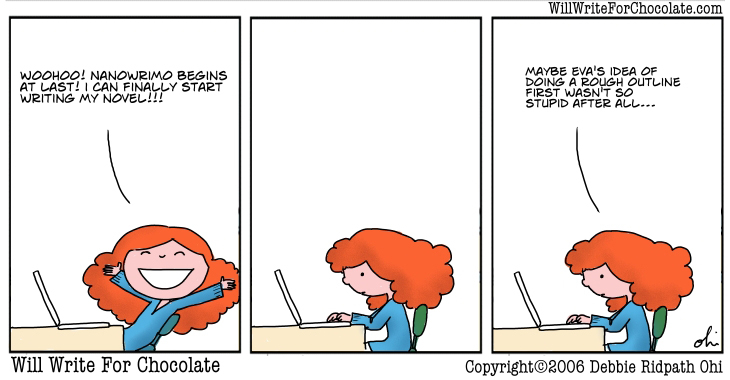 It’s another year and you realize that November is just around the corner. If you’re a writer like many of us, you’ve furiously been working through October NaNo Prep so you can have a better idea of what your novel is going to look like when you start writing it next month. Or, just perhaps, you’re one of those few people who have the precious gift of being able to just wing it and when November first comes you sit down somewhere and start writing. Whatever your plan is for next month with regards to your technique of writing your novel, remember to take as much time in planning your workspace as you did your how to write your novel. Depending upon the type of person you are, there are a few things you want to make sure you need. 1. Find a place which is comfortable. a. Whether it’s a quite nook in the house which has your desk with your computer/laptop or (like me) the couch or my bed. (I live in a studio and my bed is my couch/chair/living room) b. Library or park c. Coffee shop 2. Ensure you have all the tools you need BEFORE you start writing. a. If you’re the “old school type”, make sure you have plenty of pens & paper. b. If you’re the “tech type”, make sure your computer/laptop is fully charged before taking it outside to write with. i. Never forget to save your work and save it often. And use either a thumb drive or a “cloud drive”. Computer drives can crash easily and all your hard work with them. 3. Make a list and check it twice a. Make a daily list of your “to do” items. This will keep you on track – Include appointments, chores, daily tasks and, of course, time for writing. i. If you find that one day is overwhelmed with chores and appointments but you’re free other days, simply make more time for writing on those other days. ii. Don’t forget to include time for you. Writing takes a lot out of you, not to mention all those other things, so take some time out of the day, or week, to include some “me time”. So the mantra for all who are in the pot for NaNoWriMo this year is “Be Prepared”. Get everything ready before you start writing on the first and you’ll find writing your novel a whole lot easier. Good luck everyone. May the writing gods be with you. "Invalid Item" by A Guest Visitor  National Novel Writing Month starts Nov. 1 every year. People from all over the world gather together in coffeehouses, libraries, and other public locations to write 50,000 of the rough draft of a novel in 30 days. It is a time of writing madness. You set aside the regular activities of your life and focus on getting words on the page. PRACTICE MAKES PERFECT The first few times that I attempted Nanowrimo, I was lucky to write 10,000 words. I did not have the habit of writing every day and I did not write an outline for my story ahead of time. In 2010, that changed for me. For the first time a story woke up and “spoke” to me. No, this was not the sign of mental illness. One of the common traits that authors share is a connection to their subconscious mind where their “muse” works behind the scenes to create art. For the first time in years, my writing “muse” activated. I could not refuse to write this story even if I wanted to. Something within me pushed me forward as my story grew more complex and rich. That year, I decided to take part in write-ins in my area for the first time, to join other Nanowrimo participates and work on my novel. I was at a loss of how to participate at first. I did not own a laptop and did not have the funds to buy one. As I read the forums at nanowrimo.org, I stumbled upon a thread about a machine called an “AlphaSmart.” It is a digital typewriter designed for classrooms to teach keyboarding. The AlphaSmart has no Internet connection, a tiny screen where I could only see a few lines at a time, and a large, full-sized keyboard. I could download any text that I typed into the machine into the word processor of my choice. What was great is that I could purchase a used Alphasmart 3000 for around $25, including shipping. I bought one on eBay. It allowed me to leave my desktop behind and find the freedom to write in any location that I choose. I also discovered Chris Baty’s book, “No Plot? No Problem!: A Low-Stress, High-Velocity Guide to Writing a Novel in 30 Days.” In it, he describes his method of writing a rough draft. He believes in the old adage: write quickly, edit slowly. What Baty recommends is to write with abandon. Do not erase what you write, let your mind go free and write down everything that comes to you as fast as possible. Put out as much word count during each writing session as you can. Once your 30 days are up, take a deep breath and then go back and edit your words to clean up the passages, but not before. His book also offers up inspiration to all new authors to develop good writing habits. At the write-ins that year, I absorbed a great deal of information about the craft of writing. Before Nanowrimo, I thought that you wrote a book and sent it to a publisher. I learned that the rough draft is only the start of the process. There is also editing your work, hiring editors to double check your manuscript for typos and content, and finally choosing how to publish your work. That November became a working writing workshop for me. I asked an endless number of questions at the write-ins. My “instructors” were all a bunch of techie college students who were more connected to their smartphones than to the people around them. They made me feel old before my time, but I absorbed the information and did not take their youth personally. In the end, I pushed forward and made the 50K word count goal for the first time. WHY PARTICIPATE IN NANOWRIMO? If you are a new aspiring author, Nanowrimo will provide you with a support group of people who will cheer you on to write your book. During Nanowrimo, discussions revolve around all the new software and tools that are available to writers. You will learn many new techniques to help you become a better writer. Every year I take part in Nanowrimo, I learn something new. As time has gone by, I’ve become a published author, both in magazines and with an independently published ebook on Amazon. I credit Nanowrimo with giving me my start. Nanowrimo supports me in the creation of a large manuscript to work with the rest of the year, in addition to the short stories I write during the “off-season.” It is part of my writing habit. I have since upgraded to an AlphaSmart Neo for drafting and use Scrivener as my writing program of choice to organize my novel projects. I set aside October for planning a new book. This includes brainstorming plot points, writing outlines, and creating character sheets. During November, I clear my calendar and plan to spend at least two to three hours a day at coffeehouses working on my rough draft, minus the Thanksgiving Day holiday. Sometimes I write with the ’wrimo groups, sometimes I write on my own. Nanowrimo is there to bolster me when I grow tired, to push me to keep on working. I like to use the energy, it is like coasting with full sails in a trade wind toward your goal. It makes the larger project easier to complete. To learn more information about Nanowrimo, visit Nanowrimo.org. There is a wealth of information about the program on the website. It is free to join and the writing information is available year round. If writing in November is not good timing for you, there are other months set aside with a similar format where you can gain a helpful push for your word count. The important thing is to write. Sit in your chair, using your writing machine of choice and get the words flowing.  You may have seen a weird looking word floating around WDC since the end of September. It even shows up in some WDC user names: NaNoWriMo. What in the world? This article touches on NaNoWriMo and addresses a lesser known component of the challenge: Camp Nano. First a bit about NaNoWriMo, which stands for National Novel Writing Month, by the way. It is free to participate in this challenge to complete a phenomenal task of writing at least a 50,000 word novel in the 30 days of November. Find out more here: NaNoWriMo I don't know about you, but November is a bit busy for me. My birthday is the 16th, which is only a slight bump in the road of life, but Thanksgiving around our place is a huge event. There are between 30 and 75 people each year and that takes a good deal of effort over a week that invariably impacts my NaNoWriMo efforts. If I'm behind on my word count at all by mid month, I'm likely to abandon the challenge knowing I'll never catch up. )O: If you desire to participate in NaNoWriMo but November, like for me, is just not good for you, there is good news. Both the months of April and July host Camp Nano events. Camp Nano does not have as much fanfare and prep like Mrs. Battiwyn's October NaNo Prep Challenge , but it is based on the same premise. Aside from occurring in different months, one other major difference is a virtual writer's retreat. You can be added to a cabin at random or based on a variety of criteria such as age, genre, and/or word count goals. Or better yet, you and up to eleven of your writing friend's can create a public or private cabin. These cabins create a supportive writer's community where participants can converse with other cabin mates via a message board chat like function or via Nano email. Find out more here: Camp Nano So, now you have three months to choose from to see if you have what it takes to crank out 50,000 words (or more) in a month. Whether you're a pantser or a planner, it comes out to just under 1,700 words a day to become a 50,000 word NaNoWriMo winner. NeedingBeachDuf 🐠⛵🏝️   has won NaNoWriMo and Camp Nano on two occasions. This November, she'll be sailing from the Bahamas to Texas, so they'll be no NANO for her. She's shooting to be prepared for April. has won NaNoWriMo and Camp Nano on two occasions. This November, she'll be sailing from the Bahamas to Texas, so they'll be no NANO for her. She's shooting to be prepared for April.  "FSFS November 2016" by NeedingBeachDuf 🐠⛵🏝️  I recently attended a workshop, which changed my perspective a bit. The workshop was offered at Capclave. Actually, I sort of stumbled onto the workshop, when I saw an author I know signing up for it. He is an old pro, who was now self-publishing. He told me he had asked the con to offer the workshop titled, "Book Design 101." Seeing that offering I couldn't help but think about something that happened about five years ago. An ezine which had published a number of my short stories and serialized my first novel, Highmage’s Plight, approached me about doing an anthology of a number of my stories. That was exciting, but it was the first anthology they had ever published. I agreed, but once the anthology was published I received a particularly biting comment from someone who felt the book looked unprofessional. I've learned a lot from that, and have been careful about how I designed my books once I began self publishing after my second novel was published. Wonder what I might have missed, I signed up for the workshop, led by Danielle Ackley-McPhail. She has worked in publishing for 20 years for both Random House and Small Presses, learning every aspect of publishing ranging from writing to editing and every aspect of paperback book design. Using a number of science fiction and fantasy novels as examples, she went through the key aspects of professionalizing the look of book or even improving it. She started the session by passing out books by a range of publishers, traditional to small press. She asked what we thought of the covers, asking which looked better. It turned out the cover by a major publisher was the most difficult to read the book's title due to lack of contrast. The coverart was muted and the title lettering white. She showed two different editions of a small press book, which had similar covers made possible by a design software called POSER, which provides stock images. Danielle pointed out that such images designer's should use as something to build upon. In the early edition the publisher used it without modification. In the second, the publisher modified the image, creating a more striking looking cover, cropping the image and changing the color scheme. (There are other ways for commissioning cover art. See my earlier blog for details: http://www.dhr2believe.net/whats-a-book-without-a-cover/.) She then shared about spines. There was a self-published book in the mix which oriented the title top down. Titles on book spines should always be read such that books when laid on top of each other can be easily read. In the case of that self-published book, that text would read flag potential buyers. Now another point made about the spine. A publisher's mark normally appears on the bottom of the spine. For self-published authors that area generally remains blank. The publisher's name and mark also normally appears on the book's title page. In terms of the back cover, Danielle made two points I would also like to touch on. First, above the book description there should be a brief tagline to catch the reader's attention, so they go on to read the description. The tagline should be larger print, in a different font, may even be italicized, and the font in different color than the description beneath it. That idea made me realize that was something I don't do, but should. Take a look at the books on your shelves and you'll see what she means. Additionally, she pointed out something about the bar code area on the back cover. Traditionally published authors have a price listed. She shared that a self-published author, who had books consigned with a store was not able to sell their books because the staff didn't know how much to charge. That's true to an extent. I have had books consigned and the store put their own bar code label with the book's price over my Createspace generated bar code. But I can see how it could be a problem -- and self-published authors' books often have to be consigned since they are not easily returned, which is how traditionally published books can be. Though, when I've consigned book stores have put their own bar code label with the books' prices on the back cover. Danielle took us through the design and gave us a check list. She explained you do not want headings on the first pages of chapters and she always leaves a blank page between chapters to keep chapters always starting on an odd numbered page. When we questioned her on that choice, which really is a preference, she admitted that often publishers will not do that in order to conserve paper. That's important, paper is a major printing expense. Traditional publishers printing thicker books will not leave blank pages unless they have no choice. You may see books with additional front page matter "to eat" up what might otherwise have to be a blank page or two. Printing books often requires pages to be created in eight page groupings. I think one of the most effective things Danielle did was pass out copies of those books for us to look at as examples. It's something each of us can do, picking up disclaimer text from other's books and thoughts on what makes for a readable font. Think about that for a moment. Every try reading a book in a nine point font? My guess is that the author (I'm hoping a publisher would make that particular choice) was trying to save money, but it was a short-sighted one. Think about the prospective reader picking up that book, flipping through it and instantly deciding it was too difficult to read. I guess that's part of the take away from the workshop on book design. As an author or publisher, these little things can help make a book not just more professional looking, but more attractive to potential readers. So, did I find the workshop a great way to spend a couple of hours? Hell, yes. Dare to believe, D.H. Aire "About Book Design 101" by Highmage - D.H. Aire 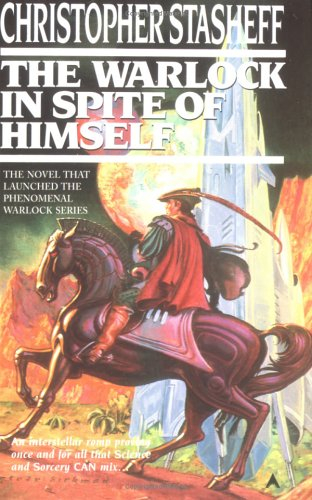 Book Review: The Warlock In Spite Of Himself Author: Christopher Stasheff First Published: 1969 Christopher Stasheff’s long love affair with television began at an early age. He started on staff at the University of Michigan as a paid student and moved up the ladder as his degree progressed into the Manager of the entire Student Staff. Once he obtained his M.A, he moved on to a position in the Broadcast Department of the University of Nebraska. At this point he switched his field of study and began to work on a Ph.D. In Theater Arts. It was at this time that he read about a competition for unpublished writers of science fiction and fantasy and he decided to enter the contest. While he did not finish his manuscript in time for the contest, he ended up sending The Warlock In Spite Of Himself to Ace Publishers. They bought it and it was the start of a long career in writing novels. He has 44 titles to his name to date. Stasheff continued to teach broadcasting at various universities for another fifteen years before he gave it up to become a full-time author. He is married with four children and with grandchildren on the way. The Warlock In Spite of Himself, a title that plays on the old british novel The Doctor In Spite of Himself, begins when SCENT spy Rodney Gallowglass lands on the backwater planet of Gramarye in a spaceship that is disguised as an asteroid. Rod and his epileptic robot/steed/sidekick Fess discover a feudal world right out of a modern day renfaire. Sprinkled through the population are fantasy creatures such as witches, ghosts, werewolves, dwarves and elves that came about due to the psychic abilities of the people that settled on the planet. SCENT, a planetary democratic federation wishes for this world to be guided toward democracy and represented rule. Rod decides that the best way to promote this is to set up a constitutional monarchy that will foil off-world anarchists, a coven of home-brewed witches, and a man that wishes to become the dictator of Gramarye. Due to Rod’s use of technology that the natives do not understand, he is branded a warlock and uses t his misconception to further his aims. Sometimes you discover an author who has that perfect blend of interests and writing that simply comes together for you. I am a science fiction and fantasy buff with a radio/television/film degree. How perfect is it to find an author who was one of the first to combine a fantasy with science fiction elements, something that is commonplace now, but certainly not when this novel came out, but also an author who creates a fictional catholic saint of television producers and IT computer geeks? I adore the entire concept of St. Vidicon, an order of monks who wear a small screwdriver in a pocket of their robes. While there are customs and concepts about women and the way that Gallowglass behaves that seem right out of the 1950’s and might prove jarring to younger readers unaccustomed to old-fashioned ideals, still the story is charming and humorous. This is Stasheff’s first novel and the first of a long series of books about the Gallowglass clan. It is well worth checking out to see if you are ready for this unique adventure in reading. Prepare to be enchanted.
The Halloween round of Three Prompts is currently in the judging stage. The next round will commence 1 December 2016.
FSFS members should use this form to sign up to a WCG.
A new cNote shop with a fantastical theme. Profits go to the FSFS!
An FSFS-only forum to discuss writing mechanics.
The FSFS Review Board is open! All WdC members can view the list on the group homepage, "Fantasy and Science Fiction Society" . FSFS Members can view the list from the homepage, Review Board page and the Hub. To post on the board you need to review at least one other item on the list.
If you are not already a member and are interested in fantasy and science fiction writing, please read through the group homepage and apply using the application form. The only pre-requisite is that you have a fantasy or science fiction item in your portfolio. If you want to advertise in the FSFS Newsletter please contact me, Matt Bird MSci (Hons) AMRSC .Vote I am pleased to announce that " Semantics and Word Choice Precision " by A E Willcox  won Best Submission for "September 2016" . A E Willcox has won an FSFS merit badge! Use the poll below to vote for your favourite submission from this month. won Best Submission for "September 2016" . A E Willcox has won an FSFS merit badge! Use the poll below to vote for your favourite submission from this month.Thank you to all the members who submitted articles to the Newsletter. If you submitted an article that wasn't included, don't be offended. I can only fit so much in the Newsletter. Please submit it again when I send the call out for articles. Please comment on this Newsletter if you enjoyed it, or if you have any suggestions for future editions. |
 un:
un:  View Portfolio
 Visit Notebook
 Send Gift Points
 Awards
 Badges



 Community Feed
 Puzzle Hub
 General Discussion
 Sponsored Items
 Book of Trinkets
 Static Items
 Books
Books Groups
 Interactive Stories
 Audio
Audio Campfire Creatives
 Community Notes
 Crossword Puzzles
 Documents
 Folders
 Images
 In & Outs
 Madlibs
 Photo Albums
 Polls
Polls Product Reviews
 Quizzes
 Survey Forms
 Web Pages
 Word Searches