%%USERNAME%%    %%ACCWORDS%% %%ONOFF%% |


 The FSFS Newsletter is written by FSFS members covering everything Fantasy and Sci-Fi |
The "Fantasy and Science Fiction Society" welcomes you to  Welcome to the September edition of the Newsletter. Written by members of the "Fantasy and Science Fiction Society" for all of Writing.Com, this month we are focusing on Writing Mechanics. FSFS members have out done themselves this month, producing a bumper 7-article Newsletter for you to enjoy! Contents 1. Introduction 2. Writing Mechanics Advice: Conjunctions 3. Semantics and Precision with Word Choices 4. How to make your writing stand out 5. SELF-EDITING TECHNIQUES TO POLISH YOUR NOVEL 6. Language & Poetry 7. On Completing a Seven Book Arc 8. Book Review - Journey to the Center of the Earth 9. Advertisements 10. Vote  In the last Newsletter I said I was struggling keeping on top of everything and also not finding time to write. I have had some good advice from several members and feel that I am now in a far better place with all of that stuff. It is important to remember why we are all here: to write. With that in mind I would love to hear from you all in the comments with your writing achievements from last month and this month. Did you hit a major (or minor) milestone in your novel? Have you come up with a great idea? Did you write a brilliant line of poetry? Let me know in the comments. There are big things ahead for the FSFS, including two group anthologies (fantasy and science-fiction). FSFS members who are interested should head over to "Publishing Forum" for more information.  In nature there are few mechanics who also write. The ones that do write usually specialize in technical manuals. However, I did locate a mechanic who knows a few things about the nuts and bolts of sentence construction. Here are his tips about conjunctions: Don't be overly concerned with the "rules". Yes, there are things that learned professors say you should not do. Yes, there are things that would make editors shudder and cross out. But if you are a good reader, then your instincts for sentence construction are probably pretty good. Notice that I started the previous sentence with the conjunction but. Supposedly there is a "rule" against that. It's a rule I like to break, but you should be aware of it. In the sentence that begins "It's a rule..." I used the conjunction but correctly. Why the difference for me? In the first sentence ("But if you are a good reader...") I wanted to emphasize the part after the but as being important and independent instead of just being the second half of the sentence that begins "Yes, there are things...". If you remove the but from "But if you are...", then you will see that it stands on it's own as a sentence, but it no longer has the linkage to the previous sentence that makes reading smoother. That's really what conjunctions are all about. Instead of a lot of choppy sentences, we can link some of them with conjunctions for a smoother flow. But don't overdo it! Too many ands are especially annoying. Example: He jumped out of the car and ran over to the door and kicked it down and entered the house. BAD! Commas would do fine there: He jumped out of the car, ran over to the door, kicked it down, and entered the house. My mechanic had to get back to work on that Honda Civic, but I will ask him for more info if you are interested.  “The difference between the right word and the almost right word is the difference between lightning and a lightning bug.” - Mark Twain "Whatever you want to say, there is only one word that will express it, one verb to make it move, one adjective to qualify it. You must seek that word, that verb, that adjective, and never be satisfied with approximations, never resort to tricks, even clever ones, or to verbal pirouettes to escape the difficulty." - Gustave Flaubert (in a letter to Guy de Maupassant) The Oxford English Dictionary defines Semantics thus - Noun - The branch of linguistics and logic concerned with meaning. The two main areas are logical semantics, concerned with matters such as sense and reference and presupposition and implication, and lexical semantics, concerned with the analysis of word meanings and relations between them.  When it comes to writing stories (or poetry) there are times when every writer, however accomplished, reaches for their thesaurus because they are stuck for the precise word to describe something. Now thesauruses are great for finding just the right synonym for the word you've thought of, BUT (a big but – a big butt is something else entirely) it is essential that you check the definition of your chosen synonym in a dictionary to make quite sure it is exactly the right word for the context in which you want to use it. The more exact words you give your readers, the more clearly they see what the character sees, smell what he or she smells, hear, taste and touch what he or she can hear, taste and touch. The key words for writers, in the dictionary definition of the word semantics, are presupposition and implication. It is easy to think that you can go ahead and substitute, with impunity, one word for another because your thesaurus groups words with similar meanings together under a single entry, but many of those wonderful, delectable, magnificent synonyms can come with connotations. There can be definite shades of meaning. Take the word anger for example. Synonyms include: annoyance, ire, rage, fury, ill temper, indignation, offence, nettle and pique. There is a real difference between someone feeling piqued, or offended and someone in a rage, or fury. Great writers are constantly aware of the impression each word carries. In the story's narrative, from the author's point of view, word choices subtly invoke readers' reactions. In dialogue or thoughts, the right word can reveal what the characters think and feel. Some words come loaded with heavy emotional baggage beyond their dictionary meanings, for example: bureaucrat - public servant; regime - government; elitist - expert; terrorist – freedom-fighter; weed - plant; beast - animal. Good writers should also aim for simplicity. Readers don’t want to have to keep turning to the dictionary to get through a page of your writing and they don’t appreciate the apparent self-indulgence which an author's pretentious writing evokes. If you can replace rare or overly long words with more common or shorter words, do it. But having said that, the kind of story you write will determine the tone of the prose and if you are writing a historical or medievalesque epic fantasy, the occasional use of longer, rare, or archaic words might be more appropriate than short, well-used and more modern terms. There is another aspect of writing which I think is rarely discussed and so I feel is important to mention here - the prose's rhythm, sound or musicality. Sometimes, word choices should be determined by musicality or the rhythm of the sentence. How does one word sound in your sentence as opposed to another? If you’re trying to choose between words like bite and morsel, for example, you might make your decision based on which word sounds better in the sentence. Lastly, I want to touch on the complete misuse of words. Possibly one of the most misused words in the English language is - Literally. Literally - should be used to describe something that is actually happening, for example - “He literally danced with joy.” It should not be used for emphasis, for example - “Steam was literally coming out of his ears ” (?) - unless you are writing fantasy or SciFi, maybe, where something like that might conceivably happen in the other world of the story. But still, that phenomenon would need to be explained. There are other words too which people seem to get mixed up, for example – Flaunt and Flout - These words are opposites, but in practice, some writers use "flaunt" for both senses. Flaunt means to show off, to blare, to blaze with colour. A merchant flaunts his wealth if he wears furs and finery. Flout means to suppress or ignore. Someone is flouting the laws if he breaks them. Ravish and Ravage - Ravish means to rape or to enchant (contradictory meanings, I know, but hey). Ravage means - to destroy, and is usually the word that people want, since it can be used in the context of, say, barbarians or a dragon, perhaps, destroying a village. It makes absolutely no sense to say, "Ravage the women and ravish the village!" The right words in the right place at the right moment are a joy to read, so use them wisely and use them well. " Semantics and Word Choice Precision " by A E Willcox   The most effective way of making fiction writing stand out in a good way is the author’s judicious use of voice, diction and the employment of figures of speech. Voice Because voice has so much to do with the reader's experience of a work of literature, it is one of the most important elements of a piece of writing. As far as the fiction writer is concerned, the term voice has two meanings – The first meaning of voice is the author's style, which is the quality that makes his or her writing unique. It conveys the attitude, personality, and character of the author and his or her approach to writing stories. The second meaning of voice is the characteristic speech and thought patterns of a first-person narrator; a persona. Voice is something which takes time to develop, but it has a direct correlation to diction, syntax (or sentence structure), the use of figures of speech and the type of novel and mood of the story the author wants to evoke. If the author intends to use a voice that differs from his or her own - to write from the perspective of someone who is insane, or an elf, or a dragon – then they must use that voice consistently. Slipping out of that voice without a clear intent to do so indicates to the reader that the author isn’t up to the task of developing and maintaining his or her characters. The author might conceivably be able to get away with having the inhabitants of his or her ancient Elven city all speak twenty-first century urban slang, but you can't have them spouting old English one minute and modern English the next. The author’s own voice ought to be the preferred one, as it should be relatively constant, but if the author wants to use an artificial one, they should keep it consistent. No one will take the writing seriously otherwise. Diction So what exactly is diction? Diction in writing means the choice of words especially with regard to correctness, clearness, or effectiveness. Good diction is writing specifics rather than resorting to generalisations. It is the process of showing as opposed to telling. It involves evoking an emotional response in the reader by describing the senses--sight, sound, touch, taste, and smell. The author needs to get the reader to share as far as possible the experience of the story characters by properly describing specific objects, images and sensations rather than simply telling the reader what is going on. Here are some examples of telling: The house was mysterious. The artwork was amazing. He looked very old. The bridge looked unsafe. I felt ill. None of those sentences really conveys anything. What they do is to provoke questions such as what is it specifically which makes that house different from any or all other houses? I can’t see the piece of artwork so in what way is it amazing? Why does this man look old? Why does the bridge look unsafe? You say you felt ill, but what were your symptoms? So how does the writer‘show’ the reader these things? Showing is all to do with drawing word pictures by focussing on the particular characteristics which make an object, person or feeling what it is. For instance, to make a house mysterious to a reader the writer needs to portray those aspects of the house which convey a sense of mystery. If the house is old then the windows might have mullions and small leaded panes of glass, the stone or brick would look weathered and the roof could be moss covered and missing tiles. If the character goes inside the house then the floor panels might be warped, the paint may be peeling off the walls. Also, the author should describe how the house smells e.g. musky, damp, dank or stale etc. and include details about the temperature and atmosphere of the house - is it chilly, vacant or bare? Pile on the imagery by getting the character to notice the dusty furniture, dark hallways, unsettling noises coming from the cellar or attic, or that the mirrors on the walls don’t reflect the room in the way normal mirrors do. There are occasions when generalisations serve a purpose. Sometimes short, stark statements add emphasis e.g. She was late. They can act like a kind of punctuation, giving structure and rhythm to prose. However, specific descriptions create a sense of realism. They engage the reader and help to get them involved with the story. Often (but not always), a tell-tale sign of telling is the inclusion of a form of the verb to be (is, am, are, was, were, be, being, been etc). By using specific diction and replacing the to be verb with an action verb and employing great figures of speech such as metaphors and similes, the author will greatly improve their writing. Figures of Speech Figures of speech (or figurative language) are rhetorical devices which achieve a special effect by using words in distinctive ways. For authors, using original figures of speech in their writing is a way to convey meanings in fresh, unexpected ways. Figures of speech can help readers understand and stay interested in the story. The most common ones to use with prose are the metaphor, which is one thing conceived as representing another (e.g. I was lost in a sea of nameless faces.); the simile, which likens one thing to another (e.g. as common as muck) and hyperbole, which is an exaggeration used to emphasize a point (e.g. "I'm boiling!"). Metaphors and similes make writing more interesting and they also help the writer to think more carefully about his or her characters and story world. Put another way, metaphors and similes are not just pretty ornaments; they are ways of thinking. But just a note of caution here, figurative speech should be used like sugar or salt; use too much and it starts to cloy. Here is a link to a list which defines and gives examples of the types of figures of speech Other Useful links Strong descriptive words Using the right style of language "How To Make Your Writing Stand Out" by A E Willcox  The use of language in poetry can be important for effective delivery of rhythm, delivery and emotion. And sometimes, just as in novels, the language in poetry needs to be from a particular era or place to make a point. As poets we often write what we know or feel in the moment, or we just write about what we know and use the language we’re familiar with. But poetry is more than what we know, there are hundreds of different styles with hundreds of different types of languages to use. I learned that when my mother found my grandfather’s book of poetry. He wrote poetry while he served during WWII. Language doesn’t need to be the language of a country, it can be the different styles, or slang, of a single country. In the U.S. alone we have hundreds of different types of slang language which is used by our youth in different parts of the States, different software companies, different police agencies, trucking companies, taxi cabs, the different branches of our military, and so many more. I have a sample poem from my grandfather of how the language of the U.S. Navy can change the aspect of a poem. "Invalid Item" As you can see, with this poem, the language focuses on the slang used by the U.S. Navy during the time of WWII. Although having grown up in the Navy I can honestly say the slang has not changed much. Sometimes, language of poetry needs to show a different aspect of not just people but animals as well. I love a good animal story and when in poetry I like it even more. Perhaps because you have to put so much more into a smaller space of wordage. Here’s one of my poems about being a wolf. "Invalid Item" Poetry is one of the best ways to get to know the different aspects of language wherever you live. If I’ve piqued your curiosity I suggest you take a look at this forum: "The Poet's Place " Have fun finding out all the different ways to use language and poetry together. "Invalid Item" by A Guest Visitor 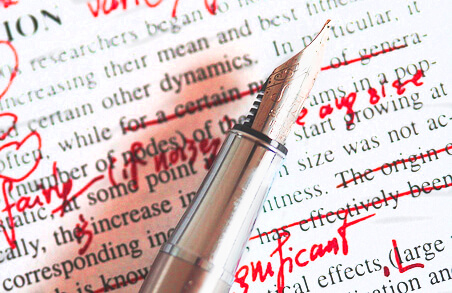 I’m a firm believer in independently publishing my novels. I enjoy the marketing process since it involves getting out and meeting people. Being a working artist for the past twenty years or more, I find working a table at a convention or being in a booth at a fair to be a normal state of existence. I would miss the experience if I allowed others to do this for me. There is nothing like the personal touch when it comes to learning what your readers like (or not) about your work. Other pluses include retaining complete control over my writing and gaining the maximum profits on my sales. Part of being an Indie Author is making sure your manuscript is the best that it can be before you release it into the world. Instead of accepting the cover art the publishing house insists upon and using their editor, I take the responsibility to hire people to do the work myself. It can be costly, a good editor doesn’t come cheap (nor should they), but in the end, I feel that keeping control of my work is the better end of the equation. Self-editing can help to reduce the cost of an editor and proof-reader since they will not have to do as much work. During my self-edit process, I use beta-readers to provide insight into the content. I follow with editing software to catch general grammar, punctuation, passive voice, and adverbs. I spend far more time rewriting and editing a work than I spend in the rough draft. However, there is more I do during self-editing than rely on machines. Below is a checklist I use to polish a novel, novella or short story before I send a longer manuscript to an editor and proofreader or submit a short story to a magazine. 1. Do not express emotion via mannerisms of punctuation, typestyles, and sizes. “The horse…is…DEAD!” doesn’t make an equine any more expired than “The horse is dead.” 2. Remove mannerisms of attribution. People speak. They do not wheeze, sigh, laugh, grunt, gasp, snort, reply, retort, or exclaim, ect. 3. Do not use similar names for your characters, it causes confusion with the reader. You should also avoid using the same first initial in names of your main characters. 4. Show, don’t tell. If Alex pounds on the door and demands entrance. You do not need to tell the reader he is angry. 5. Along with showing instead of telling, you do not need to explain the emotions of the characters. Let their actions do it for them. Alex pounded on the door. “Let me in!” instead of Alex was angry at Mary. Furiously, he pounded on the door and shouted at her, “Let me in!” 6. Avoid cliches. This means not only common words and phrases but also cliched situations. Examples: Starting with your character waking up. Having a character look in a mirror so you can describe them via their POV. Having future romance partners bump into each other on their first meeting. It has all been done before. Don’t repeat history. 7. Remove stage directions. You don’t need to describe every single action of all the characters in every scene. Leave some of it to the reader’s imagination. We live in an age of television and movies. The reader’s mind has been trained to use similar images when they read about a place or situation. There is no need to describe it as much as authors did 100 years ago. 8. Use adjectives sparingly. Instead, find a strong noun and verb to convey the same information. Keep it simple. 9. Remove the word “that”. It adds extra weight to your sentences without giving any substance. 10. Avoid the words “up” and “down”. Only use them when needed. He started [up] the car. She walked [down] the street. 11. Do not be redundant. Do this in content with your ideas, but also in your sentence structure. 12. Choose regular words over the more unusual. Don’t show off your vocabulary. Make your content and ideas shine instead. Don’t get in the way of what you are trying to say. 13. Start the action right at the beginning. Don’t start it after a couple of pages of descriptive scene setting. Just get to it! There is much more to self-editing, but this checklist is a place to start. Don’t let revision and editing daunt you. While it is a huge task, in the end it is rewarding to know you have polished your manuscript and made it the best you can.  As I write this, I written a scene I’ve had in mind for what could be a decade. I know the end has been with me since I began writing my Highmage’s Plight Series over twenty-five years ago. So, I think sharing my thoughts on writing the book that had to tie-up a lot of threads, completing what has become a seven book arc is… not a bad idea and it’s fresh in my mind. First, I’m an Indie author. Two of the books in the series were with small presses. I’m still with the first book’s publisher, who accepted that book five years ago. So, in a six year period I will have released the complete series and two companion novels at that point. I drafted a number of those books over the past fifteen years, so my pace is not actually a book a year for the series from my perspective. The other thing about me is that as a writer, I’m a pantser, not a plotter. If I were a plotter, I would have extensively outlined the entire series and likely written character précis. I outlined the first book I ever wrote and haven’t since. In my case, I’ve lived with this story and the characters for a long time… and this is not the only book I’m writing in this particular world, a world I feel I could almost step into. As a pantser, my characters and story have a freedom to express themselves that deepens my appreciation for all the trouble they’re getting themselves into. My characters, in other words, can be rather stubborn and not want to do what I think that should… They often get there way. I know, that’s not great parenting. But, you know, sometimes the kid’s right… and they are growing up. If they weren’t, they really don’t belong in the story... which may be why a kill a number of them off. Eh, thinking about that, no, it's more along the lines of sometimes you need to up the anty on just how bad things are. Being a pantser has also meant as I have written chapter after chapter, which I re-write along the way. I’ve had to go back and search through my other novels, double checking that something I say in this last book is how I wrote it in books three or four, even in the previous book. Remembering what secrets each of my characters know and don’t know about cab be easy to trip up on – just as easy as changing the spelling of a character’s name. (Which, when consist within a book, but not the next – is definitely a dialect issue between the characters… Not the fault of my editor, who prefers plotters to pantsers for that very reason, of so she may have told me a time or two.) Book seven is, not surprisingly, the longest book in the series, which should please my readers. I definitely was not going to allow it to turn into books seven and eight. Not after book six became six and seven, at least. I also have looked at my reviews. Yes, I know I should ignore them, but they’re generally nice reviews and point out things I agree with from time to time. You see, I’ve written an epic fantasy and I have lots of characters, which means my protagonist has less pages in say, book six, than one reader liked, so he skipped past those pages. I also don’t have a critique group and lots of beta (advance) readers to try to keep me “on the straight and narrow.” So, I think about some of things in those reviews. I once read Terry Goodkind’s Sword of Truth Series and one book had his protagonist in it only at the very end. I hated that. I wasn’t that bad in book six of my series, but I understood the reader’s point. Book seven had to have a lot more of my protagonist’s perspective balanced with the other main characters, who needed to come together in the climax. Hopefully I’ve struck the right balance. If I haven’t my editor will soon let me know it, or an advance reader or two or three. Which means I am also is sticking to my planned scheduled. The final book will go through a longer review process before I publish it in 2017. I’m actually ahead of schedule on finishing book seven, which I want to make as certain as I can has the best climatic ending I could envision and write. So, those are my thoughts as I complete my seven book arc, which is a major milestone in my writing. Now I just have to complete the other series I've started or plan to. That should keep me busy... which is the last lesson. Writing doesn't necessarily end when you first that novel, trilogy, or series.  Book Name: Journey to the Center of the Earth Author: Jules Verne First Published: 1864 Jules Verne was a 19th century French novelist and poet and is often referred to as the “Father of Science Fiction”. He was born in 1828 in Nantes, France. He trained to be an attorney like his father before him, but Verne was more interested in becoming a writer. Once he graduated from his law studies in Paris, he embarked on a journey of writing several very unsuccessful plays. One day, he met editor Pierre-Jules Hetzel and allowed the editor to help him overcome his natural tendency to dive deep into the scientific and to focus more on the people of his stories. The combination of the two men was like dynamite and many classic science fiction and adventure stories were born from the result. Titles such as The Mysterious Island, Five Weeks in a Ballon, Twenty Thousand Leagues Under the Sea and From the Earth to the Moon were a direct result of their collaboration. Verne penned more than 70 novels in his lifetime and is the second most-translated author in the world, succeeded only by Agatha Christie. “I seriously believed that my last hour was approaching, and yet, so strange is imagination, all I thought of was some childish hypothesis or other. In such circumstances, you do not choose your own thoughts. They overcome you.” – Jules Verne, Journey to the Center of the Earth Journey to the Center of the Earth starts in the year 1863 in the home of Professor Lidenbrock. Bear in mind, this makes this a contemporary science fiction tale of its day and not a historical one since the book published in the following year. The good professor has purchased an original runic manuscript written an Icelandic King. It contains a coded note written in runic script. His nephew Axel assists him in translating the message into Latin, but keeps the translation away from his uncle due to the fear of what his uncle might do with the information, but after two days he breaks his silence. The ancient note written by the Icelandic alchemist Arne Saknussemm claims to have discovered a passage to the center of the Earth via a cave in Iceland. Being of adventurous spirit, Professor Lidenbrock wishes to repeat the journey of this ancient Icelander and leaves for Iceland forthwith. Axel joins him against his better judgment and complains the entire way, explaining his fears of descending into a volcano and trying to come up with reasonable theories why the journey should not take place. His uncle refuses to listen and the pair travel to Reykjavik, Iceland. There they hire a guide, one Hans Bjelke, and the three continue overland to the base of the great volcano. There are three craters in the volcano. According to Saknussemm’s note, the passage to the center of the Earth is the crater that feels the shadow of a nearby mountain peak at noon in the last days of June. Axel rejoices when the weather remains cloudy and no shadow can be detected. If the bad weather continues, their party can turn around and return home. However, on the second to last day the sun comes out and the shadow falls into the correct crater. Lidenbrock leads the way with Hans and Axel in tow, into the depths of the Earth. The three adventurers have a series of misadventures, usually it is Axel who suffers the most. When they take a wrong turn and run out of water, Axel almost dies. He also wanders off and gets lost from the trio, only to be found due to an acoustic phenomenon that allows him to speak with his uncle from miles away. As the trio continue to descend, they discover a vast cavern with electrically charged gas at the ceiling and filled by a subterranean ocean. It is surrounded by a rocky coastline of petrified trees and giant mushrooms. The professor names the ocean after himself, as any Victorian explorer commonly did during these times. The men build a raft from the petrified trees and set out over “Lidenbrock Sea”. The water has ancient Ichtyosaurus and Plesiosurus and part of the coastline are full of living prehistoric animals and insects. A lightning storm threatens their passage on the sea and shipwrecks the trio back onto the coast. There, Axel discovers an over-sized human skull. Later, Professor Lidenbrock claims to have seen a 12-foot tall human watching a herd of Mastodons. Axel and Lidenbrock have a lively argument about the human, not knowing if this was a true man or a man-like ape. The three decide it is better to stay away for their own safety and continue to follow the trail left by Saknussemm. The trail ends at a rock-slide. Unable to dig through the granite, they use gun cotton to blast the passage in the hope that they can find their way to the center of the Earth. When the blast occurs, little do the adventurers realize that a vast bottomless pit is all that is behind the rockslide. The sea rushes in to fill the new gap and the trio is swept away at breakneck speed inside the volcanic chimney of water and magma. You’ll have to finish the book to find out the fate of our trio of intrepid explorers. This classic Jules Verne novel sometimes gets a bad rap. Some find it tedious or long-winded due to Verne’s hard science approach and the fact that the science is based on centuries old ideas that are extremely out of date and no longer considered true. The Victorian ideas come across as sexist and imperialistic to modern sensibilities. Yet, this science fiction novel was ahead of its time and in many ways is as impressive today as it was when it was written. Verne has a timeless style to his writing that gains him fans even today. Some care needs to be taken when finding a copy of the book to read. Remember, this book was originally written in French. All the English versions are translations and unfortunately some are better than others. In the 1960s certain translators took liberties with the story, changing it in subtle ways. The story is basically the same, but many details have been changed. You can tell if you got one of the lesser translations by the names of the characters. Axel becomes Harry. Professor Lindenbrock becomes Professor Von Hardwigg. Curiously, Hans remains Hans in all editions! However, do not fear, either as Axel or Harry, the boy is still in need of smelling salts to aid his comical fainting and hysteria.
FSFS members should use this form to sign up to a WCG.
A new cNote shop with a fantastical theme. Profits go to the FSFS!
An FSFS-only forum to discuss writing mechanics.
The FSFS Review Board is open! All WdC members can view the list on the group homepage, "Fantasy and Science Fiction Society" . FSFS Members can view the list from the homepage, Review Board page and the Hub. To post on the board you need to review at least one other item on the list.
If you are not already a member and are interested in fantasy and science fiction writing, please read through the group homepage and apply using the application form. The only pre-requisite is that you have a fantasy or science fiction item in your portfolio. If you want to advertise in the FSFS Newsletter please contact me, Matt Bird MSci (Hons) AMRSC   . .Vote I am pleased to announce that "Invalid Item" by A Guest Visitor won Best Submission for "August 2016" . Katzendragonz has won an FSFS merit badge! Use the poll below to vote for your favourite submission from this month. Thank you to all the members who submitted articles to the Newsletter. If you submitted an article that wasn't included, don't be offended. I can only fit so much in the Newsletter. Please submit it again when I send the call out for articles. Please comment on this Newsletter if you enjoyed it, or if you have any suggestions for future editions. |
 un:
un:  View Portfolio
 Visit Notebook
 Send Gift Points
 Awards
 Badges



 Community Feed
 Puzzle Hub
 General Discussion
 Sponsored Items
 Book of Trinkets
 Static Items
 Books
Books Groups
 Interactive Stories
 Audio
Audio Campfire Creatives
 Community Notes
 Crossword Puzzles
 Documents
 Folders
 Images
 In & Outs
 Madlibs
 Photo Albums
 Polls
Polls Product Reviews
 Quizzes
 Survey Forms
 Web Pages
 Word Searches