%%USERNAME%%    %%ACCWORDS%% %%ONOFF%% |


 The FSFS Newsletter is written by FSFS members covering everything Fantasy and Sci-Fi |
The "Fantasy and Science Fiction Society" welcomes you to  Welcome to the MONTH edition of the Newsletter. Written by members of the "Fantasy and Science Fiction Society" for all of Writing.Com, this month we are focusing on Poetry for National Poetry Writing Month. Contents 1. Introduction 2. Scifaiku: A Poet's Journey 3. I am the Eternal Soldier 4. Sales Roller Coaster: Author Frustration 5. Book Review: Flowers For Algernon 6. Advertisements 7. Vote  The biggest event of April has already been. Writing.Com Live was back with a talk show hosted by me and with guests A E Willcox  , J. M. Kraynak , J. M. Kraynak  and Dragon is hiding and Dragon is hiding  . The guests each represented a group of their choice: "Sisco's Good Deed Group" , "The Power Reviewers Group" and "TLC & Simple Habit Challenge Cheer Group" , respectively. If you missed the live event, don't worry! You can watch the whole show On Demand at "Invalid Item" where you can also view all the audience participation posts. . The guests each represented a group of their choice: "Sisco's Good Deed Group" , "The Power Reviewers Group" and "TLC & Simple Habit Challenge Cheer Group" , respectively. If you missed the live event, don't worry! You can watch the whole show On Demand at "Invalid Item" where you can also view all the audience participation posts.Highlights include the soon to Pulitzer Prize winning Three Word Mayhem story created by the four of us, 'I once saw a flying computer hurled by Matt into the pool of dead computers'; my pronunciation of the word 'xrbfoofk' in Kit's Magic Words flash story; a wonderful reading from 1984 by A E Willcox; and many, many more bits that you need to watch the show to see!   One Friday afternoon, I was sitting on a bench at a local science fiction convention with little to do for the next few hours. I learned that there was to be a workshop on how to write scifaiku poetry put on by the Science Fiction Poetry Association. I had never heard of scifaiku before and was intrigued by the idea. I ended up attending the seminar and this decision changed my views on poetry. As it turned out, I was the only student at the workshop along with a couple of magazine editors that published this form of poetry. The instructor taught how to brainstorm ideas for your poems and the elements that were needed for proper scifaiku. I not only became hooked on the poetry form, but I ended up publishing the poem I wrote in that workshop several months later. Defining Scifaiku Scifaiku is minimal in execution and elegant, similar to haiku. It is distinctive since it contains the human insight, use of technology and vision of the future that is natural in science fiction, but delivers it in three short poignant lines. The form is inspired by the principles of haiku, but it deviates due to its science fiction theme. The standard length of a poem is seventeen syllables. While traditional haiku has three lines of five syllables, then seven, and then five again, scifaiku does not need to follow this structure. The structure is merely a guideline in Scifaiku and the poet can write more than seventeen syllables if they wish. This is due to science fiction having technical terms that make the shortness of traditional haiku difficult. How to write Scifaiku Scifaiku contains certain theme elements, much like haiku does. In traditional haiku, the poems are about nature. In scifaiku, the poems are about science fiction. Each poem needs to evoke a science fiction premise along with its own observation of that idea. For instance, you might include a technological word like space, laser, nebula, biofeedback, or teleport. Technical words often can be long and have many syllables, but this is allowed in scifaiku. In traditional haiku, a word is included to indicate the season or time this poem is taking place in. I was taught in the workshop to also include this element in the scifaiku poem. It is not a requirement, but I am finding that including it makes my poems stronger. I tend to not use seasonal words, but I do like to use words that give a sense of the time. Haiku and scifaiku both involve creating a sense of a single moment in time and space. You need to discover that tiny moment and the feelings that it invokes within yourself. Scifaiku is about creating a tiny bubble in the universe that makes one consider the human condition. Brainstorming Techniques When I am ready to create a limited series of scifaiku poems, I take out a notebook and create three columns. One column is where I write down ideas of science fiction concepts I might want to compose poems. The second column I list moments of time. The final column is where I write down ideas of feelings that could be evoked. From these lists I begin to mix and match the three concepts to create different scifaiku poems. I pick the three best to create a sequence to send to magazines. Each of the three scifaiku poems can stand on their own as singles, but together they touch on a theme that unites them. These clusters of poems are what end up publishing. Scifaiku is such a short form of poetry that most magazines appreciate having a couple of them together to flesh out a single presentation page. Where to Submit Scifaiku I tend to write scifaiku in a small series when I prepare them to be submitted to magazines. Each of the poems is related via subject matter and work together, but also can stand separately. Each series is three to five poems in length. This gives the magazine a little more to bulk out on the page since scifaiku is such a short form. Most science fiction magazines do accept poetry submissions, but not all will accept scifaiku due to its brief format. You should read the magazines you wish to submit to and learn their publishing guidelines before sending in your work. Awards for Scifaiku There are few awards for scifaiku. It is a rare form of science fiction inspired poetry and often will not be eligible for recognition in regular poetry awards. However, The Science Fiction Poetry Association gives out a “Dwarf Star Award” for the best short length speculative poem each year which does include Scifaiku. The nominees for the award are published in their annual anthology, Dwarf Stars. Joining the Science Fiction Poetry Association allows you to nominate and vote for the award in addition to giving you a copy of the anthology. Last Word Scifaiku is a poetry form that I’ve grown very fond of. It is my hope that more people will begin to write it and that it will flourish as an art form. From a single seminar on a lazy Friday afternoon, I have been transformed into a poet of sorts and my life has become all the better for it. For a collection of Spirit's scifaikus visit "Invalid Item" by A Guest Visitor  I have traveled ancient portals, through times of love and hate, And I have fought on fields of battle, and shared Achilles’ fate. I held the pass at Thermopayle, with Leonidas at my side, And when the Persians won the day, the Gods of Sparta cried. I stood with Alexander, on the shores of distant lands, I have held the lives of many, in my coarse and bloody hands. I marched the roads with Caesar, and by his side I cried, When Brutus thrust his fateful blade, and Caesar’s vision died. When barbarians stormed the gates of Rome, and plundered Caesar’s land, I stood my post on the burning walls, a weapon in my hand. I have traveled ancient portals, through times of fear and more, For I am the eternal soldier, doomed to fight in every war. I fought with a man of royal birth, King Richard was his name, We held the walls of Jerusalem, and earned eternal fame. I bled with Wallace at Falkirk, and King Henry at Agincourt, For I am the eternal soldier, doomed to fight forever more. I sailed with Spain's Armada, on the rough and windy seas, In our quest for vengeance, to bring Britain to her knees. I stood with a man called Washington, and without a soldier’s fee, For we fought for a patriotic cause, to make his country free. I have traveled ancient portals, through times of strife and dread, I held the hand of Antoinette, when she lost her pretty head. I stood with Lee at Gettysburg, and with Teddy on San Juan Hill, For I am the eternal soldier, with a calling to fulfill. I fought in America’s western lands, to keep my people free, From the roaring guns and slashing sabers, of the US Calvary. I was with the French at Chateau Thierry, and the Germans at Verdun, And I stood on the beaches of Normandy, and watched the Nazis run. With the Marines on island sands, I stood my ground and bled, And at the Chosin Reservoir, another life was shed. I fought against the Viet Cong, in the Tet of 68, and against the American’s at Khe Sanh, where I met a bloody fate. I have traveled ancient portals, through times of fear and more, For I am the eternal soldier, doomed to fight in every war. "I AM THE ETERNAL SOLDIER " by Oldwarrior  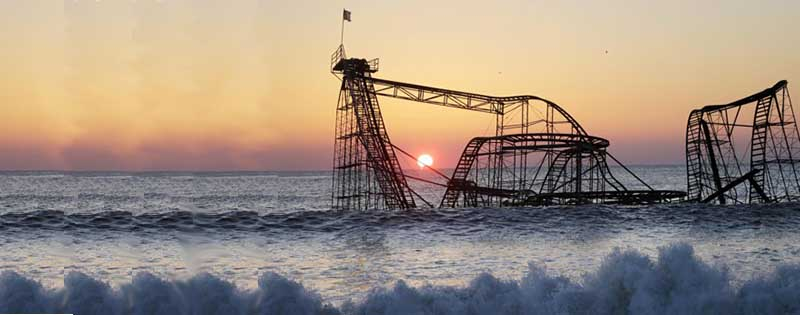 This month I’m writing an article about a reality that I’m feeling right now as an author as my tenth novel is about to come out. It’s the sales roller coaster. The plunging sales downward may not make you scream, well, maybe it sort of does… It’s not exactly that kind of ride, though. I’ve taken up the litany I first heard from best-selling author Kevin J. Anderson years ago, “Don’t give up your day job.” Getting published doesn’t mean a lucrative well-paying career. I read recently that 5% of published authors make 95% of all the money reported from book sales. The bottom of that 5% makes $15,000 a year from writing. The top 1% makes real money. Most writers don’t make a profit from the written word. So, making a profit is its own benchmark of success. So, back to the roller coaster feeling that I find rather frustrating… I’ve met authors who I suddenly stop seeing at sci fi/fantasy conventions. Sometimes that’s because they’re promoting their books far and wide, but when a regular at a local con stops coming by that may telegraph where they are in the sales roller coaster. When you’ve suddenly sold a good number of books and touched or nearly touched that 5% of authors’ benchmark, or reached the profitable year benchmark, you think “I’ve made it” as if your sales will stay that way forever. But the reality is there are usually peaks and valleys. I’ve been feeling the valley for a number of months and have cut back on my writing costs for the coming year to compensate. There are times when being able to declare a loss on your taxes isn’t a bad thing -- that is if you have savings in reserve to invest in websites, editors, cover art, tables at book festivals, conventions, writing workshops, and other marketing costs authors typically incur annually. Another reason that “Never give up your day job” is really good advice. The roller coaster is… frustrating. As an indie author, I watch my sales on Kindle and elsewhere every day, which is likely way too often. So I know exactly how much in royalties I’m earning each month. Dropping from profitability or anything near the top 5% level who make nice money to days of no sales or very few sales is... painful to live through. However, I remind myself the ride isn't over, it's only getting started. My roller coaster in sales earned me my place at my real benchmark last year, being able to join SFWA (Science Fiction Writers of America), what I consider the mark that I'm now a recognized professional in the field. My plan to making it as a professional sci fi and fantasy writer is simple. Keep writing and publishing, and write in series (which seems like it can generate the most buzz and sales in the long run, better than my twitter account can, anyway). My top selling books are epic fantasy and I’ve a new epic fantasy book coming out real soon. It looks like my sales are stable (though frustratingly lower than I’d like at the moment) until the roller coaster ride takes me to the next turn and to the next upward section of track… sometime soon. It makes for a frustrating reality since although I live to write I also need to write to live. But here’s why I’m writing this article today. Knowing this is a roller coaster, understanding the reality of this life… we have to remind ourselves that perseverance and commitment to the process will bring success – if we do our best and continue to with every book we write. It’s unlikely that I’ll ever be among the 1% of authors who make the really big money, but I don’t do this for that kind of money… I do it because I’ve stories to tell that I want to share… and earn some bucks to supplement my income, so I can promote my books at conventions, network, and pay for that next cool book cover. So, welcome to another aspect of the frustrations of being an author. Or the fun… after all, this is a roller coaster ride. "Sales Roller Coaster: Author Frustration" by Highmage - D.H. Aire   Book Name: Flowers For Algernon Author: Daniel Keyes First Published: 1966 Hugo Award for best short story (1960) Joint Nebula Award (1966) Nominated for Hugo Award as novel (1967) Lost to Heinlein’s Moon is a Harsh Mistress Daniel Keyes first job as a teenager was to join the U.S. Maritime Service as a ship purser. When he left the sea, he continued his schooling and gained a B.A. in psychology and then a Master’s in English and American Literature from Brooklyn College in New York. Keyes became a teacher for the New York City public school system and taught English and creative writing. Later he would go on to teach creative writing at Wayne State University in Ohio and become a professor emeritus there in 2000. His original university, Brooklyn College, also awarded him its “Distinguished Alumnus Medal of Honor.” Keyes was elected the SFWA Author Emeritus in 2000 for making a significant contribution to science fiction and fantasy, primarily as a result of Flowers for Algernon. Keyes died in his home in 2014 at the age of 86. It was due to complications from pneumonia. He is survived by his two daughters, Leslie and Hillary, his wife Aurea Georgina Vazquez having died the year before. His writing career began a few weeks after his graduation from Brooklyn College. Keyes was hired by Magazine Management, a publishing company owned by Martin Goodman. Since he had some experience with science fiction, he eventually became the editor of the pulp magazine Marvel Science Stories, a precursor of the now famous Marvel Comics. When Goodman discontinued the pulps in favor of paperback novels and men’s adventure magazines, Keyes was moved to Atlas to become an associate editor under Stan Lee. In 1952, Keyes was one of several staff writers (officially known as editors) who wrote for the comics. He had two science fiction stories published in Journey into Unknown Worlds along with art from Basil Wolverton. Flowers for Algernon began as a story proposal for the comics, entitled Brainstorm, but Keyes felt that this story had more depth and was more literary based than comic based. Instead, he wrote it as a full short story and it was published in 1959 by The Magazine of Fantasy & Science Fiction. He won the Hugo Award for this short story. In a few years, he would expand the short into his first full-length novel to publish in 1966. The novel has since been adapted into several movies, including the famous version “Charly” that gave Cliff Robertson the academy award for best actor. The novel was nominated for a Hugo and it won a Nebula Award. Keyes published additional books: The Fifth Sally, The Minds of Billy Milligan, The Touch, Unveiling Claudia, and the memoir Algernon, Charlie, and I: A Writer’s Journey. Anyone who has common sense will remember that the bewilderments of the eye are of two kinds, and arise from two causes, either from coming out of the light or from going into the light, which is true of the mind’s eye, quite as much as of the bodily eye. — Plato, The Republic Charlie Gordon, a thirty-something man, suffers from phenylketonuria and has a modest IQ of 68. He works as a janitor at a bakery which allows him enough money to afford an apartment and stay out of the state institution. Charlie has ambition. He takes courses to learn to read and write at the Beekman College Center for Retarded Adults. His teacher is young and attractive Alice Kinnian. Two medical researchers look for a human subject to test a new surgical technique to raise biological intelligence. The first experiments performed on a mouse were successful enough that they felt it was time to take the next step in their studies with a human. Based on a recommendation from Miss Kinnian, Charlie is chosen to be that test subject based on his motivation to improve his condition. Charlie’s operation is a success, much like that of the mouse Algernon. His IQ soars to 185 and his dream of understanding the world around him as a normal human becomes a reality. As the months pass, life changes dramatically for Charlie. His relationships take on new meaning as he realizes the guys at the bakery “liked” him because he was a butt for their jokes. Now they fear him and demand that he be fired from his job. The scientists who performed the surgery think of him as another test subject, more a mouse than a human. Charlie confronts them with anger at a cocktail party. He also begins a romance with Alice Kinnian, but due to lack of intimacy with her, he rebels and starts a purely physical relationship with another woman, Fay. When not dousing his soul with alcohol, Charlie continues his mentor’s research. This includes observations of the mouse Algernon, who he keeps at his apartment much like a pet. He discovers a flaw in the scientist’s research. When Algernon begins to behave in an erratic manner, losing his intelligence and then dies, Charlie realizes that he may suffer the same fate as the mouse. Charlie attempts to mend his broken relationships with his parents and sister. He discovers that his mother suffers from dementia and his sister Norma is caring for her. Norma had hated Charlie as they were growing up, but now has new compassion for him. She asks Charlie to remain with her and their mother, but Charlie declines. Instead, he offers money to help with their mother’s care. The process inverts and Charlie begins the decline back to a man of special needs. Fay becomes afraid of Charlie’s new condition and leaves him even as Alice returns. But will Charlie be able to accept Alice Kinnian into his life now that he is no longer a lauded genius? ##### Like many school children, Flowers for Algernon was required reading in my high school English class. It is a powerful book that left a lasting impression on me. I was made aware that science fiction did not need to be “pulp” to be part of the genre. There is room for sci-fi to be literary and comment on the human condition. The novel has gone on to sell over 5 million copies worldwide. It has inspired many television and movie adaptations, the most famous of which is Charly starring Cliff Robertson who won an Oscar for the title role. It has become a story that is now a part of the pop-culture and has been included in many high school curriculum plans. Yet, there is still controversy surrounding the novel. Some critics of the book find it to be sexually explicit and irreligious. Consequently, the book is occasionally removed from the shelves of schools and put onto “banned book” lists. I view the book as a statement of how the physically and mentally challenged are viewed in the world. I am proud how far their treatment and place in society has come. There was a time not all that long ago when such children and adults were locked away in institutions or treated with derision when kept with their families. Today, I feel that much of this stigma has been removed and that people are treated with more dignity and understanding. And what of the idea of augmenting human intelligence that plays a pivotal role in the novel? When Daniel Keyes was asked when he thought such a process might come to pass, his reply was “Perhaps in 30 years.” Science fiction may very well become science fact in our lifetime.
The April round of Three Prompts is open. The deadline for entries is the 30th of April
FSFS members should use this form if they wish to sign up to a WCG. Note: The long novel WCG is currently full.
A new cNote shop with a fantastical theme. Profits go to the FSFS!
An FSFS-only forum to discuss poetry.
The FSFS Review Board is open! All WdC members can view the list on the group homepage, "Fantasy and Science Fiction Society" . FSFS Members can view the list from the homepage, Review Board page and the Hub. To post on the board you need to review at least one other item on the list.
If you are not already a member and are interested in fantasy and science fiction writing, please read through the group homepage and apply using the application form. The only pre-requisite is that you have a fantasy or science fiction item in your portfolio. If you want to advertise in the FSFS Newsletter please contact me, Matt Bird MSci (Hons) AMRSC   . .Vote I am pleased to announce that "Invalid Item" by A Guest Visitor won Best Submission for "March 2016" . Katzendragonz has won an FSFS merit badge! Use the poll below to vote for your favourite submission from this month. Thank you to all the members who submitted articles to the Newsletter. If you submitted an article that wasn't included, don't be offended. I can only fit so much in the Newsletter. Please submit it again when I send the call out for articles. Please comment on this Newsletter if you enjoyed it, or if you have any suggestions for future editions. |
 un:
un:  View Portfolio
 Visit Notebook
 Send Gift Points
 Awards
 Badges



 Community Feed
 Puzzle Hub
 General Discussion
 Sponsored Items
 Book of Trinkets
 Static Items
 Books
Books Groups
 Interactive Stories
 Audio
Audio Campfire Creatives
 Community Notes
 Crossword Puzzles
 Documents
 Folders
 Images
 In & Outs
 Madlibs
 Photo Albums
 Polls
Polls Product Reviews
 Quizzes
 Survey Forms
 Web Pages
 Word Searches