%%USERNAME%%    %%ACCWORDS%% %%ONOFF%% |


 The FSFS Newsletter is written by FSFS members covering everything Fantasy and Sci-Fi |
The "Fantasy and Science Fiction Society" welcomes you to  Welcome to the October issue of the FSFS Newsletter. Written by the "Fantasy and Science Fiction Society" for the WdC community. You know what October means? Halloween is just around the corner. And that means Halloween Contests and activities. Contents 1. Month Summary 2. September Flash Fiction Challenge 3. Participation with Trepidation 4. Flash Thoughts on Flash Fiction 5. Book Review: Neuromancer 6. Advertisements 7. Newsletter Challenges  September went by in a flash. Well, it did for those FSFS members who entered the September Flash contest and wrote a new flash fiction story everyday for a month. I judged the 30 Dailies and sent the list off to our judges. In less than a week's time 30 will be down to 5 finalists. Then it will be up to you, the voting public, to decide the ultimate winner. ** Image ID #2055618 Unavailable ** [From the editor] Uncommonspirit's stats Entries: 30 Lates: 2 (out of 3 allowed) Wins: 5 I'm a writer without an extensive catalog of stories. I consider myself to be a science fiction and fantasy author, but the bulk of my published stories are creative non-fiction and my first novel on Amazon is a regency romance. I continue to work on my opus, a steampunk science fiction series, but I have little to offer readers in my chosen genre. I'm a member of the Fantasy & Science Fiction Society and a contributor to our newsletter. I stumbled on the Flash Fiction Challenge on Day 2 and had an impulse to try it. I've never written stories via a prompt before. I could never get my head around the idea. The September Flash Fiction Challenge offered me an opportunity to give this method of creating short stories a try. Once a day, I used a prompt to create a flash fiction story. The Day 7 challenge, that of writing a flash fiction for a child, stumped me. I have never written for children and I felt afraid of the prospect because it was out of my wheelhouse. As I struggled with the concept, I discovered a writing website that helped me create a plot for a child's story. It offered advice on the types of characters needed and even title suggestions. My story "The Princess Who Danced With A Swan" was born that way. After learning how useful the plot generators were for flash fiction, I started to use them more often when the prompt of the day brought on a block. The September Flash Fiction Challenge has been a success for me. In my WDC portfolio, I now have a long string of short stories in my chosen genre. It will be content to draw upon when I have a magazine submission call next spring. While I enjoy winning merit badges as much as the next writer, the real prize of this challenge has been the content that I've created. I no longer feel daunted by writing prompts and realize that there is a vast untapped well of stories within myself that I never realized existed.  [From the editor] PandaPaws Licensed VetTech's stats Entries: 30 Lates: 1 (out of 3 allowed) Wins: 9 In late August I received an email, well I think that is how I found out about this. Matt Bird had sent it about the FSFS September Flash, of which I knew nothing about before hand. Reading through the description my interest grew. Participants needed to write each and every day of September, responding to either a challenge or prompt for the day. I mainly write poems and the short stories I write are few and far between but I decided to challenge myself and join in. It has been one of the best decisions I have made. I joined mainly, to challenge myself. My previous attempts at short stories have been less than spectacular. I tend to use passive verbs and adverbs way more than an author should. My stories seem to have great beginning and then peter out by the time the reader reaches the ending. Certainly, none of my stories fit in the Sci-fi or Fantasy genre. I figured if I wrote thirty new stories I would be able to solve at least one of these problems. Since the first of the month my writing definitely improved. I use more active verbs and I even include conversation in my stories, something I NEVER did before! I develop a beginning, middle and ending for the story and try to keep the action up throughout. I even wrote some Sci-Fi pieces, though I will admit I needed to Google at least one prompt to figure out what to write about. This month showed me I can write based on a prompt, everyday and I can write well. (I won a couple of the daily prizes, yay me!) I recommend for everyone to challenge themselves like this. The experience has been awesome and the fellow participant's encouragement keeps me going. I joined the FSFS recently and have not been that involved, except with my poetry workshop (which will be going again in October). I felt out-of-place to a degree because of my lack of knowledge of the genre but I learned what a great group of writers call this group home and the group gives ample opportunity to learn and ask questions! I can't wait for the next activity! "Invalid Item" by A Guest Visitor  So, here are my “flash thoughts” on Flash Fiction: I first tried my hand at poetry here on Writing.com, which could almost be classed as flash fiction, the way I write it, at least. I’ve a tendency to write flash more as vignettes, so I can get out a story in under a thousand words (or 500 as guidelines require). It was soon after that I began participating in a blogger’s book fair and participating in guest blogs in flash fiction contests. What I soon learned was that by my flash fiction appearing publicly online was classified as “published,” which meant I’d written a couple of really good pieces I could never “sell” as other than reprints. (By the way, publishing on Writing.com in a restricted to members fashion can protect your stories from instantly only being considered for reprint sales – most markets only want original never previously published stories.) Another flash of a thought, I’ve been reading flash fiction via email from Daily Science Fiction (a professional paying market) for a couple of years now. (Also, they don’t charge for the emailed sample stories.) Daily Science Fiction publishes flash fiction almost every day, so if you are looking for a place to sell your flash fiction and build a fan base, you may want to check them out… or just for a read of a quick story. Okay, another thought, more a share to show you what I mean… a quirky bit of flash fiction (falling under the "drat this is now a reprint" category), whic is based on a blogger fair appearance, taking a first line and write flash fiction up to 550 words. It also feels like a nice example with Halloween around the corner. It’ll Take More Than Charm “The third time’s the charm. I had heard it often enough—that or something like it—but it wasn’t until that long summer of ’76 that I actually understood it. I still don’t know if that was the greatest summer of my life … or the worst.” They called it the Bi-centennial. Two hundred years since the Declaration of Independence and our family’s, well, social experiment. We came to America with the sword we promised to keep from all harm as we sought its destined wielder. It was about sixty years before the signs led us to a perfect candidate. Sadly Abraham Lincoln turned out to be a disappointment. Fate led him to practice law, later politics. Law? If at first you don’t succeed… The signs next pointed to a prime candidate fifty years later. He was a freemason, who went into show business. Oliver Hardy had seemed so promising. Sixty years later we found another candidate. I met him that fateful summer. We had moved to Florida, decrying the cold weather of the more northern states. That I was dressed in a giant mouse costume was unfortunate, but it paid the bills. The signs said the candidate would come to a magical kingdom and pay us homage. He sought my autograph before a rather unrealistic looking castle and shook my hand; though, I said not a word… that was against the rules, both the theme park’s and our tenets. I wrote the ward into the letters of my character’s name. The boy looked up and said, “Hey, why did you write that in my book?” I shrugged. You can’t do much more in that costume and it was rather cramped, too. “Common, what’s ‘buy apple’ supposed to mean?” I glanced down at the page. Apple? The lettering shifted, forming a sword, then reshaped to the signature. His parents quickly led him away. I gestured to the owl on the lamp post. “Who?” Him. “Who, Ogre?” Several passersby looked up, frowning. That boy! I had a growing line for pictures and autographs. Aw, hell, I thought, then waved my gloved hands, stopped time and yelled through the stuffy mask, “The boy there with the big ears, you fool!” “Why didn’t you say so?” the not-owl said, flying down and, well, marking him. Pigeon disguised fairies flew across the park as I got back into position. “See he doesn’t get into too much trouble… he could turn out to be a magician like that Houdini fellow who looked promising.” The fairy queen chirped angrily at me. She had ruled him out after he publicly claimed there were no such things as fairies. Time snapped back. “Yuck!” I heard the lad scream, then I was back hugging the kiddies. Several ladies slapped my… I really hated that job. So, we followed him all week and the fairies did the rest. He didn’t grow up to become a magician, but did start reading a lot of fantasy, which was a good sign. That he grew up to become a writer had no few of us debating whether he was the one. Well, until the world came to an end last year and he rewrote us back into existence. The world changed back and people continued blaming a lot on fracking and global warming. Now we are debating when to give him the sword. It’s not like bardic magic is going to work against… well, that’s another fairy tale. Okay, final thought on flash fiction, it can be a lot of fun, too. "Flash Thoughts on Flash Fiction" by Highmage - D.H. Aire  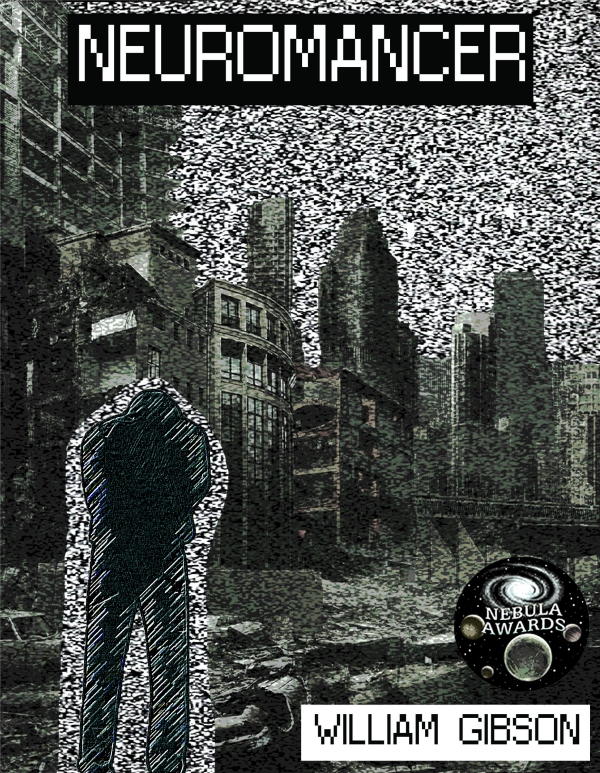 Book Name: Neuromancer Author: William Gibson First Published: 1984 Nebula & Philip K. Dick Awards winner, British Science Fiction Award nominee, 1984. Hugo Award winner, 1985 William Ford Gibson was born in the late 1940s and remained in the United States until the Vietnam War. Like many of his generation, he evaded the draft during the late 1960s by emigrating to Canada. There he became entrenched with the pervading counterculture of its day. Eventually, he settled in Vancouver, British Columbia and became a full-time author. Gibson’s early works are bleak, dystopian stories about the effect of cybernetics and computer networks on humans beings. His short stories are published in popular science fiction magazines. The themes, settings, and characters developed in these stories culminated in his debut novel Neuromancer. This book was unique in its scope and subject matter. It detailed a world that was unimaged at that time, but helped to define the world we live in today. Terms such as “cyberspace”, “matrix” were created by him in the novel and the concept of the internet can find its seeds there as well. Neuromancer was a critical and commercial success and birthed the cyberpunk literary genre. Most of Gibson’s fame resides with Neuromancer and the Sprawl Trilogy it spawned, but he is also known as one of the important developers of another genre, the science fiction genre of steampunk. His novel The Difference Engine, written with co-author Bruce Sterling, is considered one of the primary books that formed the ideas of the genre. It should be read along with the works of Tim Powers, James Blaylock, and K.W. Jeter when reading to understand the roots of the steampunk genre. “All the speed he took, all the turns he’d taken and the corners he’d cut in Night City, and still he’d see the matrix in his sleep, bright lattices of logic unfolding across that colorless void…” ― William Gibson, Neuromancer It is the future and in the dystopian underworld of Chiba City, Japan, Henry Dorsett Case is a man who is unemployable due to the damage to his central nervous system by a powerful drug administered as a punishment for theft. Addicted to drugs and near suicidal, Case canvases the “black clinics” for a miracle, a cure that will allow him to once again access the global computer network in cyberspace, a virtual reality known as the “Matrix”. He is rescued by an augmented “street samurai” who works for an ex-military officer called Armitage. Molly Millions needs Case’s skill as a hacker for a job and she arranges for Case to be healed. It is not long before Case learns that he has been double-crossed, for along with the “cure”, sacs of the poison that had crippled him before have been surgically placed inside his body by Armitage. If Case doesn’t follow through with the job, he will be right back where he started. Case and Molly are joined by a thief/illusionist named Peter Riviera. The team’s first data theft is stealing a copy of the mind of a man named McCoy Pauley. He is a brilliant hacker who was Case’s mentor. They intend to use his electronic mind to aid them in their next job. As they work together, Case and Molly begin to form a romantic attachment. The group next heads to an L5 space habitat known as Freeside. It serves as a luxury resort and casino for the wealthy and as the residence of the powerful Tessier-Ashpool family. The group’s mission is to break into the Villa Straylight and hack into an AI known as Wintermute. What is Wintermute? It is half of a super-AI entity that was designed by the Tessier-Ashpool family to circumvent the Turing Law Code governing AIs to keep them restricted and safe for humans. Wintermute is housed in a computer mainframe in Berne, Switzerland and was programmed with a need to merge with its other half, Neuromancer, which was installed in a mainframe in Rio de Janeiro, Brazil. Should the two halves make a whole, a super-intelligent AI entity would be formed. Case is tasked with entering cyberspace to get through the Turing-imposed software barriers. At the same time, Riviera is to gain the password to the Turning lock code from the current CEO of the Tessier-Ashpool family corporation. It is believed that Riviera will pose an irresistible temptation to her. Once learned, this password must be vocally spoken into a terminal in the Villa Straylight at the same moment when Case gets through the barriers in cyberspace. Will Wintermute find its AI better half to find its destiny or will the law protecting humanity prevail? You’ll have to read the book to discover what happens in the end. ### I first read Neuromancer sometime around 2005. Cyberpunk as a genre had been established for quite some time and the concepts were a known quality, slowly growing more mirrored in the reality of the real world. When I decided that I wanted to take a look at the book that spawned the genre of cyberpunk and the ideas of hacking into computer systems or jacking the human mind into a machine, it made sense to seek out the holy grail of Neuromancer. My first response to the clutter of prose and jargon-heavy “inside jokes” by this self-proclaimed techo-geek, was to roll my eyes and wonder what the heck were the award givers of the 1980s thinking? Why honor this writer of clunky prose who was obviously thumbing his nose at those of us who were not residents of silicon valley. I had forgotten the reason I had gone back to read Neuromancer in the first place. Gibson is not a hacker. He is not an engineer or an apple specialist designing the next hardware leap. Neuromancer is not about technology per se. What is Gibson? An artist that saw the direction that people could be heading and used this knowledge to create a fictional world where humans had an increased dependence on tech, more detachment between people due to constant interaction with machines and a blurring of lines between nations as we all tap into the global inner-world of cyberspace. He created a vision of what cyberspace, artificial intelligence and the merging of man to machine could be. What is amazing is that this one book, Gibson’s debut novel, created a firestorm of inspiration to an entire generation of teenagers, novelists and technologists of the 1980s to think, “Wow, this is unique and too cool.” And then to inspire them to CREATE that world that they had only read about. That my friends, is great literature. Neuromancer, although having dated technology and prose that is difficult to dive into until you get used to Gibson’s style, is a book that should be read. It is a blueprint of the world we live in today and a cautionary tale of what yet may come. Sprawl Trilogy Neuromancer (1984) Count Zero (1986) Mona Lisa Overdrive (1988)
The Halloween Round is open! Big prizes.
Discuss and share poetry in this dedicated forum. Poetry Workshop throughout October!
Help raise funds for the FSFS and other worthy groups.
Win a CSFS (the old version of the FSFS) badge, and soo win an FSFS badge. Other badges are available!
The FSFS Review Board is open! All WdC members can view the list on the group homepage, "Fantasy and Science Fiction Society" . FSFS Members can view the list from the homepage, Review Board page and the Hub. To post on the board you need to review at least one other item on the list.
If you are not already a member and are interested in fantasy and science fiction writing, please read through the group homepage and apply using the application form. The only pre-requisite is that you have a fantasy or science fiction item in your portfolio. If you want to advertise in the FSFS Newsletter please contact me, Matt Bird MSci (Hons) AMRSC   . .Newsletter Challenge  Each month I set a Newsletter Challenge. This challenge is open to the whole of writing.com, so you don't have to be an FSFS member to enter. Invalid Merit Badge #201075 In "September 2015" I asked for your favourite book openings. Only kiyasama entered, and I sent her an FSFS and CSFS badge for the wodehouse challenge (and asked her to comment...). So, this month I'm not awarding a winner. This month's challenge open to all of WdC is: There's been a lot about flash fiction this month. I'm going to set you all one of the challenges I set the September Flash contestants. Write a piece of flash fiction in 10 words or less. Thank you to all the members who submitted articles to the Newsletter. If you submitted an article that wasn't included, don't be offended. I can only fit so much in the Newsletter. Please submit it again when I send the call out for articles. Please comment on this Newsletter if you enjoyed it, or if you have any suggestions for future editions. |
 un:
un:  View Portfolio
 Visit Notebook
 Send Gift Points
 Awards
 Badges



 Community Feed
 Puzzle Hub
 General Discussion
 Sponsored Items
 Book of Trinkets
 Static Items
 Books
Books Groups
 Interactive Stories
 Audio
Audio Campfire Creatives
 Community Notes
 Crossword Puzzles
 Documents
 Folders
 Images
 In & Outs
 Madlibs
 Photo Albums
 Polls
Polls Product Reviews
 Quizzes
 Survey Forms
 Web Pages
 Word Searches