%%USERNAME%%    %%ACCWORDS%% %%ONOFF%% |


 The FSFS Newsletter is written by FSFS members covering everything Fantasy and Sci-Fi |
The "Fantasy and Science Fiction Society" welcomes you to  Welcome to the September edition of the FSFS Newsletter. All the articles are written by members of the "Fantasy and Science Fiction Society" for the whole of the WdC community. Contents 1. Month Summary 2. Writer's Thoughts - Openings 3. Caesar's Guide to Epic Beginnings 4. You're Starting with That? 5. Prep Your Novel For Self-Editing In Scrivener 6. Book Review: Contact 7. Brain to Page results 8. Advertisements 9. Newsletter Challenges  August saw members of the community enter Three Prompts. Don't forget to vote using the "Invalid Item" . September is a massive month for WdC with all the Birthday celebrations. It's also a massive month for the FSFS with the exclusive "Invalid Item" contest. Every day throughout September I post a prompt or challenge and FSFS members write a flash based on it within 24 hours! Day 3 was particularly challenging with the challenge being to write a flash between 100 and 750 words. But, they couldn't use any word more than twice!  So, today I’m going to share thoughts on the importance of a good opening of a story. It may seem obvious, but when you want to sell a story, grabbing the editor’s attention is a must. An editor will often decide in only a couple of lines whether they are need to read any more than that before continuing to either read that story or move on to the next. (Poor grammar also may have a lot to do with that too. So, be sure to proofread that opening over and over as you polish your writing.) The same truth is about grabbing the editor’s interest is as important to keep in mind for your readers. If you grab them at the beginning, you’ve a good chance of keeping them reading and ultimately buying you next book. However, writing that great opening can be tough. There are times you might want to finish your first draft first, then go back and rewrite that opening. When writing a novel I’ve sometimes gone back and added an action packed prologue tying in to the ending to make that opening more gripping. But writing an action scene is just one of many ways of drawing in editors and readers fast. Many years ago I heard a story about how a writer was getting discouraged at all the rejection letters they were receiving as they shopped out their novel. It was when they went to a nearby restaurant, eating alone in a booth in the back that a number of people arrived and sat down behind him and began talking about something that captured his attention. He liked their conversation so much that when he went home he wrote it as the opening scene of his novel, although, it had nothing to do with the rest of his book. Turns out that opening sold the book and a career was launched. Action, dialogue, sometimes an evocative description can offer that perfect opening. Just know there can be great writers’ workshops that will work with you and getting some practice in writing that great opening, too. A local sci fi convention offers such a workshop for about fifteen people a year and I did that workshop twice. Area writers groups may offer similar opportunities. Then again, if you’ve as many favorite book as I do, open to the first page and re-read those authors’ openings. Think about what it was about them that hooked you for all time… "Writer's Thoughts - Openings" by Highmage - D.H. Aire   The Praetorian Guard escorts the Emperor down the stairs, moving to the sides to allow the Emperor to approach. Caesar stands in front of the podium preparing the speech that will forever change the Roman Republic. "Is this thing on?" I had you there for a second didn't I? It would of made an epic opening for a story, but I'm here to discuss beginnings of stories. I thought about the best way to write about a guide for this, and this is actually the third an final version. They say threes a charm so here it goes. Hello everybody my pen name is A.J.Caesar. I want to welcome you to my little world in WDC, and in today's guide I want to explain an unique perspective to writing beginnings to stories. Of course I could put all the things you'll find in other articles using google, but I'm not. I will however promise after reading this you'll get a better idea on how to write better beginnings for all your writing. So let's continue on our epic journey of beginnings. I think the hardest part of being a writer today is we live in a fast changing time. We're on a verge of a global internet network that will unite us all together. We writers must continually change and adapt to the most modern advances in our time. Embracing them and taking advantage of the new tools to write our craft is essential to our success. Modern Tools of Writing For us to understand the best way to write a beginning of a story, we need to look at what the newest trends are in entertainment in our society. Mobile technology is the future of everything in the digital entertainment industry. Movies, music, games and stories are being displayed on tablets and phones by millions across the globe. Why exactly does it seem that mobile technology is in such a boom? The best answer to this question is... Unfortunately we live in a time where everything is fast paced. This means people in general have less time in their lives. They're busy going to college, work, raising a family, and typical household chores. So us writers need to take a new approach in our beginnings. We need to grab our readers as soon as they start to read our story. We need to make them say, "I'll do the dishes after this page." Then they want to read to the end of the chapter, and so forth. Finally realizing they didn't even touch the dishes hours later. This is what every writer should strive for in their beginnings. So how do we do this? I'm so glad you asked. Characters The characters are the heart of every story, without interesting and riveting characters readers will not care to read on. They want a beginning that introduces them to the main characters. The sooner you introduce your main characters the better. Your goal in the beginning is to make the reader interested and even care about your main characters so much so that they want to keep reading more and more to find out what will happen. So a good beginning introduces at least one main chracter. It should set the stage for what will come throughout the story. You need to write the beginning to say, "this is what my story is about, this is why it's interesting, and this is why you need to keep reading." Using an interesting character is the best way to do this. So give them a good name. You want your main characters to stand out the most in your story, the first way to do that is giving them an unique or interesting name. Does that mean my main character can't be called Frank? No. But please remember that we live in a competitive time. Anyone nowadays can self publish ebooks. If you hope to publish online, having unique names could help your writing stand out. It could help you gain a few more readers than the other guy who decides to write about a guy named Frank. Setting The second most important aspect in writing a beginning is setting. You want to create an interesting setting in your beginning. There are several methods of doing this. One method is to launch your characters straight into action using the setting to propel your characters and the readers well into the beginning of your story. I highly recommend this approach. In our modern times this may be the most successful way to start a story. It lets the reader know right off that you're not going to waste their time. You're going to give them a story that will always move forward, fast paced and rivetting. A story that will be hard to stop reading. Another approach is to start with an unique setting. Something unusual maybe the story takes place in some type of exotic jungle, forest, or another world. The more interesting the location in your story the more likely you'll hook readers to keep reading. Does this mean you can't start the story in Frank's apartment? No, but it means if you do, you better make it interesting, give it some great descriptions. Maybe Frank has some interesting pictures on the wall, maybe he is a collector of something strange. Frank could be an amatuer Entomologist who mounts framed pictures of insects on his walls. You could describe one of his unique specimens, maybe Frank is actually in the process of pinning it into the frame as his phone rings setting off the next part of the story. The key is no matter what setting you choose, the more you make it interesting, the more vivid description you use to make it stand out, the more likely your reader is going to want to read more. We live in a time where there is so much bad writing posted online, that people don't want to sort through pages and pages before reading the good stuff. You got to pull your reader into your world, creating a dream-like state for them. This my world, this is my setting, come with me and get lost, escape from your problems by reading this story. Know your Ending In order to know where the best place to start your story, you need to know how it will end first. Does that mean I need to know everything about the ending? No. It just means you need to understand what the general outcome will be at the ending. This is important for writing short stories. You might need to write in a smaller word count so knowing the ending will help you decide where to best start. Understanding the ending may also help you write a beginning. You could start the beginning at a moment close to the end where the rest of the story is written in flashback. This is a great way to hook your reader right in the beginning. It will make them want to read on to find out what happened. Writers need to step outside of the box so to speak. We need to see all the angles and sides of our stories before we can even introduce the reader to our stories. It really can help you as a writer to understand you're a creator of a world where youre inviting others to come visit. How long they'll stay depends on how interesting you make it. I think a good example of understanding this concept is from a movie called 'Next', starring Nicholas Cage. It's about a man who can see his own future only two minutes ahead of time. Throughout the movie he uses this ability by constantly changing his actions in the present to get the desired result two minutes later that he wants. He's able to see his actions before he even does them in the story, so after he sees the future outcome, he'll do the actions needed. In a way we writers have this same power. What we decide to write will alter the future of our stories. Staying ahead of our readers is something we do. Whether it's two minutes ahead of them or two chapters ahead, we need to know the ending to be able to do this in the beginning of our stories. We need to always stay ahead of our readers so that we too can produce the best outcome possible. The Epic Hook Alright we now understand that we need interesting characters, vivid settings and know the basic ending of our stories. But now we need that epic hook. We need to say, "read this first sentence, then this first paragraph and then this first page." We need an initial hook in the beginning to do this. Oh I could list great book openings, list famous authors openings, but I'm not. Instead I'm going to explain what you need to do. Most likely if your reading this guide it can be safe to say you're not famous yet. So why would I list old stories or famous authors opening. You can get that from other articles. Caesar aims to deliver what you actually need to know. The truth is that you're an unknown author you don't have a great fan base of readers like the famous writers of the present or past. You need an Epic hook to gain readers more than they do. Also this is a different time. Why would you even bother looking at an book written years and years ago? That's a waste of time. You need an opening to gain readers in our present time. You need a fast pace opening that promises to deliver the goods to your readers. Does that mean you always should have some great first sentence? No. What it means is you need to start with a first sentence that gets to the point. "Read this sentence, because I promise not to waste your precious time, in this fast paced society we seem to be living." Promise them in the first sentence, and the first paragraph that you have a story that's going somewhere. Make sure you're setting the right tone for your story. Don't give some epic intro only to have the story change after the first page. What ever your story is you need to set the tone for it in the initial hook. Do not dissappoint your readers. What ever you promise keep to what you promise till the end of the story. So what could make good examples of basic first sentences and paragraphs that readers of our current time would find interesting? Well I could go in amazon and look at the best selling books to list a few of the ones I like. First sentnces can be a big matter of opinion. My opinion could be different than yours, so instead of listing other writers first sentences. I'm going to show few of mine to show that I practice what I preach. Are they the greatest first sentences? No, but they get the job done. Baby Steps in Creating Your Opening Sentence. I write to entertain my readers no matter what. I try to promise them that by the end of my final revisions my stories get the story told without wasting time or dragging on forever. When I create a first sentence I don't think of some epic line, that takes me days, months or years to write. I think about my ending. I think where would the best start for the desired word count I want. Then I think what would be a great opening scene to start at that point. Once I have the opening scene. I think of what would make the best first sentence for that opening scene, not for the entire book. Baby steps is my motto. To me the story is what matters the most. I want my first sentence to make the reader read my first paragraph, thats all. Then I want my first paragraph to make them read my first page. I promise the reader right off that every page especially my first page is going to keep them entertained. So here we go. I'm going to list a few of my story openings so you can get an idea of how I approach writing a beginning. I almost feel like a drum roll is needed now, ha. (drum roll begins) The Dragonstone The great Dragon Horn's call to arms shattered Thydreck's dream. He bolted upright on his bed and reached for Valgrind, his sword. The bedroom doors were thrown open, Vizier Agras rushed through. "My lord, we're under attack!" he cried out as he wiped blood from his forehead and closed the doors behind him. "How is this possible? It sounds like the battle is upon our very gate.” Thydrek responded in disbelief. “Why was the alarm not sounded before?" "Sire, we are betrayed. Your brother is at the gates," said Agras. I really was happy with this opening scene. It really sets the tone of the story. The story is fast paced with action. There is a lot going on in the story, and this opening keeps its promise. My Jove Rhea screamed as if a thousand daggers pierced her side. The pain sent shivers of fire up her spine. This childbirth was unlike the others before, it was at this moment she knew what the oracle phophesized would come to be true. Ten dark skinned Dactyl warriors danced in the darkness outside the cave's entrance, each carried a drum that they beat in synchronized rhythm as they danced in circles. 'Boom, boom... boom,boom!' The thunderous thrums sounded like heartbeats as they echoed deep within the cavern. "Cybele! The pain, I can't bare it. Please ease my suffering." Rhea cried out to the mountain goddess, digging here fingers deep in the soil. "Please great mother, I beg of you." The fire in the middle of the cave began to grow, each flame seemed to flow outwards, like reaching hands. The heat emitting from them seemed to caress her skin, soothing and lessening her pain. Her prayer seemed answered at least for the moment. Now this is still a rough draft version of a story I wrote. I like the imagery that it gives the reader though. There's nothing like a good prophecy promised to be delivered in the story too, lol. I think it makes the reader want to read on to find out why this birth is special, what is the prophecy. The Night of the False Light With this being the night of the full moon, Captain King would need to make the sacrifice before the dawn's light. "Captain -- The Blood Queen starboard bow." "Good, light the beacon." "Aye Captain," said Peg-leg Bill; "Ahoy up there! Light the Beacon." Soon after the crow's nest was ablaze. The grapels were thrown from the Blood Queen over to the Revenge and the planks were laid across the sides. First mate Gunney jumped on board of the Revenge and with a bow greeted the captain, "Oi King, the Spanish merchant ship San Antonio port bow." "She's just where we want her," said the captain, clasping a hand on Gunney's right shoulder. "Now we wait for the moment to unleash hell upon her." This is a little unusual perhaps. A single sentence before dialogue. It almost could be considered a foreshadow hook. I think it definitely gets the reader curious to what is the sacrifice. There's nothing like a god pirate story, and this one promises to pack a punch. The Celestial Cup 'OMG! She's doing it again,' Jack thought to himself, as he sat back in the chair behind his desk. Allison sat in the front row of seats directly across from him. She spread her legs even wider exposing the white laced panties under her white skirt. She knew exactly what she was doing as she stared into his eyes. Her eyes were mesmerizing, deep blue surrounded by voluptuos blonde hair. She slowly sucked and licked the tip of her pen she held in her left hand. As if it was some tasty lollipop, his lollipop. 'God,' for a brief second he thought he spoke out loud, realizing it was only inside his head. The effect she had on him was becoming obvious in the ever increasing bulge in his pants. 'Just a little longer, it has to be time.' "Bing. Bing." Readers seemed to really like this opening. This was for a story I wasn't quite sure how to open for it. I think this shows how throwing a little provactive inuendos can hook a reader. It might be a cheap trick, but it works, just try to use this as a last resort maybe, lol. The Forbidden Zone Grub jumped to the shorebank landing in the mud. He looked back, side to side to see if anyone spotted him. 'Stupid Grub,' he thought to himself. There is no one even close to where he found himself standing now. But he'd show them, oh yes he would. You see it all started back... well when he first got his name. He was a homely child being the youngest out of five siblings. It was old Uncle Remus to be blamed, telling him about all those monsters and giants. Got him hooked to books, yes he sure did. He never went outside much, kept his little nose in a book. First they called him bookworm, and when that got old, just worm. Then mean pimple nose Raph ran into him one day when he was walking to the library. "Hey! Watch it... Grub," barked Raph. Then the name just stuck. Pale-skinned and considered short for his age, so the name must of seem fitting at the time. Always and forever the outcast of the children in the neighborhood. But all that would end soon enough. This is another rough draft I wrote this story in a day, but you can see how I put action right into the first sentence. Now there is a good length of back story here, but you can see how I played it off. Just make sure you don't throw in major info dumps in the beginning. The People of the Fog Little did I know that the events that would come into play, would forever change my life. My name is Chance, and chances are you would never meet me, well unless you got yourself lost some where and they sent me out to find you. You see I'm a tracker. Some would say the best tracker in our present times. But I always just say to others, 'It's in my blood.' You see I'm half blooded Cheyenne and proud of it. The chopper landed on the snow cover field. The blades forced the surrounding snow to swirl around creating a circle pattern on the ground. Chance hopped out onto the snow, ducking low. A man in military uniform greeted him. "Sir, my name is Lt. Hodge. I'm with the National Guard. The jeep with the equipment you requested is over here, sir." He pointed towards the green jeep parked a short distance away. "The keys are in the ignition, you're all set to go." "Thanks," replied Chance as he walked away towards the jeep. When he got to the vehicle he did a close inspection making sure everything was in order. The back pack with the gear he always used was all there. Map, gps compass, flashlight with extra batteries, first aid kit, reflective blanket, the tent strapped to the top of the pack and the snow shoes fastened on the bottom was all there. He took off his coat and picked up the mini hydration pack which was sitting next to the backpack. He slung it over his head and strapped the slim pack around his waist then put his coat back on. He sat down and started the jeep. Another rough draft here, but I like the first sentence. It makes the reader wonder what events will come that will change his life forever. Noticed how the first paragaph is in first perspective. That might not be right, but once you know the rules in writing you're allowed to break a few. There is a lot thrown out here, but it definitely sets the story right off for sure. You might not exactly agree with my opinions, these examples, or even like these stories, but I wanted to show you my own style. I wanted to introduce you to my family. Writers stories are like their own babies. We put time into them, let them grow in hopes someday they can stand on their own two feet. The biggest part of becoming a good writer is to be confident in your writing. Not to be afraid if you're good enough, what others think. We all have a right to our own opinions. You'll know when you write better beginnings because it will be when you start to read others and say, "I can write a better beginning than this." "Invalid Item" by A Guest Visitor  Matt has asked us to talk about beginnings. Allow me to list a few beginnings I have found in my reading and tried in my writing. 1). In the beginning --- 2). Once upon a time --- 3). It was a cold winter day in the park. 4). George yell, “Duck, damn it John, you going to get a bullet standing there!” 5). The hills were dark with deep shadows as a creature moved down the slow winding trail. 6). The explosion left everyone’s ears ringing causing us to miss the warning klaxons that the ship was heading for a planet out of control. 7). The breathy hot gusting wind howled and whistled through the dark shriveled brown dead grass. 8). It all started when John walked down the road into the city. Now all of these are good beginnings, but which ones would you rather read? This is the question you need to ask yourself when you start your story or chapter. I don’t know enough about poetry to comment on the opening lines for them. This article is only about short story and novel or novella writing. Now if you have done the title as a hook and your description as a hook now to really keep your reader you need to continue the first sentence as a hook as well. Every new chapter if we are keeping the reader’s interest will be the conclusion of a cliff hanger so again you will want it to be a hook or continuation of the action or situation. We want them to ride a roller coaster of emotions, but in our ride no one wants to go from promise of action to ho-hum. Example: Jonny saw the enemy space ship heading his way and preparing to fire. (End of chapter one.) (Beginning of chapter two.) When Jonny looked again the ship had turned around and left the sector. If we had started chapter two with a space ship chase or a battle then the reader is geared for this, but where we stopped it in the second chapter it feels flat and the reader is left feeling deprived. I had to learn this the hard way. My reviewer on my first book pointed out I cannot have my character going to sleep at the end of my chapters. Then start them with him waking up. I started reading my favorite books and this was a part I picked up that I found was the heart of reader attraction and great writing. Make your beginnings interesting. If you use action, mystery, or beginning of sexual attraction use what would draw your attention as well as what your market your writing for would expect. Let’s dissect the eight beginnings I listed. First what is wrong with one and two? They are old and worn out and used so much that readers associate them with the old worn out stories they went with. Not your new action adventure you just finished. What about number three? Well what is exciting or interesting about a cold day in a park? It is just a background description. The meat or subject of interest is probably two or three sentences later. It could have been placed in a different spot once we got the reader interested. Take number four now we have George and John dodging bullets this leaves it open to a lot of questions that the reader will want to find out. It is a hook as well as generating interest in who is shooting? Why are they shooting? Who are George and John? Why do they have to dodge bullets? Next is number five. This one can go either way it is describing a lot of things that are not that interesting. Now the fact we made the thing going down the path a creature and not a man gives it interest. Still it could be a better says the writer in me. The point with this is too much descriptive on the beginning takes away from the reader interest or drowns out the reader interest also if this is used too much it bores the reader. Number six is adventure again and again it makes the reader ask questions. But if it is too long and too descriptive at the beginning it is only a spark. The next few sentences have to do the work instead of being the descriptors of the scene to make it work correctly. Number seven, this is an example of heavy description as your beginning. Honestly I know a few people who find this type of writing very interesting. At times I do too myself, but as a beginning line I tend to skip it and go looking for the action. However once the action starts and you can use it to build the scene. That is when I enjoy it the most is at that point. I remember one story that had three paragraphs of this type of heavy description just to tell me the sky and grass made me feel like I was young and free. This was beautiful descriptive writing, but boring and a total waste of my time to the reader/reviewer. Remember your market the percentage of people who want a whole book of beautiful descriptive writing in every sentence are a really low percentage. We want action not flowers. Number eight, this was a weak try in one of my stories I thought I would show you it so you can see the plus and minuses to this type of opening. Again I’m using something that has been over used and I didn’t add anything else to make it more interesting. This depends on your next few sentences to do the grabbing and drawing in. It does help you out in scene building and is a great lead into your main scene. These are just a few things I found in my own writing adventure that I have to overcome. The one way I solved this was to write the whole first paragraph as one sentence. (Hey run-on does have some advantages.) ;>) Just kidding! I had to learn to place the beginning action first, then start in on my scene and descriptions. That was my way to solve the beginning problems I started out with as a newbie writer. Never forget to end your chapters with a cliff hanger so you can begin your next chapter with the action we all crave in our escapism fiction. One of the best beginnings to use is sexual attraction between two characters between your action scenes. Oh the interesting fun you can have with this. It really helps with chapters that do not end with a cliff hanger. It will always be a great beginning no matter what genre you write in.  As an advocate for the Nanowrimo writing process, I firmly believe that a writer should write the rough draft of their novel as quickly as possible and let the words flow as they will. The most important thing to remember about writing a rough draft is to finish it without letting your inner editor stop you. Once you finish the rough draft, there is still plenty of work to do before you hand your manuscript to a hired editor and begin the publishing process. Breaking it Down When my rough draft is completed, I break the entire manuscript into scenes. A scene is defined by a single place and time in the story where action or dialog happens. I write a short synopsis of each scene in a paper notebook that I can remember and I color code it with highlighters. I label “good scenes”and “bad scenes”. Each type of scene is color coded with its own hue. I understand that many people like to print out their manuscript and then cut up the paper into scenes and lay this out on story boards in their office. Others take the print out and hole punch the pages to fit in a large Filofax or office binder. The loose pages allow them to move the scenes around in the binder as they rearrange the scenes. While I love to use paper in my writing process, I tend to reserve it for outlining and brainstorming. It gives me a hard copy of what I’m working on that I can use as a referral beside my computer. What I like to do with my scenes is to create a new project file in Scrivener for my revision, leaving my rough draft untouched in its original file. I break each of the chapters into scenes and keep them free of their chapter organization and lay them out in the new project file. Then switch to cork board view and I use the notebook where I wrote down all the scenes and use the meta-data labels to color code my scene files to match what is in my notebook and I type in each synopsis into the scene file’s index card. I like to label each scene with the character POV as well. Naturally, as I go through the manuscript, there are scenes there that I did not remember. I label those as “forgotten scenes” and there are places in the story line that have no scene associated with them and need to be added at a later time. I create a blank scene file, write a synopsis of what needs to be there and label it as a “missing scene”. The Different Types of Scenes Good: These are the scenes you feel great about as the author. They are the cornerstones of your plot and characters. They are scenes that are most likely to remain in the book during the editing process. Bad: These are the scenes that when you reread them you wonder “what on earth was I thinking when I wrote this drek?”. These scenes will either be removed or rewritten during the revision process. Forgotten: These are scenes that you wrote, but don’t really remember. They could be good or bad, but the fact that you did not remember them as you did your break down means that they are not strong and could probably use rewriting. Missing: As you reread your manuscript, you realize that there are plot holes in your story without any scene to describe it. Write what is missing into your list of scenes as a synopsis. There is no scene as yet to cover this bit of information, but later there may be. Building It Up At this point, my manuscript looks like a huge mess. My 30 chapters are now well over 100 individual scenes. Some scenes are a few paragraphs in size, others are twice as long as a full chapter. Due to Scrivener’s meta-data capabilities, it is easy to see in my cork board where the scenes that need work are due to color coding. I focus on all the red “bad scenes” first. I target them for rewrites or removal. I look over the small single or double paragraph scenes and remove them in order to tighten up the novel over all. Because I have set the meta-data to show me the POV of each character, this is a good time to follow each main character via a scrivening. This means to look at only those scenes that the character appears in. I can read this set of scenes and check for the arc of each character, giving small content tweaks to help shape each character into stronger story arcs. As I work, my cork board shifts from a hodge podge of different colors into being all green good scenes”. Finally, I put the scenes into chapters again. Each chapter is a folder in Scrivener’s binder. I move all the scenes associated with that chapter into the folder. Most of the novel will simply go back into their original places, but there are always scenes that end up moving in places that I would have never thought up had I not broken down my manuscript. It is here that I check the chapter’s length and make them all as uniform as possible. Ready For Self-Editing So far, all the work that I’ve done in the novel has been for content. Do the story lines flow? Are the scenes all necessary to the plot of the story? Have I removed all those little transition scenes that sometimes clog the pace of a novel? The novel is still not ready to send to the editor. The copy editing stage still needs to be done. However, that is a story for another day. 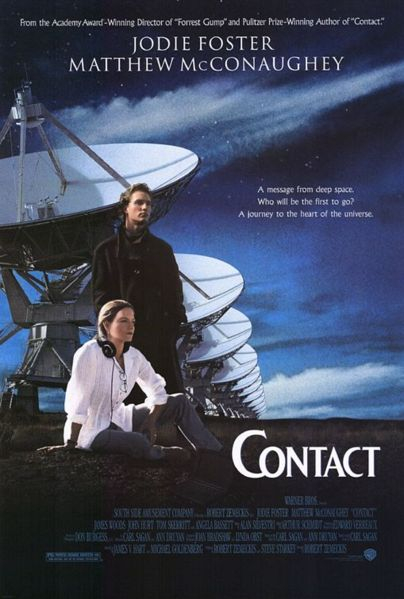 Book Name: Contact Author: Carl Sagan First Published: 1985 Locus Award for Best First Novel in 1986. Dr. Carl Sagan was born in Brooklyn, NY in 1934. He earned bachelor and master’s degrees at Cornell and gained a double doctorate at the University of Chicago in 1960. He became a professor of astronomy and space sciences as well as a director of the Laboratory for Planetary Studies at Cornell University. He would go on to take a leading role in NASA’s Mariner, Viking, Voyager, and Galileo expeditions to other planets. Dr. Sagan received many prestigious awards in his field of study. As a scientist trained in both astronomy and biology, he has made large contributions in the study of planetary atmospheres, surfaces and the history of the Earth. For twelve years, he was the editor-in-chief of Icarus, the leading professional journal devoted to planetary research. He was a co-founder and President of the Planetary Society, a one hundred thousand strong organization that is the largest space interest group in the world. An author or co-author of twenty books, including The Dragons of Eden (1977) which won a Pulitzer. His other books include Contact (1985), Pale Blue Dot (1995), and The Demon-Haunted World: Science As a Candle in the Dark (1996). Sagan produced and starred in the PBS series, Cosmos, which won Emmy and Peabody awards and brought the concepts of science into the living rooms of everyday people. The series was watched by 500 million people in 60 countries. A book by the same title came out in 1980 and was on the New York Times Bestseller List for seven weeks. Co-Producer with his wife, Ann Druyan, Sagan turned his popular novel Contact into a major motion picture of the same name which starred Jodie Foster and Matthew McConaughey in 1977. At the time, Sagan was struggling with bone cancer and two years before his film would be seen the theaters, he lost the battle and passed away. His wife gives the following account of her husband in his last moments in the epilogue of Sagen’s last book Billions and Billions: Thoughts on Life and Death at the Brink of the Millennium: “Contrary to the fantasies of the fundamentalists, there was no deathbed conversion, no last minute refuge taken in a comforting vision of a heaven or an afterlife. For Carl, what mattered most was what was true, not merely what would make us feel better. Even at this moment when anyone would be forgiven for turning away from the reality of our situation, Carl was unflinching. As we looked deeply into each other’s eyes, it was with a shared convic tion that our wondrous life together was ending forever.” “The universe is a pretty big place. If it’s just us, seems like an awful waste of space.” ― Carl Sagan, Contact Fate comes into play in many factors of a life, a planet, and a universe. It was pure luck that the radio telescopes of the Argus project happened to point at Vega at exactly the right time in the night sky. If not, then the scientists would never have picked up the repetition of prime numbers that showed the first sign of life beyond our own planet. This is the theme of Contact, based on Sagan’s studies as an astrophysicist and philosopher, he gives his idea on how our world might reaction to the knowledge of extraterrestrial life. This is the story of Eleanor “Ellie” Arroway, an astrophysicist and radio telescope engineer. She is a scientist working on the SETI project, the search for extraterrestrial intelligence. We learn about her childhood and college years as a curious girl who loses her father at a young age. She becomes a rebel who asks questions about religious contradictions and turns to science as the answer. After college and graduate school, she joins SETI and what is known as the Argus project, a large radio telescope array that is designed to search the universe. Late one night, a signal is picked up. Prime numbers being repeated. The signal is confirmed to be coming from the star system of Vega, twenty-six light years away. Not only prime numbers are transmitted. Two more messages are sent from Vega. One is a playback of the first Earth transmission into space, a speech that embarrasses many, but also a blueprint from a machine, one that is designed to transport people elsewhere. There is much debate about the machine among the political forces of the Earth. There are also religious forces that wish to find answers. Two prominent American preachers, Rev. Billy Jo Rankin and Palmer Joss meet with Eleanor to talk about the religious implications of the message from Vega. As more about the machine’s blueprint is recorded, the more the tensions between the religious and the scientific communities increase. The machine from Vega is built but later is destroyed by a bomb placed on one of its parts. The American who was supposed to travel in the Machine is killed in the explosion. A second machine is built near Hokkaido, Japan. Eleanor is chosen to be America’s representative along with four others from other nations to use the machine to travel. The machine is activated and the five explorers are shot through a wormhole. They enter a sort of cosmic mass transit system, viewing many star systems along the way. Eventually, they end their journey near the center of the galaxy where a docking station is the end of the line. The five humans are deposited on what appears to be an Earth beach. When the others go off to explore, Ellie remains behind on the sand. She is surprised when instead of an alien, she is greeted by her long dead father. Eleanor and her “father”, who is one of the aliens who took the form to help make Ellie more at ease, talk about Earth’s place in the universe and how they traveled to this place. It is suggested that there may be a Creator after all and her “father” suggests that to find the signature of this Creator, she look at the number pi. The five humans return to Earth using the same method that took them to the way station. Instead of the eighteen hours that they knew was their travel time, they are told that they were only gone for twenty seconds. There is no evidence to back up their claim for being gone as long as they had and since the camera Eleanor carried only recorded static, there is no proof of their journey through space. Did Ellie and the others actually travel to the center of the universe or are they having delusions? Is the great machine nothing but a big hoax? Can their story be believed simply on faith? You will have to read the book to find out. ### My first exposure to Dr. Sagan was via his PBS series Cosmos. Decades later I can still hear that lilting melody of its theme like a perpetual earworm. The show introduced me to concepts of science as a child and sparked not only an interest in the planets and the world around me, but in science-based fiction as well. The man had a way of explaining complex subjects in a way that was easy to understand. As I studied science, his name would come up time and again and I realize that his television series and books were only a small part of the amazing accomplishments this man gave to the world. I found the movie Contact to be wonderful in its idea of a great machine that would take us to the stars and that he chose a female protagonist to do the job. In the seventies, this was not a common occurrence. I am not surprised that his first novel won a Locust award for excellence. Contact is a book that I can recommend to people that enjoy “hard science fiction”. While there are some relationships that go on in the book, the focus is on the technology and scientific concepts that make the wonders in the book happen. Brain to Page Results  The results of the FSFS exclusive contest Brain to Page are: The second place article is:
You have won a 25K awardicon! The first place article is:
You have won a 50K awardicon and a physical FSFS merit badge The first place story is:
You have won a 50 awardicon and a physical FSFS merit badge
Vote for your favourite entries to Three Prompts.
FSFS exclusive contest writing a flash every day for 30 days. Daily prizes.
The FSFS Review Board is open! All WdC members can view the list on the group homepage, "Fantasy and Science Fiction Society" . FSFS Members can view the list from the homepage, Review Board page and the Hub. To post on the board you need to review at least one other item on the list.
Check out how many of our members are published!
If you are not already a member and are interested in fantasy and science fiction writing, please read through the group homepage and apply using the application form. The only pre-requisite is that you have a fantasy or science fiction item in your portfolio. If you want to advertise in the FSFS Newsletter please contact me, Matt Bird MSci (Hons) AMRSC   . .Newsletter Challenge  Each month I set a Newsletter Challenge. This challenge is open to the whole of writing.com, so you don't have to be an FSFS member to enter. Invalid Merit Badge #201075 In "August 2015" I challenged you to vote in the Brain to page contest and review the entries. I am pleased to announce the winner (chosen by the random number function on Excel) of the FSFS Merit Badge is.... Tobber   Tobber and sarahsbooks will also receive a reviewing merit badge for reviewing all the entries.This month's challenge open to all of WdC is: What is your favourite opening to a novel or short story. Thank you to all the members who submitted articles to the Newsletter. If you submitted an article that wasn't included, don't be offended. I can only fit so much in the Newsletter. Please submit it again when I send the call out for articles. Please comment on this Newsletter if you enjoyed it, or if you have any suggestions for future editions. |
 un:
un:  View Portfolio
 Visit Notebook
 Send Gift Points
 Awards
 Badges



 Community Feed
 Puzzle Hub
 General Discussion
 Sponsored Items
 Book of Trinkets
 Static Items
 Books
Books Groups
 Interactive Stories
 Audio
Audio Campfire Creatives
 Community Notes
 Crossword Puzzles
 Documents
 Folders
 Images
 In & Outs
 Madlibs
 Photo Albums
 Polls
Polls Product Reviews
 Quizzes
 Survey Forms
 Web Pages
 Word Searches