%%USERNAME%%    %%ACCWORDS%% %%ONOFF%% |


 The FSFS Newsletter is written by FSFS members covering everything Fantasy and Sci-Fi |
The "Fantasy and Science Fiction Society" welcomes you to  Welcome to the April edition of the Newsletter. Written by members of the "Fantasy and Science Fiction Society" for all of Writing.Com.. Contents 1. Introduction 2. The Importance of Reading 3. Color Your Character 4. Nitty-Gritty Writing 5. Reprints 6. Book Review: The Eye of the World 7. Advertisements 8. Challenges  I hope you weren't pranked too hard this April Fools Day! If you were, then recuperate by reading this Newsletter! The Pre-Quill Gala took place last Saturday. Several awards were given out and many more had their finalists announced. Join in the fun of the big Quills Ceremony on Saturday 8 April by watching the live feed featuring Elle   managing a whole load of wacky guests from around the world, including (and I am sure this is what will excite you the most) ME! I will don my suit and lucky socks and attend the biggest event on WdC's unofficial calendar! managing a whole load of wacky guests from around the world, including (and I am sure this is what will excite you the most) ME! I will don my suit and lucky socks and attend the biggest event on WdC's unofficial calendar!Of course some of you may want more Live goodness. If so, then "Invalid Item" is coming back next week. I still need guests, so check out my newsfeed for more info on that or contact me if you're interested.  Many of us know the quote by Stephen King about what it takes to become a writer and reading - “Read, read, read. You have to read widely, constantly refining (and redefining) your own work as you do so. If you don’t have time to read, you don’t have the time (or the tools) to write.” What Stephen King is referring to in this quote is the ability to read outside of the genre we write. It’s a very important key in how we shape our own writing. Knowing how other authors write allows us to see different techniques of our trade. From the Young Adult authors to the experienced (and perhaps no longer with us). There are thousands of authors to choose from. Fantasy writers are a varied lot (myself among them). When we write we don’t always stick to just your normal, everyday wizards, dragons and elves. There are books in the fantasy section you may not have thought of before. For instance: Ray Bradbury, often known for Science Fiction, his book “Something Wicked This Way Comes” is classified as fantasy. Another book most may have thought of as more Science Fiction than Fantasy is “The Strange Case of Dr. Jekyll and Mr. Hyde” by Robert Louis Stevenson. Even Robert Heinlein wrote Fantasy for a magazine known as “Unknown Worlds”. At this point you may be saying to yourself that Science Fiction and Fantasy are two genres that really aren’t that far apart from each other and perhaps you might be right in some ways. Often times both genres take a lot of research into world-building, character development, and sometimes even technical research. But there is one slight difference between the two. With Fantasy you can do almost anything as long as you can make the reader believe it’s possible. Science Fiction you need to make the reader believe there is some kind of Science behind what is happening. Mystery, Horror and Suspense writers also come in an array of sizes. I will mention here that I’ve read some of Stephen King’s books (those that don’t scare me while reading during the day) and found them infinitely profound. I think the first of his I read was “Fire-starter” and I realized that though classified Horror, it wasn’t. I’ve also enjoyed several of Dean Koontz novels and a mystery series written by Shirley Rousseau Murphy (who’s main character is a cat named Joe Grey). Of course I must confess my favorite mysteries of all time are still “Sherlock Holmes” by Sir Arthur Conan Doyle. I believe the writers of these genres are somewhere between Science Fiction and Fantasy. They must delve into a bit of the unknown and fantastic. Researching things which are very real to us. Sometimes the horror or suspense may be more in the realm of fantasy, or they may have been case files of the police - rewritten to exclude names we might recognize. These authors walk a fine grey line to keep us on the edge of our seats. I’ve been discussing Fiction but there are Non-Fiction books such as Biographies/Auto-Biographies, Self-Help, Essays and Journalism. Authors of these books or articles all want to either tell a story or help others with their stories. Some you’ll find on the bookshelf and others in magazines. It can be difficult to find an item in these categories that you enjoy, but they’re out there. I’m partial to stuff on space and the universe myself. And last, don’t cut out Comic Books and Manga (Japanese Comic Books). Both are a large market here in the United States. I’ve found a few I really enjoy, both for the artwork and the story lines. For a comic book produced in the States I’ve started reading one called “Elephantmen”, a postwar science fiction sort of comic book. And with regards to Mangas I have several I enjoy, “Sayuki” being the top runner. I do also try and read different magazines for articles and essays. I’ve recently subscribed to “The New Yorker” and I also read “Writer’s Life”, “Time”, “Natural Geographic” and occasionally “Life”. Each gives me a different perspective upon the world and how authors write. In closing, as Stephen King said, don’t be afraid of reading outside of the genre you write in. It expands your horizons as an author, teaches you different techniques as a writer and at the least entertains you as a person. I have found, as I’ve followed this philosophy, that I’ve become far more open-minded in the kinds of books I’m willing to try to read. I no longer am drawn by just artwork or title in one genre. I’ll browse every one, read the synopsis of story lines and take time to see if a book will interest me. So far the only books I can’t seem to get into are Romance novels but even that may change in time. If you’re interested in knowing about what genres of books are out there, here is a list of them all: https://en.wikipedia.org/wiki/List_of_writing_genres "Invalid Item" by A Guest Visitor 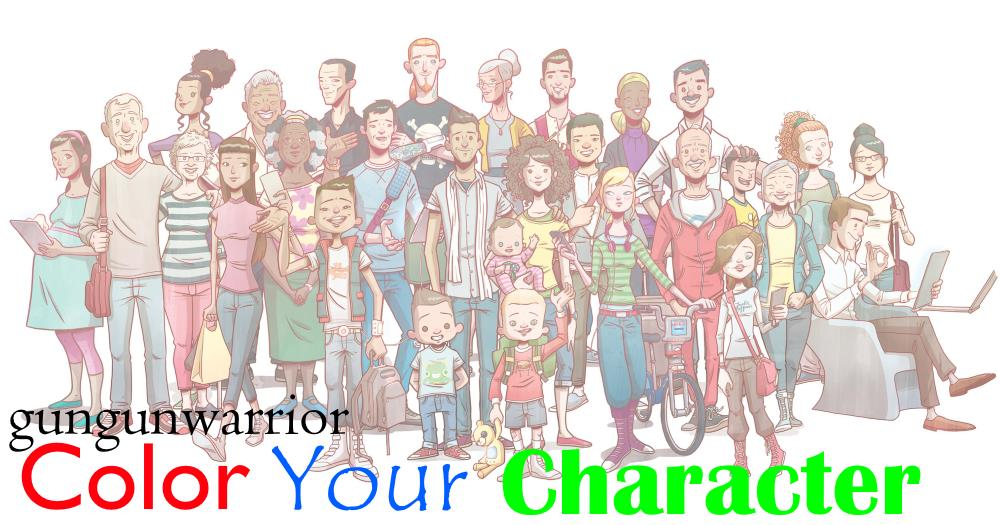 I picked this topic because I began to realize what I do for characters when I am writing. Besides being a newbie and a panster writer sometimes the combination isn’t good. I have learned a few things by reviewing other people's work on novels and short stories. I learned that my idea of a good character was one I invented on the spot to fill in for needed plot advancement or to bring humor or plot twist as I am writing along. Let’s be honest how believable is a character just invented on the spot and left for editing later. This is how I work most of my fleshing out and description is filled out in another chapter or two as part of the progression but some characters are just for the one scene never to be seen or heard of again. I have had a few reviews saying I use too many characters or have too many to keep track of. My only question is why are you trying to keep track of a one use only character? What made it memorable to you to add it to a growing list we all mentally keep when reading books or watching movies. Now that I am aware of this what readers like to do to all characters they meet. I now like to stop creating throw away characters and reuse a sub main in the same spot and transition them to this new scene. I also find it fun to add another detail about this character. I’ll bet you are going how on earth does a Panster keep track of all his characters and their personalities? The truth is I don’t, but my time lines and character names and notes on the information I just wrote about them posted in there does it for me. That is how I keep track is a separate document that I keep new ideas and changes or additions to my characters. I have seen some of the all around character sheets that other authors use to keep track of their characters. I have to say I feel they are a great exercise in imagination. Who doesn’t love a chance to show off what we can think up about our characters? Still, does it really work for us? I make mine live by my story more than create a 2D rap sheet. But other authors make them live and very memorable with the use of a rap sheet. Some of the ways to really breathe life into a character are to color them. When you look at your character in your mind what color do you see? One of the best gauges of how strong our characters really are is to try and visualize them. Can we see this as a person that we can love or hate or laugh at? Because if we the writer cannot see them, how do you expect the reader to see them? Sometimes I have a little fun with my characters since I love to write science fiction I like to have surprise characters. Like this one: “Hi, I am Betty. I welcome you aboard the Empire Warship Betty. Since you are new to my crew and this is your first day for you. You are allowed to ask questions from any rank and get answers. After your first day, I will be addressed as Fleet Admiral Betty. You will address me only through the chain of command. I am the ship’s living computer and in charge of our battle group. Today I am free to work with my new crew members so take advantage of this day.” The cadet that the ship's computer is talking to is a throwaway character that I was using to breathe some life into the main character. If I wrote a rap sheet on Betty you can imagine the fun of filling it out. She just doesn’t fit into a normal character sheet that I listed below, therefore, I created one of my own for her. Character profile: Height Hobbies Prejudices (if any) Pet Hate Favorite Music Best Friend from School Clothing Style Employment History Friends and Family (their profiles come later) Issues with Friends and Family Make and Model of Car Pets Favorite Midnight Snack Taste in Men/Women Fears Name: Fleet Admiral Betty Occupation: Empire Warship Eyes: None (She uses ship’s cameras and micro mini cameras she launches into space at an area no other ship has been before.) Body description: She is a round ball twice the size of any tall humanoid male. Her insides consist of advanced computer cores and memory banks. The inside of her hull metal shell is designed to hold a living soul of a once living person. This is her shell when she is in place inside the Command center. Since she is the ship and running all functions of a spaceship you could say she is the size of a ten story building and round like a ball ten stories wide. She holds fighters and drones for a crew of one thousand and a maintenance crew of one hundred. Abilities: She has the ability to function as a real person and create holograms of herself. Since most living computers never remember the dying husk they were transferred from they tend to get creative on humanoid looks. She in conjunction with her computer cores is the only way the Empire Warships can travel in hyperspace it takes the speed and computing power combined together for it to work fast enough to have precise control of the faster than light drive. Voice: Now voice tends to get interesting being a computer she can be sexy and commanding all in one breath. She can change her sex at any time and for any reason, she thinks fit. Since no one really knows their true sex they go with what they feel like they are. Now you can see the fun you can have with a machine main character and how you can add to their growth as you develop their feelings for other mains and of sub chars. You can really develop them with dialog and actions. This is the reason why I love writing science fiction. You can make anything you can imagine a character. "Invalid Item" by A Guest Visitor  In a paraphrase that Woody Allen once said, “half of succeeding at something is just showing up.” What does this mean to us writers? Simply put, just working on your story is the primary process that will ensure the creation and production of a written piece. I once found a site about self-publishing that said to write four to six hours day for six months to a year. This of course is a bit extreme sounding but I think it pertains to writing and publishing on the “fast track.” I prefer writing on the fast track myself. However, I am just now starting to work my way get closer to that writing time. On the 17th of March, I wrote for about three-and-a-half hours. That may seem impossible, but I think if a person sacrifices a little down time and devote it to writing, a lot more can be produced. I do not work so it is relatively easy for me to do that much writing. The rule of “just doing it” can be applied to editing as well. If you hammer at your piece every day, you will see and resolve problems in your piece. Probably it is equally important to read. As quoted in that same site, reading is the life juice to writing. Those who write a lot read a lot. For some, all that I have said may be common knowledge but it needs to be emphasized and practiced. I hope that this article will help you in your writing and ultimately aid you in publishing your story as most of us desire.  Well, reprints have been on my mind lately. You see, once you publish a story in a magazine or anthology, you have sold either your First North American Serial Rights or First World publication rights (based on the contract you sign). If that magazine paid 8 cents a word or even 2 cents a word, or you sold the story for exposure, once the rights to your story have reverted, you can sell your story again; however, that’s only if the next market accepts reprints. If that’s the case, the industry standard is you’ll be paid a penny a word for reprints. A few months ago, there was a call from an online SF magazine seeking only reprints. I submitted one of my old stories and they accepted it – at a penny a word. The contract stated there may also be an anthology, and in that case, the story would earn a bit more. Being able to sell a reprint is nice, just not very profitable. Something else to consider, if you publish a story on the Internet, publicly, that story is considered a reprint. What did he say? You heard me. If it is available publicly on the Internet it is instantly a reprint as far as the next market is concerned. Okay, so how does that effect what you’re writing on WDC? If you limit your stories to members only -- it’s not officially already been published. Working on a story which is changing? Selling a story that’s substantially changed will make the final version an original, not a reprint. Perhaps the story you want to submit is a lot longer than what you published on your website or in a blog – that, too, makes it an original never published piece (since the published part is only a small part of the whole). One author I know has been repackaging stories she’s previously sold, making significant changes to them, and telling the editors that’s precisely what she’s done. They’ve accepted those stories as original and paid accordingly. So, why have reprints been on my mind lately? I’m concerned about sales (I also am and found that pretty much every published writer is, too) and I’m going to a convention in six weeks or so. Having something different to sale can help me market to a larger audience, who may not be interested is my epic fantasy novels. I’ve a number of old stories, whose rights have reverted (to which I’ve never “accidentally” sold my rights – I read my contracts very carefully – and are original works of mine) that I can monetize again, by, at this point, offering them in a collection. (A collection represents work from a single author, while an anthology offers works by multiple authors). So, I’ve a short story that people ask me about that was published several years ago. By incorporating a collection of: some flash pieces I’d published in on the Internet for blogger book fair and exposure; stories I’d published in an ezine; and including some articles I’ve written online, I’ve enough to publish a short collection. Thing is, I can offer it at a better price than one of my paperback novels and still catch some more attention by those passing my table in the Dearler’s Room or a book festival, and offer it as an ebook at a great price, too. My editor’s on board and my cover designer’s excited… Though, I’m concerned that like an anthology, a collection normally won’t sell as well as a novel can. So, I’m doing what I can to keep my costs down on this one. I’ve chosen one original story to include, but it’s part of my epic fantasy series. That story’s a perfect hook for a fan of the series, looking for more – or a good introduction to someone new. Of course, publishing it will make it a reprint. Then again, I’m likely to incorporate it into a future novel, so it’s a good choice to include. So, there are things you can do with a reprint. Also, if one of your stories ends up in a pro level SF or Fantasy magazine, you may get requests for it in anthologies soliciting it – at better than the penny a word rate. I know someone that’s happened to a number of times for just one of their stories, which has just kept earning them money without him having to submit it for consideration. But forewarned about the meaning of “reprint” is forearmed, which why I’m sharing this with you today. When you sell a story, be sure to read your contract to see when your rights revert or if they never do… It’s important. Being a writer isn’t just about writing, it’s about earning money so you can buy groceries, pay the rent, etc. (Which is why so many writers have day jobs, too). If you’re like me, looking to make a few more dollars isn’t a bad thing and may help you build your brand and sell more books at the same time. Dare to Believe, D.H. Aire Author of the forthcoming Crossroads of Sin and Other Stories (May, 2017) "Reprints" by Highmage - D.H. Aire  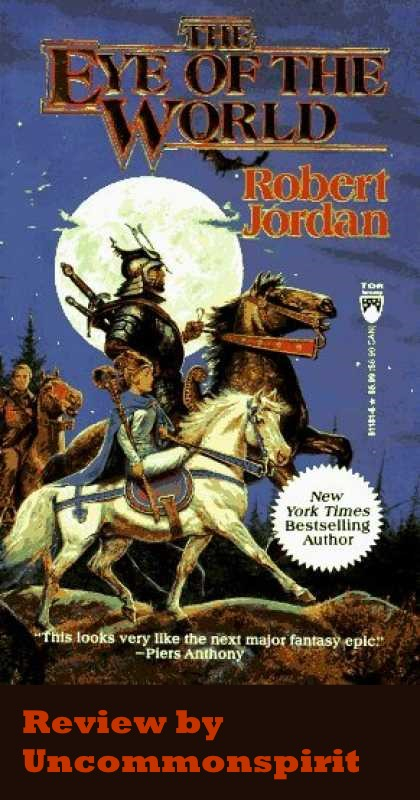 Book Name: The Eye of the World Author: Robert Jordan First Published: 1990 Author Robert Jordan (born James Oliver Rigney, Jr.) was born in the late 1940s in Charleston, South Carolina. As a child, he was fond of reading, especially the books of Mark Twain and Jules Verne. As an adult, he served two tours of duty in Vietnam as a gunner with the US Army. Returning to the states in the early 1970s, Jordan went back to school at the Military College of South Carolina. He studied the sciences and following the gaining of his degree started work as a nuclear engineer for the Navy. Writing had always been his passion and in the late 1970s, he began to write novels of various genres, under different pen names. Robert Jordan was his final pen name in which his fantasy books were gathered. His most famous fantasy series is The Wheel of Time which has sold 44 million copies globally and was the basis for a role-playing game, soundtrack album, and a computer game. The ideas and title of the series were inspired by Hindu Mythology. Jordan had many other concepts waiting to be written in the fantasy genre, he was waiting to start them once he finished The Wheel of Time. However, fate was not kind to him. In March of 2006, he announced publicly that he had cardiac amyloids, a rare blood disease. He was given four years to live. He underwent chemotherapy and took part in a study for a new drug that might have helped him. It was all to no avail. Jordan passed away in September of 2007 with his Wheel of Time series unfinished. After his death, his wife selected Brandon Sanderson, an up and coming epic fantasy author, to complete the Wheel of Time series based on the notes that her husband had left behind. Robert Jordan had written the epilogue and a few chapters, but little more of the final book. Sanderson took up the challenge but found that the story was so complex that he needed three rather long books to finish the Wheel of Time properly. “As the Wheel of Time turns, places wear many names. Men wear many names, many faces. Different faces, but always the same man. Yet no one knows the Great Pattern the Wheel weaves, or even the Pattern of an Age. We can only watch, and study, and hope.” ― Robert Jordan, The Eye of the World The Eye of the World is the first book of a long fantasy epic series that features a cast of main characters instead of a single hero. It has a huge cast of characters and the story unfolds, chapter by chapter, via the viewpoint of a different rotating protagonist. It is a complex tale with many twists and turns. The story begins in a land known as the Two Rivers which has been all but cut off from the rest of the world for at least a thousand years. It is a rural place of small villages and isolated farms. During the spring festival, young Rand al’Thor notices a stranger watching him. A man whose cloak doesn’t move in the wind. He tells his father about the stranger, but he is gone when his father looks. They arrive in the village of Emond’s Field for the festival and Rand hooks up with his two friends. Perrin, the apprentice to the village blacksmith and Mat, a comedic prankster. They both mention that they have seen this same stranger watching them. In the village, there are visitors come for the festival. Aes Sedai Moiraine and her warder protector Lan. Moiraine gives each of the three boys a coin; she calls it a token for future work she may ask of them. Rand and his father return home, but are attacked by creatures known as “Trollocs”. Rand’s father is wounded during the attack. In his delirium, he tells his son that he is adopted, a foundling he picked up on a mountaintop during the Aiel War. Rand takes his injured father back to the village in the hope that the Aes Sedai can use her magic to heal his father. She does heal his father, but she tells Rand, Mat, and Perrin that the Trollocs are after them personally. The strange man who watches them is a “Myrddraal”, a creature of darkness, and the three must leave the village for their own safety and that of their people. The three decide to leave with Moiraine and her Warder. At the last minute, Rand’s girlfriend Egwene joins them. She desires to become an Aes Sedai herself and this is a good excuses to leave Edmond’s Field. A wandering minstrel named Thom also comes along. The party flees Emond’s Field and travel toward the town of Baerlon. There they meet a young woman named Min who claims that she can see auras around Rand and his friends. While there, their village wisdom Nynaeve find them and says that she wishes to bring the boys home for their own good. This causes her to be at odds with the Aes Sedai who is having enough trouble protecting the boys from Trolloc attacks on the road. In Baerlon, the boys begin to have dreams where a man clad in black names himself Ba’alzamon and tells them that they will serve him and the Dark One. Moiraine wishes to bring the boys to the city of Aes Sedai, known as Tar Valon, where they can be better protected. She uses her channeling magic, called The One Power, to scare off whitecloak soldiers in Baerlon who wish to harm the boys. While their inn is set on fire, the party escapes. Away from Baerlon, the group is forced to seek refuge from the Trollocs in an abandoned city called Shadar Logoth. Even the Trollocs fear to enter the city. In the city, the boys go exploring and meet a man called Mordeth who casts no shadow. Mat steals a dagger from him. The boys manage to get away from the man, but this episode worries the Aes Sedai and her Warder enough that they decide to split the party up. Perrin and Egwene cross the river and try to make their way to Tar Valon on their own. On the way they encounter a man who can talk to wolves. He claims that Perrin has this ability too. As they continue to travel, Perrin and Egwene come to a “stedding”, which is the home of “Ogiers”, giant sized people who live incredibly long lives. Their home has magical protection from Trollocs, however Perrin and Egwene discover that Whitecloaks have also come. The Whitecloaks take a disliking to Perrin due to his association with wolves, which they regard as evil. Nynaeve, Lan and Moiraine depart Shadar Logoth together. Moiraine senses that Nynaeve also has the one power and can channel it, but she is untrained. Without the schooling of the Aes Sedai of Tar Valon, she may die. Nynaeve resists the idea, but in the end she accepts that she will need to become an Aes Sedai and agrees to go to Tar Valon with Moiraine. Nynaeve casts her eye on the intrepid Lan and the two begin to fall for each other, which causes complications for Moiraine who is bonded to the man via the one power. Via the coin Moiraine had given Perrin in Emond’s Field, the Aes Sedai is able to track him and Egwene. The trio arrives to save the pair in the nick of time from the Whitecloaks. Mat, Thom and Rand leave Shadar Logoth in a boat and eventually arrive in the city of Caemlyn. Mat becomes increasing paranoid on the journey. Unknown to the boys, he is being magically poisoned by the dagger he stole from Mordeth in Shadar Logoth. In the city, Rand meets a young Ogier named Loial, who at first mistakes him for an Aiel and tells Rand that he must be a “ta’veren”, a man who fate wraps itself around. Rand is eventually taken to see Queen Morgase where a seer has a foretelling that Rand is at the center of all the destruction that is to come to Caemlyn. While it is commented that Rand looks like an Aielman, his accent is that of the Two Rivers. The Queen decides that Rand may go free since she is familiar with the people of the Two Rivers. Moiraine and her party arrive in Caemlyn and connect with Rand and Mat. Moiraine uses the one power to heal Mat of the poison from the dagger. The group learns that the Dark One plans to use an object known as The Eye of the World in a place called the Blight. Loial the Ogier knows how to use a magical passage called “the ways” and takes the group to the Blight via this method. There Rand must confront Ba’alzamon, using the budding power within him, to claim the objects that are contained in the Eye of the World. ### I was first introduced to The Wheel of Time saga by gaming friends that were hooked on the roleplaying game based on the novels. In order to play the game, it was necessary to read the books. It did not take me long in The Eye of the World to become completely hooked on this series and soon would go on to read the rest of the novels. I had an opportunity to hear Robert Jordan read from his final work-in-progress novel, the one that would eventually turn into three volumes written by Brandon Sanderson, at the San Diego Comic Con a few months before his death. The room was packed with hundreds of breathless people, waiting to hear Jordan read from his much-anticipated book. He was seated and did not wish to move about much due to his illness, but his voice was strong and clear. The words captivated the audience. When he died with the final book unfinished, I was one of those heart-broken fans that wondered if I would ever hear the end of the tale by one of my favorite authors. When his wife commissioned Brandon Sanderson to finish the series, I was uncertain if this young author had the chops to write The Wheel of Time. I checked out one of his first novels, Elantris, and saw the quality of his work. I had nothing to worry about. Sanderson has gone on to become one of the top writers in the epic fantasy genre today. The Wheel of Time Saga The Eye of the World (1990) The Great Hunt (1990) The Dragon Reborn (1991) The Shadow Rising (1992) The Fires of Heaven (1993) Lord of Chaos (1994) Locus Award nominee, 1995. A Crown of Swords (1996) The Path of Daggers (1998) Winter’s Heart (2000) Crossroads of Twilight (2003) Knife of Dreams (2005) Final novel completed by Robert Jordan. The Gathering Storm (2009) Completed by Brandon Sanderson. Towers of Midnight (2010) Completed by Brandon Sanderson. A Memory of Light (2013) Completed by Brandon Sanderson, epilogue by Robert Jordan.
The April Round is now open. Apologies for the delayed start--the deadline has been adjusted accordingly.
A new cNote shop with a fantastical theme. Profits go to the FSFS!
An FSFS-only forum to discuss writing mechanics.
The FSFS Review Board is open! All WdC members can view the list on the group homepage, "Fantasy and Science Fiction Society" . FSFS Members can view the list from the homepage, Review Board page and the Hub. To post on the board you need to review at least one other item on the list.
If you are not already a member and are interested in fantasy and science fiction writing, please read through the group homepage and apply using the application form. The only pre-requisite is that you have a fantasy or science fiction item in your portfolio. If you want to advertise in the FSFS Newsletter please contact me, Matt Bird MSci (Hons) AMRSC  . . Last Month's Result I am pleased to announce that Chris Breva  has won an FSFS merit badge for his character in last month's Newsletter. A E Willcox has won an FSFS merit badge for his character in last month's Newsletter. A E Willcox  also kindly donated a Magic Words MB to the challenge as well. also kindly donated a Magic Words MB to the challenge as well.This Month's Challenge To win an FSFS MB this month, all you have to do is tell me something you have learned from the Newsletter. It can be this month's edition, or any other edition. I will roll the random die to determine the winner. Thank you to all the members who submitted articles to the Newsletter. If you submitted an article that wasn't included, don't be offended. I can only fit so much in the Newsletter. Please submit it again when I send the call out for articles. Please comment on this Newsletter if you enjoyed it, or if you have any suggestions for future editions. |
 un:
un:  View Portfolio
 Visit Notebook
 Send Gift Points
 Awards
 Badges



 Community Feed
 Puzzle Hub
 General Discussion
 Sponsored Items
 Book of Trinkets
 Static Items
 Books
Books Groups
 Interactive Stories
 Audio
Audio Campfire Creatives
 Community Notes
 Crossword Puzzles
 Documents
 Folders
 Images
 In & Outs
 Madlibs
 Photo Albums
 Polls
Polls Product Reviews
 Quizzes
 Survey Forms
 Web Pages
 Word Searches