%%USERNAME%%    %%ACCWORDS%% %%ONOFF%% |


 The FSFS Newsletter is written by FSFS members covering everything Fantasy and Sci-Fi |
The "Fantasy and Science Fiction Society" welcomes you to  Welcome to the July edition of the FSFS Newsletter written by members of "Fantasy and Science Fiction Society" for the whole WdC community. Contents 1. Month Summary 2. Dragon Emotions 3. Writer Motivation 4. Motivation 5. The Power of Positive Thinking 6. George Orwell’s Four Universal Motives of Writing and Creative Work 7. Motivation and Being Self-Published 8. Tips for Successful Author Readings 9. Book Review: Forty Thousand in Gehenna 10. Advertisements 11. Newsletter Challenges  So, June was a little hectic with the Game of Thrones event going on. The FSFS may not have done fantastic, but we all enjoyed the experience and got to know each other a little better. This month I have opened a brand new and exclusive FSFS contest which starts with members writing an article about anything they want and then they write a short story based on someone else's article. I've never seen this done before, so it will be interested to see how it works. Check out next month's newsletter where you will all get the chance to vote on your favourite story.  Hello I am Silverwindrose Dragon Minstrel  I mostly write about dragons and other creatures in my stories. On the newsfeed LinnAnn-Cookie Baker I mostly write about dragons and other creatures in my stories. On the newsfeed LinnAnn-Cookie Baker  asked a question that got me thinking. asked a question that got me thinking. How do you show fear in a dragon? Now we never really think of dragons being scared but then again how often do you hear of a dragon being scared by something and how in the world would it act? Well here is one of the ways I give life to my dragons. I imagine what it would be like to be that dragon. How would I act in that situation? Here is an example. You are a young dragon that has just met it's first human. Now you do have to know if the young dragon has been told about humans because it will affect how your dragon will react. So for this example you are a young dragon that has just met it's first human and all of your life you have been told how humans kill dragons but you notice how the human is just slightly smaller than you. Now your parents are about 3 times bigger than you. Example: I had been trying to figure out my wings worked and now lay resting in our cave watching for my mother's return. A soft crunching of dry leaves just off to the side of the cave opening. I sat up to see if by chance it might be my mother. To my surprise a strange two legged creature appeared at the cave opening. As you see in this example I used two different animals to show how this young dragon is scared. The snake allowed me to show how the dragon moved away. While the dog is used here to show how hard the dragon was shaking.I could not help but wonder if this scrawny two legged creature might be the feared dragon killer called human. Mother always talked about how one killed my father. I lashed out my tongue taste/smelling the air trying to figure if this creature was a human. The creature held in it's front paw a long thin tree branch that a long shiny straight claw was attached to. I coiled back against the wall like a snake. Tucking my wings in tight against my body, as I hissed unsure of what to do. I trembled like a scared dog unable to move. Now you can do the same thing with anger. You can say that in anger you dragon struck like a snake so quick it was like lightning. The fun thing is this can be applied to anything. You can even give emotion to inanimate items like a toaster that when sad slowly heats up and the leaver on the side bends downward on the sides making a curved handle that is moist and slippery. The main thing I have found when writing emotions is that you need to feel them when writing them or at lest remember how it feels for that emotion. Then you can compare how others react to the needed emotion. Animals in real life gives you a lot of things to work with. If your dragon as long over lapping scales. You can make the scales stand up like fur or even balloon up like a puffer fish to look bigger to scare off attacking creatures and things. There really is only one way to know what your creature will do and that is to write it down and see what happens. Remember actions show how a creature really is feeling. Just like us, a flinch can say something startled or upset your creature the same way it does you. 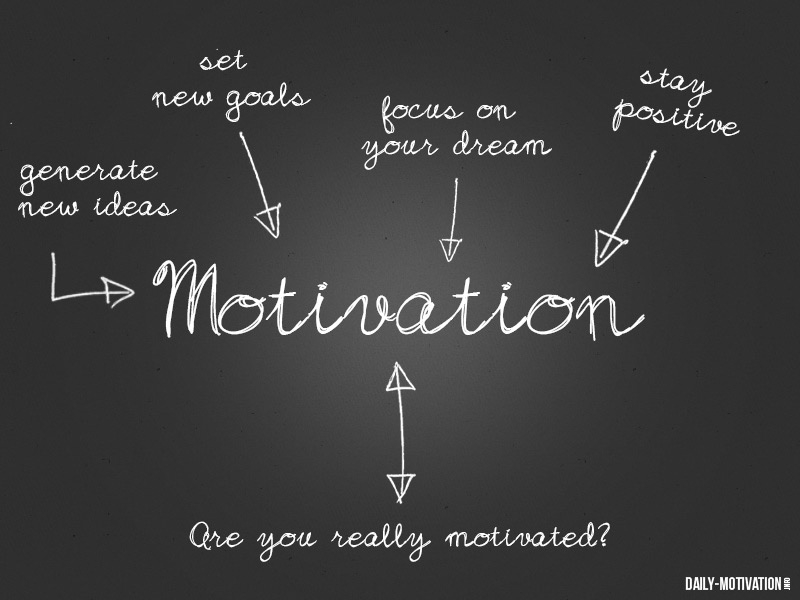 Matt is asking for articles on motivation. I am a pantser by writing methods, so when a prompt or something I read sets my mind in motion. I sit down and write it all out until my muse stops. There is nothing wrong with my writing method. However, none of us are the same. I have read a lot of help articles on how to find inspiration to kick start our muse. The issue with all this help is it only give you ideas to try. Now lets take today I see that the Armed Forces group would like me to submit a war story with an independence theme to it. Not much there to inspire my muse to write it. So how do I solve this small issue. Since all I have is my memories of that war as I call it. I look back to that time and think of all the places, the battles, the funny stuff, and look for anything to trigger my muse. I found an old war story told by an ex-army buddy about a snake. What if I wrote his tale of the snake showing the snakes independence. The point is, I have something to write. Do I want to write it to help them out since they only have one story submitted? Do I even feel like writing today? Or heck I’ll save the thought on my hard drive and go do something else. Motivation is what I need to take my story idea into typed words in my port. Sometimes we just don’t want to take our ideas and put them into print. The Marines had us enlisted men supplied with great motivation, it was fear! You did as ordered or they did bad things to you. It was great motivation. But we are not in the service. Fear doesn’t work here other than a motivation not to write. To me the fact that they asked me to submit a story to help them out in the middle of GoT. I feel honored they would ask me. Now I have a motivation to write it. Now the funny part with all this, is after writing it and submitting it. I find other people have written stories as well and they all won a prize. I think we all have been there. This does cause us to lose our motivation to write there again. No matter what I say or do, you are the only one who can motivate you. No one has a generic all purpose, motivation tool that anyone can use. What you have to do is decide you are going to do it, then go and do it. However writing involves a bit more then just go and do it. So prepare, find reasons to do it, find ways to get it done with a hectic schedule. Now reap the rewards of having done it. Even if no one tells you, thank you, for your entry or you never hear another word from the contest owner. This is worth it. I know, why would I say that? The reasons are: 1. You get great writing practice. 2. You do this three times and it becomes a habit. 3. After a while your writing will improve and you might start winning contests! 4. You love writing, what better way to break out of a slump. 5. We all love to see our stories listed in a contest or in a newsletter. We all want recognition there is no better way than writing practice for contests. I have listed some of my motivation here. But we are all different so take what you can use that will work for you and please ignore what doesn’t. "Invalid Item" by A Guest Visitor  Definition - noun 1. the act or an instance of, or providing with a reason to act in a certain way: a. I don't understand what her motivation was for quitting her job. b. Synonyms: motive, inspiration, inducement, cause, impetus. 2. the state or condition of being, or having a strong reason to act or accomplish something: a. We know that these students have strong motivation to learn. 3. something that; inducement; incentive: a. Clearly, the company's long-term motivation is profit. Motivation for us as writers can come from many different things. If we started writing at a young age, it may be we either saw or read something which inspired our imaginations causing us to write it on paper. And, of course, once begun we simply could not stop. If we began writing at an older age it’s probably for entirely different reasons, or the same. Some of us may have started journals to keep a log of daily happenings and those journals turned into stories. Some may have started writing poetry as a way of relieving stress. There are a thousand reasons why those of us in older years begin writing. But it’s what motivates us to keep writing which is important. The thing which motivates us as we begin our writing journey is not always the thing which keeps us motivated to write. As we grow and mature we learn it can be a difficult journey down the “writing road”. If we don’t want to continue writing as just a hobby or stress reliever and want to publish, we have to find different ways of motivating ourselves to continue. And it’s not always easy. Perhaps this is why we have “writer’s block” occasionally. Because sometimes motivating ourselves to do something we love for publication is not always an easy thing. So what does motivate us to pick up the pen & paper, the tablet, or computer keyboard to continue to write? I have a small list that may help you remember that first burst of motivation we all love. 1. Imagination – Our minds are forever creating different scenarios, worlds, characters, etc. which we cannot seem to ignore. Even with poetry, it invades our conscious & subconscious mind motivating us to write it down. 2. Enjoyment – The pure ecstasy of creating something we know is new and different, then showing it to others and seeing their delight in it as well. 3. Need for Growth – We long to grow in our craft. We are continually seeking others who write and we want to enter contests or simply as those in our craft if we’re improving. That growth is a part of our motivation. As long as we know we’re growing we’re happy. 4. The End Goal – we always have an end goal. Whether its publication or putting together our own book or pamphlet of our work for ourselves so family might enjoy it. We strive for it and that is a great motivation for many of us, even when we don’t think we’re getting anywhere. If we have those around us who support our achievements and carry us when we’re down; our motivation will always be there. 5. Peers & Family – peers and family are the ones who often keep us motivated when we’re not sure we’re going in the right direction. As mentioned before, they can support us in our achievements and carry us when we’re down. 6. Yourself – Though listing this last it’s the most important one. You are the only one who can ultimately keep yourself motivated in your writing, or whatever craft you choose. Sure, there are a lot of reasons to keep you motivated and you can keep listing reasons why. But if you cannot cause yourself to actually do it, you will not be motivated. A very last thought. As motivation can be brought from many different things and people, remember it’s you who decides what influences you as a writer and what motivates you. We have a say in our lives and it often shows in what we write. Whether it’s stories, songs or poetry. So get out there and write, review and be yourself. For that is the only way to be motivated. "Invalid Item" by A Guest Visitor  The majority of us plod through life like armchair generals, responding to events and situations as they slowly and methodically unfold before us. We have no clue as to what is about to happen in the next few minutes, the next hour, the next day, week, month, or even year. Unlike professional generals, we do not plan possible moves in the future by developing countless what-if scenario’s, we simply react to events as they happen. \ Perhaps the famous line in Forrest Gump; "Life is like a box of chocolates - you never know what you’re going to get" is just about as true as anything else is. But, it’s not what piece of chocolate life serves you; it’s how you adapt to that piece. "Always anticipate the unexpected and have a contingency plan in mind to deal with it," one of my great mentors once advised me. I have learned to apply the good advice of my mentor by adapting, improvising and overcoming obstacles as they are strewn in my path. I guess one reason is because I firmly believe that without inner peace, outer peace is completely impossible. We can do anything we put our mind to; achieve any goal, overcome any difficulty, conquer any fear, so long as we make up our mind to do it. You will learn that the quality of our life does not depend upon external development or material progress, but upon the inner development of peace and happiness. Without inner peace, outer peace is impossible. Always think positive! The power of positive thinking is one of life’s greatest assets. Think positive about everything you do. No chore is impossible so long as you tell yourself, "I can do it," and prepare your mind for action. Apply positive thinking, not only to events, but also to people you meet. Do not think of them in a negative way, think of them as adding value to your life. Learn from their mistakes as well as their achievements. Teach yourself not to be like them, but to be the person you want and to be. Never place yourself above others because we are all wonderful creations, as teammates in a battle for inner peace. This may be hard to do at times because so many people think in the negative and unknowingly infect you with their negative attitudes. Do not arrogantly display your material possessions as a means of proving your success. Because success, in reality, is not what you own but what you are. You cannot take your possessions with you into the spiritual realm, but you can - take yourself. For when you have obtained pure inner peace, you have no need of material possessions. We are all endowed with the gift of original thinking, therefore, always apply it in a positive, productive and uplifting manner. Never forget that you have the power to move mountains, even if you have to start with one shovel full at a time. A very wise person once told me that no matter what has happened in your past, each morning when you arise from your slumber, you have an opportunity to start life all over again. Yesterday is gone forever and you cannot change it no matter how much you would like to. Tomorrow depends on what you do today for it is yet to come and, like a sculptor, you have the opportunity to shape tomorrow into whatever you want it to be. You can be a slave to the events of the past, or you can cast off the chains of yesterday and boldly shout out, "Today, I will seek inner peace and I will become a take-charge person, for am the true master of my destiny!" "THE POWER OF POSITIVE THINKING" by Oldwarrior  George Orwell’s Four Universal Motives of Writing and Creative Work Sourced by Hanna  Original article by Maria Popova. Source Article  “All writers are vain, selfish, and lazy, and at the very bottom of their motives there lies a mystery." Literary legend Eric Arthur Blair, better known as George Orwell, remains best remembered for authoring the cult-classics Animal Farm and Nineteen Eighty-Four, but he was also a formidable, masterful essayist. Among his finest short-form feats is the 1946 essay Why I Write (public library) — a fine addition to other timeless insights on writing, including Kurt Vonnegut’s 8 rules for a great story, David Ogilvy’s 10 no-bulls*** tips, Henry Miller’s 11 commandments, Jack Kerouac’s 30 beliefs and techniques, John Steinbeck’s 6 pointers, and various invaluable insight from other great writers. Orwell begins with some details about his less than idyllic childhood — complete with absentee father, school mockery and bullying, and a profound sense of loneliness — and traces how those experiences steered him towards writing, proposing that such early micro-traumas are essential for any writer’s drive. He then lays out what he believes to be the four main motives for writing, most of which extrapolate to just about any domain of creative output. "I give all this background information because I do not think one can assess a writer’s motives without knowing something of his early development. His subject matter will be determined by the age he lives in — at least this is true in tumultuous, revolutionary ages like our own — but before he ever begins to write he will have acquired an emotional attitude from which he will never completely escape. It is his job, no doubt, to discipline his temperament and avoid getting stuck at some immature stage, in some perverse mood; but if he escapes from his early influences altogether, he will have killed his impulse to write. Putting aside the need to earn a living, I think there are four great motives for writing, at any rate for writing prose. They exist in different degrees in every writer, and in any one writer the proportions will vary from time to time, according to the atmosphere in which he is living. They are: (i) Sheer egoism. Desire to seem clever, to be talked about, to be remembered after death, to get your own back on the grown-ups who snubbed you in childhood, etc., etc. It is humbug to pretend this is not a motive, and a strong one. Writers share this characteristic with scientists, artists, politicians, lawyers, soldiers, successful businessmen — in short, with the whole top crust of humanity. The great mass of human beings are not acutely selfish. After the age of about thirty they almost abandon the sense of being individuals at all — and live chiefly for others, or are simply smothered under drudgery. But there is also the minority of gifted, willful people who are determined to live their own lives to the end, and writers belong in this class. Serious writers, I should say, are on the whole more vain and self-centered than journalists, though less interested in money. (ii) Aesthetic enthusiasm. Perception of beauty in the external world, or, on the other hand, in words and their right arrangement. Pleasure in the impact of one sound on another, in the firmness of good prose or the rhythm of a good story. Desire to share an experience which one feels is valuable and ought not to be missed. The aesthetic motive is very feeble in a lot of writers, but even a pamphleteer or writer of textbooks will have pet words and phrases which appeal to him for non-utilitarian reasons; or he may feel strongly about typography, width of margins, etc. Above the level of a railway guide, no book is quite free from aesthetic considerations. (iii) Historical impulse. Desire to see things as they are, to find out true facts and store them up for the use of posterity. (iv) Political purpose. — Using the word ‘political’ in the widest possible sense. Desire to push the world in a certain direction, to alter other peoples’ idea of the kind of society that they should strive after. Once again, no book is genuinely free from political bias. The opinion that art should have nothing to do with politics is itself a political attitude. It can be seen how these various impulses must war against one another, and how they must fluctuate from person to person and from time to time." After a further discussion of how these motives permeated his own work at different times and in different ways, Orwell offers a final and rather dystopian disclaimer: "Looking back through the last page or two, I see that I have made it appear as though my motives in writing were wholly public-spirited. I don’t want to leave that as the final impression. All writers are vain, selfish, and lazy, and at the very bottom of their motives there lies a mystery. Writing a book is a horrible, exhausting struggle, like a long bout of some painful illness. One would never undertake such a thing if one were not driven on by some demon whom one can neither resist nor understand. For all one knows that demon is simply the same instinct that makes a baby squall for attention. And yet it is also true that one can write nothing readable unless one constantly struggles to efface one’s own personality. Good prose is like a windowpane. I cannot say with certainty which of my motives are the strongest, but I know which of them deserve to be followed. And looking back through my work, I see that it is invariably where I lacked a POLITICAL purpose that I wrote lifeless books and was betrayed into purple passages, sentences without meaning, decorative adjectives and humbug generally." This, of course is to be taken with a grain of salt — the granularity of individual disposition, outlook, and existential choice, that is. I myself subscribe to the Ray Bradbury model: "Writing is not a serious business. It’s a joy and a celebration. You should be having fun with it. Ignore the authors who say ‘Oh, my God, what word? Oh, Jesus Christ…’, you know. Now, to hell with that. It’s not work. If it’s work, stop and do something else. Why I Write is part of Penguin’s Great Ideas series, excellent in its entirety."  I just read a depressing blog article by Dave Farland (author of Runelords), who I first met in 2011, saying that self-published authors are making less and less money in ebook sales every year. That the outlook is pretty hopeless in getting noticed among the 3 million self-published books coming out this year, unless you already have a fan base of 50,000 readers. (http://mystorydoctor.com/new-struggles-in-self-publishing/) He concludes by noting there are exceptions to that, noting one self-published author of three years, who’s selling over a 100,000 ebooks a year. So, Dave wishes those who self-publish luck. Well, that’s not very motivating. But I can acknowledge this as only a challenge. I don’t yet have a fan base of anything close to 50,000 readers and I’m here to tell you that writing hasn’t been a highly profitable endeavor for many a writer. I got a lot of rejection letters when I first started sending off short stories and the first book in an epic fantasy series. It was discouraging. So, I gave up sending out stories for literally decades. I just wrote, re-wrote, and wrote some more and stumbled on Writing.com in 2010, that’s when I started sending out stories again and sold my first stories to an ezine and to an anthology. Seeing that, I sent out that old epic fantasy novel and a small press accepted it in what seemed the blink of an eye. That first year sales were, shall we say, tepid. I was an unknown author in a sea authors. I offered the publisher the next book in the series and they passed on the option. So, I sent it to another publisher, who published it. Sales were a little less tepid. So, I thought about it. Give up? I love my story and it’s not like I hadn’t written a lot more in the series over the years and all these characters were sort of glaring at me, daring me to let their story out. I figured, what did I have to lose? So, I self-published the next two novels in the series within about a month of each other and all four books started selling in numbers I’d never seen before. It was easier than you might think to self-publish and I did it in a professional manner, hiring an editor and graphic artist. Seeing that significant level of sales, the first publisher suddenly wanted to renew my contract and I was suddenly getting reviews in short order on Amazon and Goodreads, most loving my story, some hating it – and also asking when the next book was coming out. I’m still trying to figure that out. Then the Science Fiction Writers of America created a new policy at the end of 2014, accepting self-published authors if they met the same level of sales as the advance for a first time author with a major publisher. Now, that was my dream, to be a professional sci fi and fantasy author. So, in May I checked my sales and saw one of my books qualified me. Guess what? I’m now a member of the Science Fiction Writers of America. So, as I said, I read best-selling author Dave Farland’s article today. So depressing, but should it be? I haven’t given up my day job, likely won’t be able to ever. Most authors can’t, by the way. In the 1980s, I loved reading David Eddings books. A fan found him working at an area grocery story, stocking shelves, and asked for his autograph. He had three books on the New York Times Best Sellers List at the time. The fan asked him, “Uh, why are you working here.” He replied, “Never give up your day job.” Apparently, challenges face even the most successful authors. My response to Dave Farland’s article, I guess, is to state this regarding the traditionally published world, advances are lower than they used to be with major publishers. Also, well, there does seem to be less shelf space for books at places like Barnes and Noble. Are there still even many places like Barnes and Noble? Perhaps, just perhaps, publishing is more challenging than ever for everybody. Perhaps, publishing is showing growing pains as it transitions into a new age, evolving, seeking a more successful path. Here’s the thing that motivates me… I’ve too many stories in my head or on my hard drive. I will seek to broaden my audience and continue to send out short stories (I sold one two weeks ago for an anthology and got a rejection last week). I will do my best to ignore the nay sayers, who think self-publishing or publishing with small presses isn’t the way to succeed. This is an author’s life. It’s never easy, but I’ll say this, I love holding a copy of one of my books in my hand. I’ve a lot to learn, a lot to try, some days will be better than others… but my books will be available for years and good books will be found by your audience. Don’t give up or your characters may glare at you like they did me and dare you. "Motivation and Being Self-Published" by Highmage - D.H. Aire   Author readings are a great way to present your new book to the public. It allows you to give a personal sample of your writing, interact with potential readers, and can turn into a sales event. There are many venues to set up a reading location: bookstores, libraries, seminars, book clubs, restaurants and even private homes. In my area, the writer societies have “salon readings” on a semi-regular basis. If you are a paid member of the society, you can usual find a space in their advertised reading events. I am finding that these events are well attended, with 20 to 30 audience members and some record the readings and turn them into podcasts to go onto the web. It is a win-win for both the writer and the readers because it is a great way for writers to present themselves to new fans and for fans to find authors that interest them. I have prepared a few tips on getting ready for a reading based on my former experience as a talk show television host. These are some of the things I’ve done to get ready to go “on the air” during my younger days when I hosted “Flowers by Rod”, a how-to program about flower arranging and “Class Act”, an interview talk show. Rehearse Remember that a reading is performance art. You are “on stage” the moment you walk into the venue. No matter how many people are there, you want to make a good impression. Choose three or four short passages from your novel. You may only read one or two at the salon, but it is good to have alternate options available if needed. Read your selections out loud while facing a mirror in the privacy of your own home. If you own a video camera, consider recording your reading performance so you can view it and make any corrections necessary. Wardrobe Yes, it is difficult to watch one’s self on television, but remember no one has to see it but you. This is also a good time to select wardrobe. You can see for yourself how you will appear to the audience if you record yourself in your wardrobe choice. Does the fabric move with you? Does the outfit reflect your mood as an artist? Most authors wear clothing that is dressy casual and have something that pops that members of the audience might remember. If you are female, an artistic piece of jewelry is often a good idea. Biography You should prepare a written bio to take with you. Often times you will hand this to the moderator, who will introduce you to the audience before your reading. However, sometimes you will be expected to introduce yourself. Keep it short and if possible, humorous. Practice your bio information so you can recite it naturally when needed. As a television host, I would often sit and chat with my guests for a short time before the program and base my introduction on this, but I feel that it is best to be prepared with something in writing too. Timing Do not read too long. I would prepare no more than ten minutes of prose to read. When you practice your readings at home, make sure you time it. Ten minutes may not sound like a long period of time, but for a performance, it is substantial. Think about how long a typical television segment on a television program is. That is what you should be aiming for. After your reading, you should be able to take questions from the audience. You will get typical questions such as: Where do you get your ideas? What do you use to write with? Who are your favorite authors? Why did you become a writer? What inspires you to write? Be prepared to answer questions such as these ahead of time. The readers are seeking a more personal connection with you as an author. They want to know what is behind the story you’ve written, the deeper meaning that is not readily apparent. Performance Do your best to relax when reading your work. Stand comfortably and speak clearly. Do not bury yourself in your words, try and look up from time to time and make eye contact with the audience. During question and answer sessions, talk directly to people, remember to smile, and just be yourself. If you can calm your nerves, your performance time is a wonderful way to gauge how your audience reacts to your words. It is similar to when you are in a critique group and have someone else read your story out loud and then you the author can sit back and gauge the reactions to the story. What is great about a reading is that the audience are not always fellow writers, they are the true public that reads your work. Seeing their reactions can be a golden opportunity. Publicize Before your reading date at the Salon, make sure you announce it via your social media platform. Post on your website, Facebook, Google+, and Twitter. Send out a press release to shopping guides with calendars of community events or to your local paper. Books Bring a box of books to sell at the event, fliers or cards with links to your ebook seller sites, or if you are in a bookstore, make sure your book is stocked on the shelves. Double check with the bookstore about their policy of who sells the books to the audience. You want to be able to return to this location, so keep the store happy. If you do bring books, make sure that you sign them, even ones that the store may purchase from you to sell later. Some stores like to keep autographed books on a front table after your appearance is over for book collectors.  Book Name: Forty Thousand in Gehenna Author: C.J. Cherryh First Published: 1983 Nominated for Locus Award (1984) Author Carolyn Janice Cherry is better known by her pen name C. J. Cherryh. She is a Hugo Award-winning science fiction and fantasy writer with 40 novels under her belt. Cherryh is pronounced “Cherry”. When she first began publishing her stories in the early 70s, Cherryh was asked to create a pen name by DAW editor Donald Wollheim. He felt that her real name more fit a romance writer instead of a science fiction writer. She also switched to using her initials to disguise that she was female. This was a common practice at the time since women authors were not as accepted in the genre as male authors were. Fortunately, that is no longer the norm in the genre. C.J. Cherryh was born in 1942 and raised in Lawton, Oklahoma. In 1964, she earned a Bachelor of Arts degree in Latin from the University of Oklahoma and went on to gain a Master of Arts in classics from Johns Hopkins University. After graduation, Cherryh became a high school teacher of Latin, Ancient Greek, and the classics After graduation, Cherryh taught secondary school in the Oklahoma City public school district. While her job was teaching Latin, her passion was history. During her summers off, she would conduct student tours of ancient ruins in England, France, Spain, and Italy. As busy as she was, Cherryh could not shake the writing bug. She had been writing stories since the age of ten and continued to write novels in her spare time. She did not follow the usual path of science fiction writers of the time, starting with publishing short stories in the national magazines of the day, but instead her focus was on writing novels. While Cherryh has written shorter works, she did not begin to do so until after she had published several of her novels first. Her break came in 1975 when Donald Wollheim bought two manuscripts she submitted to DAW Books. She stated once in an interview on Amazing Stories, “It was the first time a book really found an ending and really worked, because I had made contact with Don Wollheim at DAW, found him interested, and was able to write for a specific editor whose body of work and type of story I knew. It was a good match. It was a set of characters I’d invented when I was, oh, about thirteen. So it was an old favorite of my untold stories and ended up being the first in print.” It was the start of a long and fruitful friendship. Cherryh has gone on to publish almost 40 novels, most of them with DAW, but not exclusively, and still continues to write more books today. She has won the Hugo Award for Best Novel twice, first for Downbelow Station and then again for Cyteen, novels that are part of the Alliance-Union Universe series that Forty Thousand in Gehenna is also part of. Currently, Ms. Cherryh lives in Spokane, Washington, with her partner science fiction/fantasy author and artist Jane Fancher. She enjoys skating, traveling and is a regular guest at many science fiction conventions. Culture is how biology responds and makes its living conditions better. – C. J. Cherryh Forty Thousand in Gehenna is not a normal story about the colonization of a planet where an intrepid group of humans set up a foothold on the world and build. Instead, it is the story broken into two main sections with a few smaller vignettes bridging. The characters are born and die of old age as the centuries go by. The focus of the novel is about the interaction between humans, from Cherryh’s Alliance-Union universe, and the Caliban, large lizard aliens that are not the unintelligent animals the colonists were led to believe when they first arrive. Gehenna, which means “hell”, is an experimental colony set up by Union. It is made up of a small faction of “born men” and forty thousand “azi”. The azi live to the age of 40 and then their bodies fail. When they are cloned in the lab, each human azi is programmed psychologically so that he or she is subservient to the born men and happy in their place in society. They are the worker slaves of the Union civilization and outnumber their aristocratic masters a thousand to one. The azi are the key to how Union manages to take over worlds ahead of their competitors, the merchants of the Alliance, giving biological numbers to the leaders of Union to place where they will. The first part of the novel is about the original colonists and follows a born-man named Gutierrez who comes aboard the colony disguised as an azi and a clone named Jin and his love interest Pia. Within a few years, it is realized that Union has abandoned Gehenna and no more supplies or the promised azi labs arrive as scheduled. The colony begins to fall apart as the machines break down. The azi begin to have children instead of reproducing via cloning techniques and teach their programming to their children as best they can. In the mix, the alien Caliban intrude as the settlers realize that the giant lizards are far more intelligent than first realized. The azi children imprint on the Caliban as well as their azi parents. This creates an entirely new culture that grows more different as the centuries go forward. The middle of the book covers when Alliance discovers Gehenna and via a mix of reports and chapters from many different points of view, we see how the outside stellar civilization sees what is happening on the planet in the long view. Alliance meddles in the Gehenna culture with ill effects. The final part of the novel covers a war between the descendants of Jin and Pia’s two children. The descendants have formed three cultures, one is aggressive and “male” the other is more passive and “female”. The third group is termed “weirds”. They are people that choose to live with the Caliban in their tunnels. All groups have formed a symbiosis relationship with the alien Calibans. While the Alliance watches and files reports, the cultures clash for domination of Gehenna. Diving into the Alliance-Union Universe can be confusing. There are a great many novels, some of which follow their own mini-series inside the series. This book can be considered the first of a trilogy, the final installment only being written a few years ago. The original cover of a girl riding a Caliban lizard into battle is what originally drew me to the book. It reminded me a great deal of McCaffery’s dragons of Pern, who also had a symbiotic relationship with their human partners. As it turns out, the Caliban are a more complex komodo dragon with a unique way of communication. You learn about it via submersion just as the colonists do in the story. Cherryh is a master at not only developing sweeping historical world views that explore intricate human cultures of her own devising, but she also is adapt at creating stunning alien cultures. I am fascinated by the concept of the human clones known as azi. Here in Gehenna we get a good look at the Union’s tank-bred, hypnotic-tape-education workforce. The azi make up most of Union’s population and has allowed it to out-breed Sol and the Alliance in these stories, but at what cost? Cloning is a process that is starting in our day and age. The morals and ethics behind the technology have not been fully addressed. What was once science fiction may soon be science fact. Finally, I enjoy that Cherryh does employ female protagonists in her stories. While in the first section she followed two male Azi, in the last section the protagonist was a girl named Elai who was certainly no wimp and proved to have the wit to fight for her community and people. The 1980s is known for introducing female characters who were independent and functional as full characters in their own right instead of always being the “love interest” for the men. While Cyteen is the Hugo Award Winner, I feel that you should start with Forty Thousand in Gehenna since it precedes Cyteen chronologically in the series. The two books can be read independently of each other and be fully understandable, but it works better if you read the two together. Unionside Series of the Alliance-Union Universe Forty Thousand in Gehenna (1983) Cyteen (1988) – Hugo and Locus SF Award winner, British Science Fiction Award nominee, 1989 Regenesis (2009)
Vote for your favourite Three Prompts entry!
A brand new FSFS exclusive activity. Write an article on anything you want. Then write a story based on someone else's article. Great prizes!
Check out the list of published authors in the FSFS. I have several entries to update. They should be done soon.
The FSFS Review Board is open! All WdC members can view the list on the group homepage, "Fantasy and Science Fiction Society" . FSFS Members can view the list from the homepage, Review Board page and the Hub. To post on the board you need to review at least one other item on the list.
If you are not already a member and are interested in fantasy and science fiction writing, please read through the group homepage and apply using the application form. The only pre-requisite is that you have a fantasy or science fiction item in your portfolio. If you want to advertise in the FSFS Newsletter please contact me, Matt Bird MSci (Hons) AMRSC .Newsletter Challenge  Each month I set a Newsletter Challenge. This challenge is open to the whole of writing.com, so you don't have to be an FSFS member to enter. Invalid Merit Badge #201075 In "June 2015" I asked you to tell me which book you thought was the best at world building. I am pleased to announce the winner (chosen by the random number function on Excel) of the FSFS Merit Badge is.... Elle  who suggested both Tolkein and Terry Goodkind (Sword of Truth) who suggested both Tolkein and Terry Goodkind (Sword of Truth)This month's challenge open to all of WdC is: We've read a lot of articles on motivation this month. What motivates you to keep writing? Thank you to all the members who submitted articles to the Newsletter. If you submitted an article that wasn't included, don't be offended. I can only fit so much in the Newsletter. Please submit it again when I send the call out for articles. Please comment on this Newsletter if you enjoyed it, or if you have any suggestions for future editions. |
 un:
un:  View Portfolio
 Visit Notebook
 Send Gift Points
 Awards
 Badges



 Community Feed
 Puzzle Hub
 General Discussion
 Sponsored Items
 Book of Trinkets
 Static Items
 Books
Books Groups
 Interactive Stories
 Audio
Audio Campfire Creatives
 Community Notes
 Crossword Puzzles
 Documents
 Folders
 Images
 In & Outs
 Madlibs
 Photo Albums
 Polls
Polls Product Reviews
 Quizzes
 Survey Forms
 Web Pages
 Word Searches