%%USERNAME%%    %%ACCWORDS%% %%ONOFF%% |


 The FSFS Newsletter is written by FSFS members covering everything Fantasy and Sci-Fi |
The "Fantasy and Science Fiction Society" welcomes you to  Welcome to the June edition of the FSFS Newsletter where every article is written by a member of "Fantasy and Science Fiction Society" Contents 1. Month Summary 2. Sci-Fi World Building 3. Fantasy and Monarchy 4. Writer in the Dealer Room 5. Book Review: Red Mars 6. Advertisements 7. Newsletter Challenges  May was a busy time for me with 4 big exams to prepare for. As of today they are now over and I am a free man once again. For that reason May wasn't particularly busy for the group, but this month we are competing in the Game of Thrones Activity. Head over to "King's Landing updating " and find out how you can help House Targaryen out by sending us cheers. 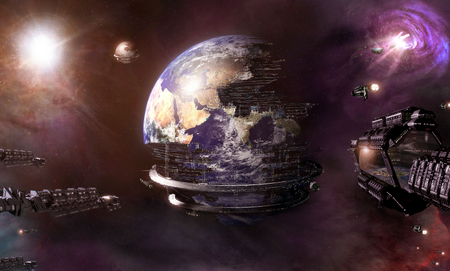 Being a newbie writer has its advantages and disadvantages to world building in any genre. The first advantage is you don't know your world building. You're just trying to get this story out and this is what I did to overcome my issues. What you need to know about World Building for Novels: Having never read any books on writing. Or had access to writing aids and ideas. I started writing a book. Yes, I had internet and yes, I know Google is my friend, but when you're in the middle of a story who has time for that, it breaks the train of thought.  Choosing the location of your world: I decided that my stories would take place in our galaxy, in our solar system, and on our planet. (Great world building right?) Now follow along as my muse hit me right smack between the eyes. I am going to save aliens right. Okay, where did they come from? Why are they here? And most importantly, how come nobody, but you knows about them? Choosing the location of your world: I decided that my stories would take place in our galaxy, in our solar system, and on our planet. (Great world building right?) Now follow along as my muse hit me right smack between the eyes. I am going to save aliens right. Okay, where did they come from? Why are they here? And most importantly, how come nobody, but you knows about them?A. Choosing reasons to cover your world building: Those are all good questions and are part of world building for any story. First off, where did they come from and why are they here: They came from a universe at war their mission is to secretly watch over us and guard us from harm. B. The reason nobody knows they are here, is because they came here after Atlantis sank into the ocean. They are a race created by the Alantians. So part of all of this was started by our ancestors. Notice I'm using time as part of my world building. Never underestimate the power of time in world building. Use of Alternate Universes, Hidden Areas and Unlikely Spots to keep your story here on earth: I used them as being a water dwelling humanoid form and they created colonies and small cities in underground areas close to a water source or in caverns that the ocean had filled. This worked out nicely for the first part of my story.Building another planet not like Earth. Having access to the internet I looked up "world+creating+software" looking for a demo or free program to try out to get a picture of an all water planet. I found a free demo program of CC3 as they call their main program. It was a thirty day trial of a real terrain generator and I set it up for 85% water with a single large land mass. It gave this to me that I could view. (What can I say, it is only a demo very limited.)A. By viewing this picture I was able to complete my book and give the reader a good idea of their home world. Campaign Cartographer 3 is what cc3 stands for. This program is nice. Have you ever seen the maps in the fantasy books this is the program that created them. B. It will let you get right down into building villages, hut by hut. It has an add-on for Sci-Fi as well. The real problem you will have with it is you will spend all your time world building and forget your story. It is reasonably priced for a software program. Planet creation: All I found I needed was:A. A mind picture of what makes my world different from earth. B. How many cities are needed to tell your story? C. How many characters will live in this world? (In fantasy they create family trees to develop out a character. There are several forms free on the internet to do this. One way to cheat is to use a real genealogy tree and modify it with your generated names.) D. How much action takes place on the world versus outer space or other worlds? This will determine how much of your world you need to build. E. How many and what kind of Terrain, critters, and other life forms that co-exist with your characters or aliens if any? F. Are you going to add any subplots to this world? Once you figure all this out, when you write it you concentrate on the story. Me, I invented as I went along. I ended up with a weak plot, too many characters to keep track of and loss of reader interest. These are the drawbacks to jumping right in and not knowing what you're doing. The major point to this is I have a 44 chapter rough draft to go back and now use all these tools I mentioned. Now for short stories: 1. World, Location, and time line: For short stories, keep it simple and make it match your story's plot line. Nothing else matters, it will always be your starting scene. 2. Just enough characters to tell the story. You do more on your plot and story line using character dialog. This allows more show and builds your world to the reader. 3. Always keep it simple: (Plots however, can be as complex as you can create it.) Keep the story telling to pleasant reading. 4.Make your world interesting to everyone. Remember to give your world flaws and different things going on these draw reader attention. These are the lessons I learned in writing my game lore and short stories. Since none of us are created equal or all write the same. Please feel free to use what you find helpful and ignore the rest. After all, I am still a newbie writer in training. Useful links: https://secure.profantasy.com/products/cc3.asp <--- This the link to CC3 https://secure.profantasy.com/library/demo.asp <--- This is the link to the demo "Invalid Item" by A Guest Visitor 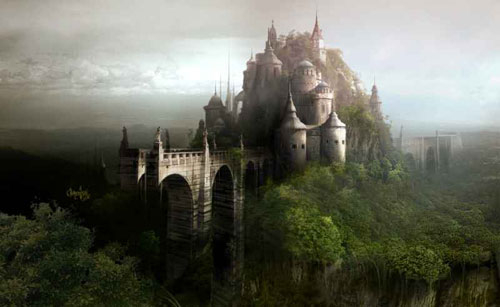 I was at Balticon 49 over Memorial Day Weekend and moderated a session entitled: “Crowns and Swords: The Intertwined Worlds of Fantasy and Monarchy.” The panelists were Tee Morris and Phillipa Ballantine (who are married), TJ Perkins, and myself. Tee and Phillipa co-wrote a steampunk series, The Ministry of Peculiar Occurrences, featuring (of course) Queen Victoria, TJ Perkins is the author of an urban fantasy ninja clan stories (Shadow Legacy Series), and my Highmage’s Plight Series features an empire, city-states, kingdoms, and, well, you get the picture. Among the questions I posed to the panel was: Intertwining worlds of fantasy and monarchy, why? Which boiled down to, “It’s Queen Victoria, Dude.” That was Tee. Phillipa’s response was the basically conflict is inherent with monarchy and we know what to expect when people fight for power – that creates great story. TJ’s Yakuza offered a cultural lens based on respecting the words of ones elders, which she overlaid with dark magic. That was one of the key things that excited her about writing the series set in modern day Japan. Looking at stories such as Game of Thrones, one can see the historical parallels of the Lanister family and the Lancaster family of yore, which George R.R. Martin based them. Having a monarchy helps not just offer natural conflict in the plot, but the verisimilitude of the world for the story. Readers have centuries of knowledge about such cast systems, which have versions in North American Society, where wealth versus poverty offer a similar stratus of society nature. Delving into history as a point of research, Tee and Phillipa discovered that Queen Victoria was, well, let’s say not a nice person. It was not a matter of her being quoted as “I am not amused.” She wanted no rival in even the smallest thing, which played into the storyline of their series. The lessons of history are stranger than fiction. So when writing stories intertwining monarchy with fantasy, research is never a bad thing. A writer can create resonance with readers, who feel a touch of familiarity, when we use history as a model. For example, consider writing a story about a king like King Arthur, or an Old Testament King David, or Julius Caesar, perhaps? You pick the culture and monarchy, establish you own land, change the names of your Queen or King, add your particular brand of magic to the mix, and, voila’, you’ve a good story in the making. So, go forth and build your own world and Dare to Believe… "Fantasy and Monarchy – World Building" by Highmage - D.H. Aire   I was just at Balticon 49 over Memorial Day Weekend. This was my fourth year there and my first with a table in the Dealer Room. This past year I finally had enough books, I told myself, to invest in having a table. Having one book or two in a series, for example, can limit sales. At least, that’s the advice I’d taken to heart. I went that route at a one day local book fair, where I split a table to keep my cost down for a few years. This year I saw a new colleague sell out at that fair with her single sci fi book. I told her she would be going far… her new book comes out this fall. At Chessiecon about six months ago, I split a table. Sales at the con were off. Previously it had been Darkovercon and it seemed as if half the regulars had decided to be elsewhere. I had four books for sale and would not have broken even if I hadn’t split that table with another author. At Balticon there are normally at least 1,000 participants and Masquerade on Saturday evening is packed, practically standing room only. The Dealer’s Room always seemed busy, so I figured this was a good time to invest in having a table for my now six books, five in a series and one the first book of a new series. The Dealer’s Room, Balticon in general, just was not as well attended as usual. This was their last year in the hotel, which sold out the room block, before George R.R. Martin is the guest of honor for their 50th Anniversary as a con. The hotel changed ownership this past year and did a major renovation, one that was not expected to be completed in time for the con, but was – just in time. That skewed the organizers PR and program planning, crimping panels for authors, who were invited and like myself found we didn’t have panels scheduled (of which there were too few) and had to beg, borrow, and steal to fix that. So, what’s an author working the Dealer Room to do? Network, network, network, and be as nice to the fans and the many aspiring authors at the con as possible. The vendors quietly commiserated and I spent a lot of time at my table, talking with the authors around me. I learned from one that they had done a promotion on Bookbub that exceeded their wildest expectations, and was not inexpensive, but both the free book sales it generated for the promotion date were magnitudes higher than their expectation and the sales the day after, when the book was no longer free and for weeks and months later were great. The fact that a second book in the series came out after the promotion boosted its ranking to #2 in genre on Kindle. Hmm, I’m keeping that piece of advice in my back pocket. What else happened there in the fairly less than crowded Dealer’s Room? I spoke with authors, checking out the room between sessions and shared some interesting news. The first night of Balticon I received news that my application to become a member of SWFA, the Science Fiction Writers of America was approved. I was officially a professional science fiction and fantasy author. That’s something I did not expect to achieve for a while yet as someone whose books are published by small presses, who do not offer the required advances for membership, or as an indie author, who self publishes their titles, too. However, at the end of 2014, SWFA voted to allow small press and Indie authors, who sold at the same level as traditionally published authors, the opportunity to join. So, I looked at my sales and saw I met their standard and applied last week. One of my colleagues was very pleased, knowing I wasn’t the only Indie author to have joined in the months since the change, feeling it was about time and good for the field. What I didn’t know is something I learned in the final hours in the Dealer’s Room, when another of my Indie colleagues came over and told me that she had joined SFWA recently just so she could participate in the Baltimore Book Festival’s SFWA sponsored panels this fall, which would help her sell her books. She told me, go talk to such and such, she’s organizing the SFWA panels and SFWA has its own table with a bookseller selling member titles. Now, I’d looked into having a table there. It’s very pricey and the deadline’s coming up soon to put in an application… So, that idea didn’t go in my back pocket. I sent an email to said organizer before the day was out. It doesn’t hurt I’ve been on panels and moderated said organizer of the SFWA panels. Her answer, “You’re in. Just send me your book cover, bio, and website details.” Oh, and one way I got myself on panels at the last minute was by offering to moderate. Good moderators are always welcome at conventions. The visibility on those sessions also drew some new fans – and old ones (four years of publishing stories creates old fans, doesn’t it?). So, yes, Balticon did not live up to my expectations. That will happen at cons. The economy, the weather, conflicting schedules can all effect sales at a convention. But how an author deals with it, that’s the important part. Our frustration is something we can quietly share among ourselves, which brings me to those aspiring writers at conventions, who happen by the Dealer’s Room. I talked with them about the business and craft. Maybe they bought one of my books in the process, maybe not… but like the fans, paying it forward, encouraging them to believe in themselves as an author did for me at my first con, only five years ago (?), is part of the responsibility. Look, other authors may not see it that way, but if you see me at a convention, whether on a panel, at a table in the Dealer’s Room, or pausing in the halls of the hotel, that's the kind of author that inspired me and is the kind I want to be… hence, this article on providence or curse in being a writer in the Dealer's Room. Looking for silver linings is one thing, actively networking, you never know what jewels you’ll learn in this business… and becoming a science fiction and fantasy author is a business, my friends. You, like me, may write because you can’t not write, but if you aspire to be a professional author, you need to think of the business side… and always be there for your fans, future fans, and those interested in knowing more about your stories and how to write and publish their own… D.H. Aire Author of (the just released) Well Armed Brides, Book 5 of the Highmage’s Plight Series and Dare 2 Believe, Book 1 of Dare2Believe. Member of SFWA. "Writer in Dealer Room–Providence/Curse" by Highmage - D.H. Aire  Book Name: Red Mars Author: Kim Stanley Robinson First Published: 1993 Nebula Award Winner for Best Novel 1993 Author Kim Stanley Robinson was born in Waukegan, Illinois, but mainly grew up in Southern California. He earned a B.A. in literature from the University of California, San Diego in 1974 and gained a Masters in English from Boston University in 1982. He returned to his California ala mater in 1984 to finish a PhD in English. Robinson is an avid backpacker and many of his novels feature characters that hike or climb mountains including his Mars Trilogy. He doesn’t consider himself to be a mountain climber, more of a man that loves the great outdoors. In 2009, Robinson was a Clarion Workshop instructor and the following year he was the guest of honor at the 68th World Con. His novels have won 11 major science fiction awards and 29 nominations. He is married with two sons and his family currently resides in Davis, California. “History was like some vast thing that was always over the tight horizon, invisible except in its effects. It was what happened when you weren’t looking — an unknowable infinity of events, which although out of control, controlled everything.” ― Kim Stanley Robinson, Red Mars The epic novel Red Mars begins when one hundred participants are chosen to go to the red planet after a detailed and rigorous selection process. The winners are geniuses from Russia and the United States along with a few other countries. They undertake a nine month space mission to reach their goal of forming a colony base on Mars. “Underhill” has nuclear generators for power, medical stations are established, GMO foods are produced on martian farms and new life forms that can survive on the Martian surface unprotected are also genetically created. During this time, a debate that started on the spacecraft and continues both on Mars and Earth about the moral right of humans to terraform and mine Mars for their own profit. Two factions arise on Mars. One is the Reds, led by Ann Cayborne. She believes that Mars should not be used for corporate profit or for Earth’s expansion. The other are the Greens, led by Sax Russell. He believes that terraforming is important in order for life on Mars to continue. As time goes on, these and other political arguments tear the martian settlement apart, even as more new Earth immigrants arrive to worsen the situation. Added to the mix is a new discovery by a medical team, a drug that grants near immortality. One of the medical team disappears with a group of followers and they harvest many eggs in order to produce children at will. What was once a scientific operation, turns into a struggle for power by governments and international companies who wish to carve out a piece of Mars for themselves. Mining on Mars increases and more workers are imported from Earth to handle the work load. The new city domes become crowded and understaffed. Riots begin as water and other supplies are lost or damaged, causing massive flooding and death. Even the entire moon of Phobos is destroyed in the chaos. Most of the first hundred colonists are killed in the resulting revolution. Their work is destroyed. The survivors take refuge in a hidden colony called Zygote under the southern pole and begin to build a new life for themselves on a chaotic and destroyed Mars. **** One of the draws of Robinson’s work is his detailed world building based on known science. There are many “sense of wonder” descriptions of the Martian landscape that draw you in as a reader and give you an appreciation for the natural environment. His details about the science behind the transformation of Mars make you wish that you could visit these people and places. As someone who enjoys natural beauty, this was one of the aspects of the novel that I enjoyed. I also liked how the author shifted the third-person point of view among the main characters of the book, allowing me to see Mars, its society and its culture through their different perspectives. Robinson often features scientists as heroes, not because of their physical brawn, but more for the importance of their discoveries, networking or collaboration with other scientists. The characters struggle to preserve and enhance the world around them in a manner evoking individualism and entrepreneurship such as was found on the American Frontier a century ago. In Robinson’s novels, scientists must take responsibility for educating the public in the responsible use of their discoveries and often emerge as the best people to direct public policy on environmental and technological issues. Robinson could be considered an anti-capitalist, his ideas promote an egalitarianism that more in keeping with socialist ideals. The Martian Constitution in his Mars Trilogy, draws upon these social democratic ideals and focus on the community-participation elements in the Martian’s political and economic life. I personally do not agree with all his political views, however, Robinson is not overt in his preaching and it is tolerable if you keep an open mind and enjoy the environmental and technological ideas. Whatever your views on his political ideas, Red Mars is a detailed portrayal of how this planet might be colonized in the near future with present day technology. Considering that there are programs in real life that are in the planning stages of going to Mars with an eye toward colonization, Robinson’s books are incredibly timely and an interesting read. It is my hope that the destruction and chaos that happens on Red Mars might be bypassed by our own colonists, but human nature being what it is, we can only hold our breath and hope for the best. I feel that the Mars Trilogy is well worth reading and I hope you’ll consider adding it to your to-read list. The Mars Trilogy Red Mars (1993) – Colonization Green Mars (1994) – Terraforming Blue Mars (1996) – Long-term results The Martians (1999) – Short stories
Check out the latest round of Three Prompts! Three new prompts. A new first place prize. Be in it to win it!
Our FSFS-only forum. Discuss and share poetry in this dedicated forum. The Poetry Workshop is still going on. We've had some good poetry, but it would great to see more members participate. Four merit badges are up for grabs!
The FSFS Review Board is open! All WdC members can view the list on the group homepage, "Fantasy and Science Fiction Society" . FSFS Members can view the list from the homepage, Review Board page and the Hub. To post on the board you need to review at least one other item on the list.
If you are not already a member and are interested in fantasy and science fiction writing, please read through the group homepage and apply using the application form. The only pre-requisite is that you have a fantasy or science fiction item in your portfolio. If you want to advertise in the FSFS Newsletter please contact me, Matt Bird MSci (Hons) AMRSC   . .Newsletter Challenge  Each month I set a Newsletter Challenge. This challenge is open to the whole of writing.com, so you don't have to be an FSFS member to enter. Invalid Merit Badge #201075 In "May 2015" I challenged you to review the Three Prompts entries from the April round. I am pleased to announce the winner (chosen by the random number function on Excel) of the FSFS Merit Badge is.... Amalthea  who wrote a Invalid Review who wrote a Invalid Review  This month's challenge open to all of WdC is: We've had a few world building articles this month. We've all read books with great world building, but which do you think is the best. Let me know which book you think has the best world building in. I will randomly select a winner from the entries. Thank you to all the members who submitted articles to the Newsletter. If you submitted an article that wasn't included, don't be offended. I can only fit so much in the Newsletter. Please submit it again when I send the call out for articles. Please comment on this Newsletter if you enjoyed it, or if you have any suggestions for future editions. |
 un:
un:  View Portfolio
 Visit Notebook
 Send Gift Points
 Awards
 Badges



 Community Feed
 Puzzle Hub
 General Discussion
 Sponsored Items
 Book of Trinkets
 Static Items
 Books
Books Groups
 Interactive Stories
 Audio
Audio Campfire Creatives
 Community Notes
 Crossword Puzzles
 Documents
 Folders
 Images
 In & Outs
 Madlibs
 Photo Albums
 Polls
Polls Product Reviews
 Quizzes
 Survey Forms
 Web Pages
 Word Searches