%%USERNAME%%    %%ACCWORDS%% %%ONOFF%% |


 The FSFS Newsletter is written by FSFS members covering everything Fantasy and Sci-Fi |
The "Fantasy and Science Fiction Society" welcomes you to  Welcome to the March edition of the FSFS Newsletter. Each month the Newsletter features articles from members at all stages of their writing career, be they just starting to write stories, or published authors. Contents 1. Month Summary 2. FSFS Poetry Workshop 3. Writing Fantasy: A Reader's Perspective 4. Steampunk: Learning the Genre 5. Being a Guest & Vendor at a Con 6. Book Review - The Crystal Gryphon 7. Advertisements 8. Three Prompts Results 9. Coming Soon! 10. Newsletter Challenges  March saw plenty of votes for the February round of Three Prompts, so be sure to check out the results later on in the Newsletter. April looks to be a busy time for the group. With a new forum already released, and several new pages due for release soon, there will be plenty for members to do! Of course the biggest thing that happened this month were the Quill Awards! The FSFS won Best New Group and Best Fantasy/Sci-fi. I am thrilled with this results and want to thank everyone who voted in the genre awards, and Andrew   for running such a great event. You can see all the nominees in the Quills video I made for the Awards ceremony: for running such a great event. You can see all the nominees in the Quills video I made for the Awards ceremony: How would you like to expand your Fantasy/Science Fiction Portfolio? On April 5th the FSFS Poetry Workshop will begin. The workshop is designed to run for eight weeks.The first two weeks will concentrate on poetry basics; rhyming, meter, and alliteration will all be discussed. The next five weeks will each concentrate on a different poetry form. I choose these forms both on the ease of learning them and the ability to be able to tell a story in them. The last week will concentrate on writing a fantasy/science fiction poem. I will not review topics relating to the fantasy/science fiction genre because I feel the members of this group already know these quite well.  There will be weekly assignments. It will not be required to participate every week, but keep in mind, as with every workshop, what you get out of it is directly related to what you put in. I hope to see everyone in April! There will be weekly assignments. It will not be required to participate every week, but keep in mind, as with every workshop, what you get out of it is directly related to what you put in. I hope to see everyone in April!"Invalid Item" by A Guest Visitor [Editor Note: The workshop will take place in the brand new "Poetry Forum" ]  This is kind of a rant, really, (not necessarily aimed at you personally, unless you're guilty) addressing the common mistakes I've come across after having done a lot of reviews for Writing.Com authors who are both new to the fantasy genre and new to writing in general. I have noticed there are mistakes which crop up time and time again. Fantasy is a broad literary category in so far as it can encompass any other genre within its wide embrace. For example, you can write a fantasy murder-mystery, a fantasy romance, a fantasy action-adventure, an historical fantasy etc., but whatever kind of story you do have in mind, to be properly classed as fantasy it must be strongly fantastic and not some kind of lame hybrid such as a romance with a bit of fantasy thrown in. In other words, the fantastical element, whether that is magic, other races, or beings (e.g. fairies, elves, unicorns, or dragons, etc.) should be integral to the plot and not there as decoration. If you are going to incorporate other fantastical races or beings, they should be at least a little bit otherworldly and strange and not simply be dressed-up humans. And then if you are writing anything except, perhaps, an urban/contemporary fantasy or (heaven help you) a contemporary vampire romance novel, your human characters should not be your friends in funny clothes. They should talk, walk, dress and act within the framework of the made-up world they inhabit. So, OK, your race of Jomonkeys look like a cross between an orang-utan and a giraffe and walk like ostriches. That is really great, but then, please, don't blithely go ahead and write something like - "Gpnzfftgh jxzntpl flsdzp," he said in a language Queen Salmonella didn't recognize. If you want to use a made-up, or constructed language for a different nation/race in your story, then that's wonderful, truly, but your readers need to be able to pronounce it aloud. In fact, it is a good idea to learn how to construct a language. See – http://www.zompist.com/kit.html or http://www.wikihow.com/Create-a-Language. But then, It is also a good idea to use it like seasoning, sparingly, not show off your creative language constructing genius by giving your reader huge indigestible dollops of it. When writing a story set in another world, please, please Don't. Reference. Earth. She stood an amazonian 6' 3" tall. … He got set out the enchanted chess set and saw, to his horror, the white queen was missing - When writing fantasy set in a made-up world it is essential that objects, descriptions, comparisons, metaphors and similes, reflect the fact the characters inhabit a different world. The term 'Amazonian' references real world mythology and a chess set is specifically Earth bound, so these examples are, to my mind, extremely lazy world-building. Please guard against anachronisms in your historical (e.g. mediaeval type) fantasy stories by doing research. As outlined in another article which I wrote on the subject – "Invalid Item" - it is not a good idea to give your world an uncharacteristic level of cultural, technological, or medical and hygienic advancement . By uncharacteristic, I mean, for example, unless you contrive an intricate system of plumbing and waste-management that is somehow completely independent of advanced technology for your towns and cities (i.e. something like that of ancient Rome) the streets are going to be awash with both human and animal excrement and will stink like hell and be rife with disease. Alternatively, if you have bothered to set up a good magic system for your world, that could be a solution to your cities' waste management problem. And before you get into the meat of the story, please make the beginning interesting. I have a Kindle (it is great for travelling and for reading under the bed-covers at night). Kindle regularly offers books for 99p or for free and the other day I downloaded a fantasy novel called A Quest of Heroes by Morgan Rice. Fortunately it was free. I say fortunately because I read a couple of pages only and decided to go and read something else. Why? Here's the opening paragraph - The boy stood on the highest knoll of the low country in the Western Kingdom of the Ring, looking north, watching the first of the rising suns. As far as he could see stretched rolling green hills, dipping and rising like camel humps in a series of valleys and peaks. The burnt-orange rays of the first sun lingered in the morning mist, making them sparkle, lending the light a magic that marched the boy's mood, He rarely woke this early or ventured this far from home—and never ascended this high—knowing it would incur his father's wrath. But in this day, he didn't care. On this day, he disregarded the million rules and chores that had oppressed him for his fourteen years. For this day was different. It was the day his destiny had arrived. Now compare this to Joe Abercrombie's Story The Heroes - 'Too old for this s***', muttered Craw, wincing at the pain in his dodgy knee with every other step. High time he retired. Long past high time. Sat on the porch behind his house with a pipe, smiling at the water as the sun sank down, a day's honest work behind him. Not that he had a house. But when he got one, it'd be a good one. The first story opening is yawn inducing. Why introduce the character but not give him a name? Also, if you feel you need to show your character not doing much except watching the sun go up, or down, at least do as Joe Abercrombie does and give some indication of who the character is in a interesting way. While I'm about it, I'm going to mention it is the characters who drive the plot. Make them solid, deep and well rounded and give your protagonist(s) and antagonist(s) a worthwhile opposing goal and the more likely it is your story will be a pleasurable read. Lastly, while I think your first story draft should be a wonderful voyage of discovery, full of wild ideas, fantastic visions and delightful prospects, you will absolutely need to put it away for a while, then get it back out and then make the story work. To make the magic happen you will need to toil hard and think deeply, looking at your draft with objectivity and a decent working knowledge of the writing craft. "Writing Fantasy: A Reader's Perspective" by A E Willcox  Edited by Eliot Wild  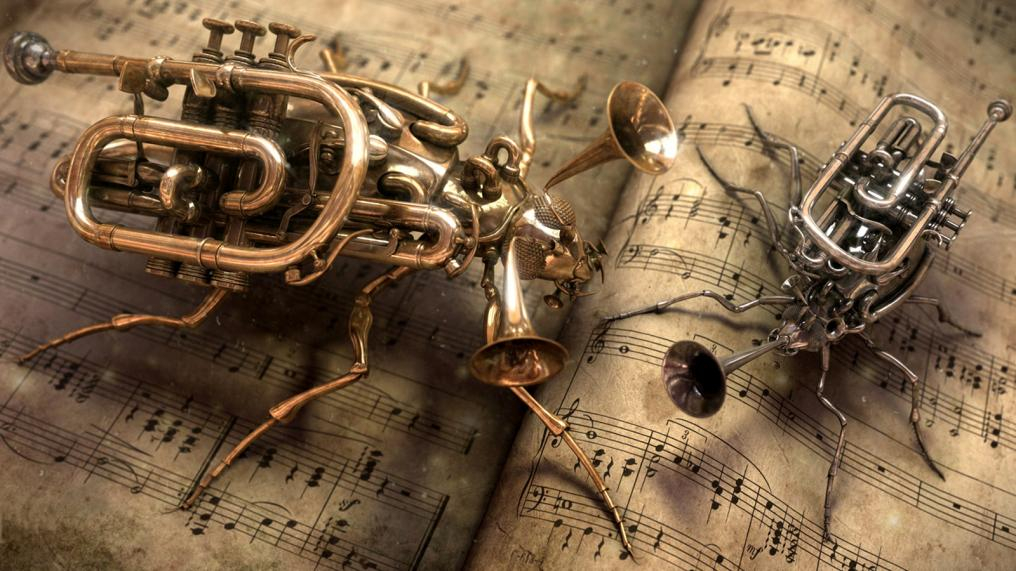 A popular subgenre of science fiction and fantasy is known as steampunk. It features steam-powered technology with the decorative sensibilities of the 19th century Victorian era. Steampunk stories can also be considered a sort of alternate history where the British Empire continued on to be a major power in the world and their empirical style of culture and manners still hold sway in a future world. It is often thought that the origin of steampunk as a genre began with H.G. Wells and Jules Verne. The stories of the adventurer explorer or the gentleman inventor who travels through the world or in time via their abilities and education and bring British culture to other peoples is a trope that is common in many steampunk stories. While Wells and Verne were certainly part of the inspiration of steampunk as a genre, they were writing alternate history or true science fiction of their times. In other words, looking to how the future may be based on the technology of their own times, much as science fiction writers do today. The origins of steampunk was actually back in the late 1980s with a trio of authors in Southern California. Tim Powers, James Blaylock and K.W. Jeter were a group of friends that met to talk about their writing. They developed a style of science fiction that was influenced by victorian fantasies of the past and taking it to the next level. The name for what they were doing came about when Jeter wrote a letter to Locus Magazine in 1987. Dear Locus, Enclosed is a copy of my 1979 novel Morlock Night; I’d appreciate your being so good as to route it Faren Miller, as it’s a prime piece of evidence in the great debate as to who in “the Powers/Blaylock/Jeter fantasy triumvirate” was writing in the “gonzo-historical manner” first. Though of course, I did find her review in the March Locus to be quite flattering. Personally, I think Victorian fantasies are going to be the next big thing, as long as we can come up with a fitting collective term for Powers, Blaylock and myself. Something based on the appropriate technology of the era; like ‘steam-punks’, perhaps. —K.W. Jeter If you look at the “gonzo-historical” books of these three authors, such as Power’s Anbuis Gates, Jeter’s Morlock Night, or Blaycock’s Homunculus, you will see that while all the novels are flavored with the Victorian era’s culture there is no fixed time period or even technology. Steampunk is not about the aristocracy, although they are often present and it is not always about steam powered gadgets either. Sometimes the Victorian idea of the supernatural takes precedence. If you tire of Steampunk stories that feature nothing but airships, goggle wearing heroines or characters that go around with steampowered batman belts, fear not. Look at the origins of the genre and you will discover that these conventions did not appear until much later. Today, the term steampunk can refer to any of the clothing fashions, jewelry, and art objects that have a particular Victorian flair. Steampunk design emphasis’s a balance between the form and function, somewhat like the arts and crafts movement did, there is a blur between the line of tool and decoration. Examples include computers keyboards and electric guitars that are redesigned to employ materials such as polished brass, wood, iron and leather with Victorian conventions, rejecting the norm of current day industrial designs. Many of the costumes feature corsets and goggles, the color brown, or antiqued British military uniforms. The best way to learn more about the genre is to read books by the three original authors and then expand out to newer authors of the genre. It will gain you a better balance about the genre and help you avoid falling into the cliches that have developed over the past ten years since the genre has gone more mainstream. Below are some of the places that I frequent to keep up to date with the steampunk movement. The Steampunk Forum at Brass Goggles http://brassgoggles.co.uk/forum/index.php This is an active forum where all aspects of steampunk are discussed. Clothing, art, music, writing and events. If you are looking for examples in costuming or simply want to know where the local steampunk groups hang out, this is a good place to start. The Steampunk Empire http://www.thesteampunkempire.com/ This online community is one of my favorites. The forums, photos and places to connect with fellow steampunk enthusiasts are many. I learn about new conventions from this site all the time. The Gatehouse: Online Dieselpunk and Steampunk Magazine http://www.ottens.co.uk/gatehouse/ I’m new to this magazine, but I like what I see. It covers more of the literary side of steampunk and goes into what steampunk and dieselpunk are. I find it a good resource for writers wishing to enter into the genre and for readers who want to learn more about the origins of what they are reading.  Today is the last day of Chessiecon. As a first time vendor at a con, I’d like to share that the other vendors were nice to work with. One came over to me this morning and offered some advice, since I plan to be a vendor again. She shared that I should make sure to put out less copies of each of my books, no more than three of each. “Two would be better,” she suggested, “which encourages the sale of those few copies to each passers buy, who may feel they’re possibly buying one of the last available copies. Keep your inventory in a box under your table to restock from as needed.” She also suggested I continue share my table, so that we can help sell each other books when the other is on panels, etc. I consider that excellent advice.I guess the best part of having a booth was meeting a fan or two -- and hopefully the new fans, who came over, telling me they appreciated my comments at the sessions.I also spoke with one of my fellow authors, Kelly Harmon, and told her I found it challenging to find beta readers. She asked me how I was trying to do it. I explained that I invited my readers to join my online group. Kelly suggested it could be how I was asking that was limiting my responses. “Try using words like ‘sneak peak of the upcoming book’ or ‘an exclusive first look at the forthcoming novel in the series.’” I thanked her and congratulated her on her new book, Stoned in Charmed City, and complimented her on the cover. She’s a second book in the series coming out soon from the same publisher. I’m on two panels today, the first on “Military SF” moderated by Carl Sipra, with Steve Kozeniewski, Timothy Liebe, and Scott MacMillan. Carl as moderator opened with: “While we dream of peace, it seems war is an ongoing state for too much of humanity. What is believable about the future worlds propounded by authors such as Elizabeth Moon and David Weber? What do you like in their stories? What do you dislike?” Steve Kozeniewski is a veteran as is Scott MacMillan (though, he served decades earlier). Scott's the husband of author Katherine Kurtz. They are big fans of military SF and talked about the use of military life, weapons systems, and logistics that are critical factors in creating a realistic story. Timothy shared his love of history and how military SF novels often retell classic battles. Personally, I'm a fan of Elizabeth Moon, David Weber (Honor Harrington Series), and David Feintuch (the Nicholas Seafort Saga). I particularly love David Weber and John Ringo’s March to the Stars series. I explained that I don’t have a military background. I became a fan of military SF after reading Gordon R. Dickson’s Tactics of Mistakes, one of his Dorsai books. Tactics introduced me to thinking about military strategy, using a simple shell game to make the other side think they understood his game, while turning the tables on them. That lesson’s never left me. Tactics and Dorsai! are books that have never left me. My last panel is “What Do Authors and Editors Want to Know About the Fans?” The session, moderated by Jan Whiteley, featured Karen MacLeod (the copyeditor of my Highmage’s Plight series), and Don Sakers. The audience was made largely of aspiring authors who asked the editors and authors what the process is like. One thing that has stayed with me is the issue of authors accepting being edited. If you cannot listen to your editor, in other words, completely refuse to listen to criticism, you will not go very far. Oh, you can write badly and become famous, but your writing will not be the best it can be. One editor recently dealt with an author on a client basis, who would not make a single change. I shared that Frank Herbert’s Dune was well edited, but after its success God Emperor of Dune was not, which is why I think of it as a brick and found it difficult to follow… and I’m a big Dune Series fan. Being able to prune and hone a story, is more than a matter of adding or removing a few commas. Editors who are offering to buy your story have to be listened to. There are times you may need to disagree, but if you want that story published, you need to make changes (not just minor ones). Don Sakers explained that it is about the readers, not the author. Your story needs to attract readers, and editors are looking to bring out the best in the story so it helps attract as many readers as possible. I was asked if following the editor’s directives is hard to do. Normally, I accept making the changes; although, honestly, there are times it can be rather trying. Ultimately, you as the writer have a decision to make. Nine times out of ten, I make the change… If the editor decides to pass on the story because the one thing I feel is key they’d like changed I feel I can't, I accept that. But I will not do so lightly. My goal is to sell my story, making it the best it can be, so I can build my audience. So, on that note, instead of bidding Chessiecon ado, I grabbed a quick lunch and returned to my table in the dealers room, hoping to sell a few more books before packing up and heading home. Such is my new life as a Vendor and Guest at a Con. Wish me luck… "Being a Vendor & Guest at a Con" by Highmage - D.H. Aire   Book Name: The Crystal Gryphon Author: Andre Norton First Published: 1972 Alice Mary Norton was born in Cleveland, Ohio. Her first writing experience began as editor of a literary page in the school’s paper called The Collinwood Spotlight. During this time, she wrote her first book, Ralestone Luck, which was eventually published as her second novel. She dreamed of becoming a teacher, but due to the Great Depression, she took a job working at the Cleveland Library System, in whose employ she remained for 18 years. She kept writing at this time and in 1934, she published her first novel. At this time she legally changed her name to Andre Alice Norton. Andre Norton is the pen name she adopted for marketing reasons. At this time boys were the main audience for fantasy tales and it was thought that they would not read stories written by a woman. Andre is a Norwegian male name, but obscure enough in the United States that had a more androgynous feel. Andre Norton remained working for the Cleveland Public Library until 1950 when she retired due to her health. She took a job as a reader for publisher and editor Martin Greenberg at Gnome Press, a science fiction small press. She remained there for eight years until she shifted into becoming a full-time writer. At that point she had twenty one novels published. She would go on to write hundreds of novels, some of which are still being published today after her death in 2005 of congestive heart failure. Her first science fiction novel was Star Man’s Son, 2250 A.D. published in 1952. She was a prolific novelist in the 50’s, many of her books selling in the juvenile market. She wrote over a dozen speculative fiction series, but her longest and most popular was the Witch World series, of which The Crystal Gryphon is a part of. Norton was nominated twice for the Hugo Award, for the novel Witch World in 1964 and for the novella Wizard’s World in 1967. She has been nominated three times for the World Fantasy Award for lifetime achievement and won the award in 1998. Andre Norton was a founding member of the Swordsmen and Sorcerer’s Guild of America (SAGA). They were a group of fantasy authors led by Lin Carter and whose work appeared in her anthologies, Flashing Swords!. She was the only woman of the original eight members. Known as the Grand Dame of Science Fiction and Fantasy, Andre Norton wrote novels for over 70 years. She has had a huge influence on the entire genre, having published well over 300 titles and having inspired at least four generations of science fiction and fantasy writers. Notable authors who cite her as an influence include, Greg Bear, C.J. Cherryh, Mercedes Lackey, A.C. Crispin, Charles de Lint, Joan D. Vinge and many others. “Be yourself, not ruled by the belief that one man must be like another.” Andre Norton, The Crystal Gryphon. Neevor’s advice to Kerovan. The Crystal Gryphon is the first book of the Gryphon Trilogy. It is one of the first fantasy romances and follows what is now a standard format, of writing the story via duo viewpoints, that of Lord Kerovan of Ulmsdale and his promised bride Lady Joisan of the Dales of High Hallack. When Kerovan’s mother was to give birth, she was forced to shelter in the mysterious ruins of the Old Ones. Due to this, or perhaps the rumor that she had blood of the old race herself, her son was born with small cloven hooves instead of feet and his eyes were the color of butter amber. His father decides to name him heir despite his unusual features, and to prove his intentions, he “ax-weds” his ten year old son to an eight year old girl of good connections. Young Joisan remains with her family, to be sent for when she comes of age. When Kerovan becomes a man, there is danger afoot as the Hounds of Alizon attack the mountains of High Hallack and Kerovan joins the Dale armies to represent Ulmsdale. Before he leaves, he sends Joisan a beautiful crystal gryphon encased in a globe, an object of power that he had found, almost as an after thought. Soon, Kerovan’s father dies and his mother rejects Kerovan’s claim to Ulmsdale, wishing to pass it on to her daughter and her new betrothed. Ulmsdale is betrayed to the enemy and falls, leaving Kerovan to depart and travel across the war-torn lands of High Hallack to Joisen’s Dale. As she has grown, young Joisen learned how to wear armor and to fight with a light sword. She wears the tiny gryphon under her mail as a keepsake from her unknown fiance, a man she has never met in person. When Kerovan finds her, she mistakes him for one of the Old Ones due to his cloven feet and reserved manner. The two set off into the wilderness as the Dales fall to the invaders, seeking the lands of the Old Ones and learning about the power of the gryphon and of each other. They hope to save their people from enslavement and destruction. I confess that I have not read the entire Witch World saga, there are many books to the series and they interact in a way that can be confusing if you don’t know where the books fit. However, the two books in the series that I consider to be my favorites is the original Witch World and The Crystal Gryphon. The story about Kerovan and Joisen has stuck in my mind for decades. The romantic duo point of view of the writing that allows you to understand the characters emotions during their growing relationship created a chemistry that was hard to forget. Much of fantasy and science fiction during the time when this book was written was geared toward boys. Therefore romance was an element that proved missing in many books and there were few female protagonists. Joisen, while still having an old-fashioned “stay by your man” outlook, was a strong female lead in her day. As a young girl reading this novel, that held a certain appeal to me. I consider Andre N orton to be one of the influences in my own writing style. Most of my stories also have elements of romance and strong female characters. How else would I write after growing up reading Andre Norton? The Crystal Gryphon is out of print, but you can find a kindle version on Amazon and used paperbacks. While this trilogy has become a little more obscure these days, it is one that I can recommend. The Gryphon Trilogy is part of the High Hallack Cycle of the Witch World Series. Gryphon Trilogy: The Crystal Gryphon (1972) Gryphon in Glory (1981) Gryphon’s Eyrie (1984) with A. C. Crispin Three Prompts Results  The results have been counted and verified. I can exclusively reveal that the winner of the February round of "Thrice Prompted" is: . . . . .
Congratulations, Vixey Todd you have won a 50K awardicon, an FSFS merit badge and Shop: "Writing.Com Stress Relievers (Set of 2)"
Check out Three Prompts on the 1st of April for the next round!
A brand new FSFS-only forum. Discuss and share poetry in this dedicated forum. There are plans for a poetry course to take place in here in April.
The FSFS Review Board is open! All WdC members can view the list on the group homepage, "Fantasy and Science Fiction Society" . FSFS Members can view the list from the homepage, Review Board page and the Hub. To post on the board you need to review at least one other item on the list.
If you are not already a member and are interested in fantasy and science fiction writing, please read through the group homepage and apply using the application form. The only pre-requisite is that you have a fantasy or science fiction item in your portfolio. COMING SOON: The FSFS is soon to have two new additions. The first exciting new page is a listing of every published author in the group including details of where you can buy their published books or read their published stories/poems. If you are an FSFS member and you have not already given me details about your publishing credentials get in touch with me, Matt Bird MSci (Hons) AMRSC . The page will be available for all of WdC to see.The second thrilling item is a Challenges forum. Here you will be able to enter mini challenges for a chance to win merit badges, reviews, and GPs! There will be a mixture of quick and long-haul challenges (read 10 minutes vs 5 weeks) and writing and non-writing challenges (read flash fiction vs group participation). The forum will be an FSFS-only page. If you want to advertise in the FSFS Newsletter please contact me, Matt Bird MSci (Hons) AMRSC .Newsletter Challenge  Each month I set a Newsletter Challenge. This challenge is open to the whole of writing.com, so you don't have to be an FSFS member to enter. Invalid Merit Badge #201075 In "February 2015" } I challenged you all to review someone who had done something lovely for you. Sadly no one entered so I have no merit badge to hand out this month  Hopefully more of you will enter this month's challenge to win an FSFS merit badge. This month's challenge is: Hopefully more of you will enter this month's challenge to win an FSFS merit badge. This month's challenge is:To celebrate the opening of the FSFS's brand new poetry forum I want you to post in the comments section below your favourite line from a poem and tell us why you love it so much. I will randomly select a winner from the entrants. Thank you to all the members who submitted articles to the Newsletter. If you submitted an article that wasn't included, don't be offended. I can only fit so much in the Newsletter. Please submit it again when I send the call out for articles. Please comment on this Newsletter if you enjoyed it, or if you have any suggestions for future editions. |
 un:
un:  View Portfolio
 Visit Notebook
 Send Gift Points
 Awards
 Badges



 Community Feed
 Puzzle Hub
 General Discussion
 Sponsored Items
 Book of Trinkets
 Static Items
 Books
Books Groups
 Interactive Stories
 Audio
Audio Campfire Creatives
 Community Notes
 Crossword Puzzles
 Documents
 Folders
 Images
 In & Outs
 Madlibs
 Photo Albums
 Polls
Polls Product Reviews
 Quizzes
 Survey Forms
 Web Pages
 Word Searches